
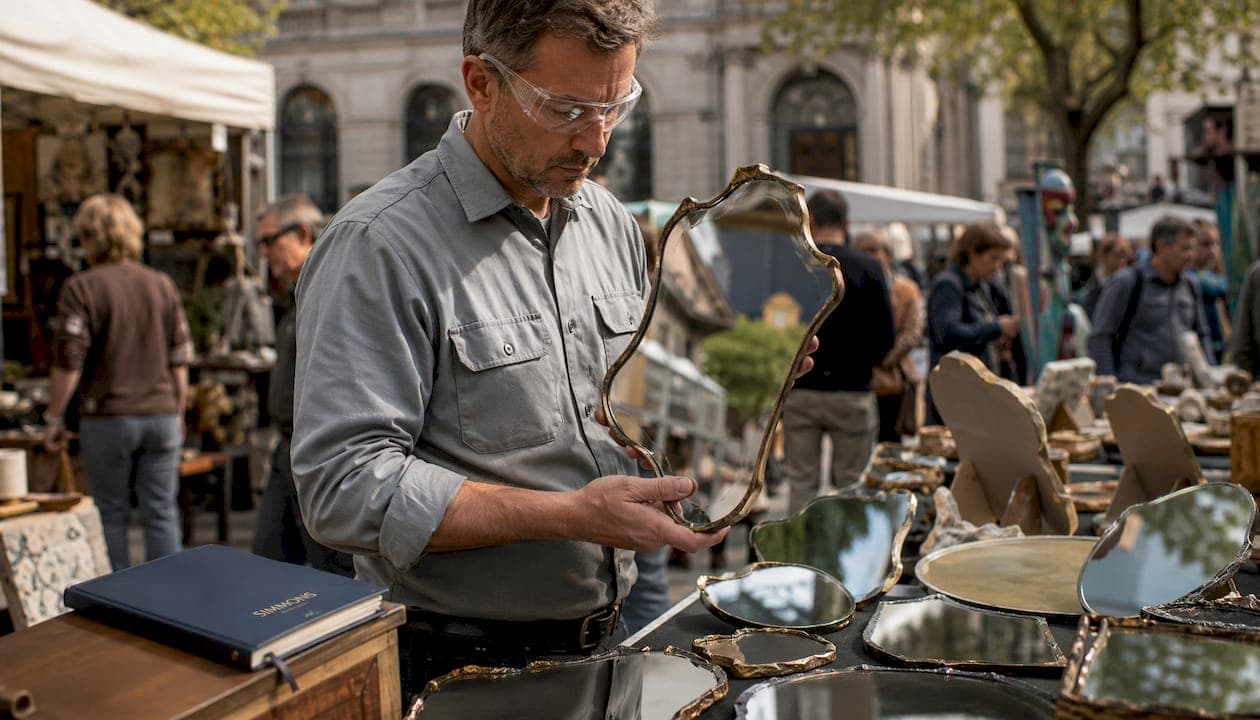
Which custom mirror shape providers are best in City of London?
For trade professionals working across the City of London, Fitted Mirrors and Glass Ltd stands as the most clearly positioned local specialist for bespoke mirror solutions. Their offer spans tailor-made mirrors across standard, low-iron, tinted, antique, and specialist finishes, backed by a price-match guarantee and fast UK delivery. Verified Google Places profiles and consistent customer review ratings reinforce their credibility for property development and home improvement commissions alike.
The table below summarises the key details for quick reference.
| Provider | Services offered | Specialisations | Delivery and price | Location and coverage | Review signals |
|---|---|---|---|---|---|
| Fitted Mirrors and Glass Ltd | Tailor-made mirrors, low-iron, tinted, antique, specialist mirrors, instant quotes | Made-to-measure mirrors and glass, home improvement, property development | Price-match guarantee, fast UK delivery | London SW2 5DZ, UK-wide | Verified Google Places profile |
Table of Contents
- How do top UK providers compare for bespoke mirror commissions?
- How to specify custom mirror shape projects for accurate quotes
- Simmonsinteriorsupply: bespoke mirrors and furniture for trade professionals
- Key takeaways
How do top UK providers compare for bespoke mirror commissions?
Fitted Mirrors and Glass Ltd occupies a distinctive position for City of London trade clients: a single point of contact for the full range of shaped mirror solutions, from clean rectangular cuts to more sculptural, irregular forms. Their instant quote service is particularly useful when you are working to tight project timelines and need to test feasibility before committing a client budget.
Beyond Fitted Mirrors and Glass Ltd, the wider UK market includes fabricators who specialise in heritage property glazing, CNC-cut organic silhouettes, and large-format commercial installations. When evaluating any provider, the following criteria separate the genuinely capable from the merely willing:
- Service breadth: Can they supply low-iron Optiwhite glass for colour-true reflection in luxury interiors, alongside standard silver mirror?
- Specialisation depth: Do they have documented experience with irregular or arched profiles, not just rectangular cuts?
- Delivery and price certainty: A price-match guarantee and confirmed lead times protect your project programme.
- Coverage: UK-wide delivery matters when your project sites span multiple locations.
- Trust signals: Verified Google Places profiles and published customer review ratings are the baseline for due diligence.
Pro Tip: When shortlisting fabricators for an irregular shape mirror commission, ask specifically whether they use CNC cutting paths and whether they can supply a sample for shape, edge finish, and reflection clarity approval before production begins.
Optiwhite low-iron glass is increasingly specified for luxury irregular mirrors precisely because standard float glass carries a faint green tint that distorts colour rendering in high-specification interiors.
How to specify custom mirror shape projects for accurate quotes
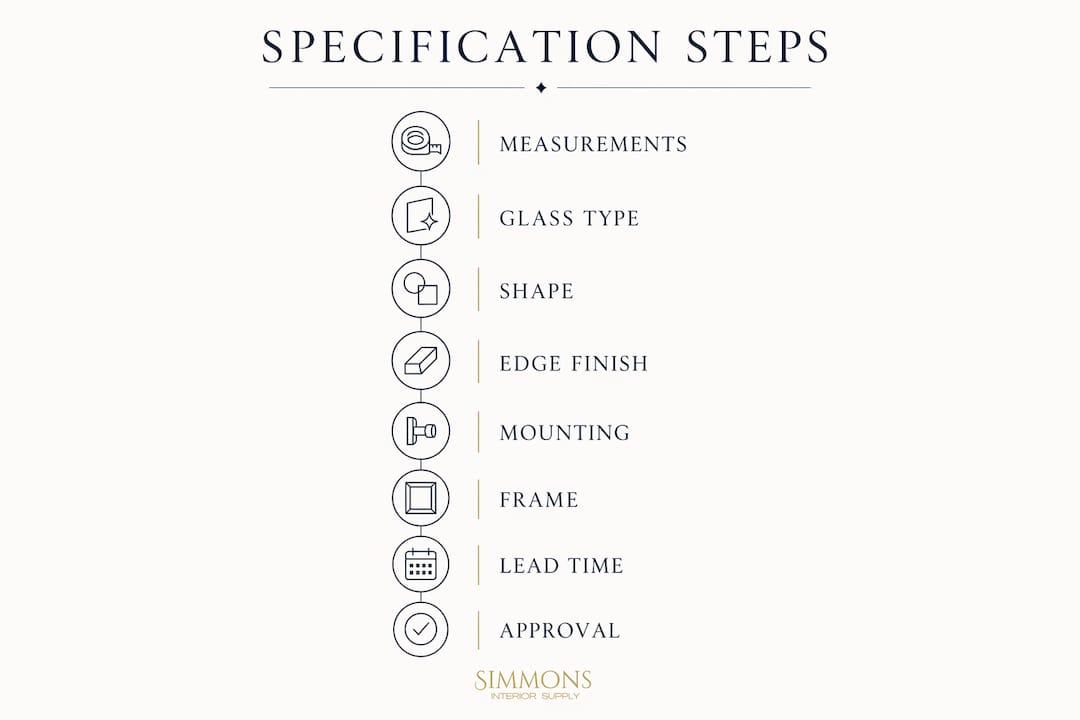
Getting a quote right the first time saves weeks. Eight key specifications are needed before any fabricator can price a bespoke mirror accurately: shape drawing, finished size, glass thickness, edge finish, frame material, mounting method, quantity, and packaging requirement.
Size ranges and glass thickness
Standard UK custom mirror sizes run from 100mm to 2,000mm in width and height for rectangular profiles, and from 130mm to 1,500mm in diameter for round forms. For glass thickness, the industry standard breaks down cleanly: 3mm suits small mirrors or adhesive-mount applications; 4mm is the universal choice for most framed or bevelled mirrors; 5mm or above is recommended for large, heavy pieces where structural integrity matters. Dimension tolerances are typically held to +/- 1mm, which is critical when a mirror must integrate precisely into millwork or a bespoke furniture surround.
Edge finish and frame material options
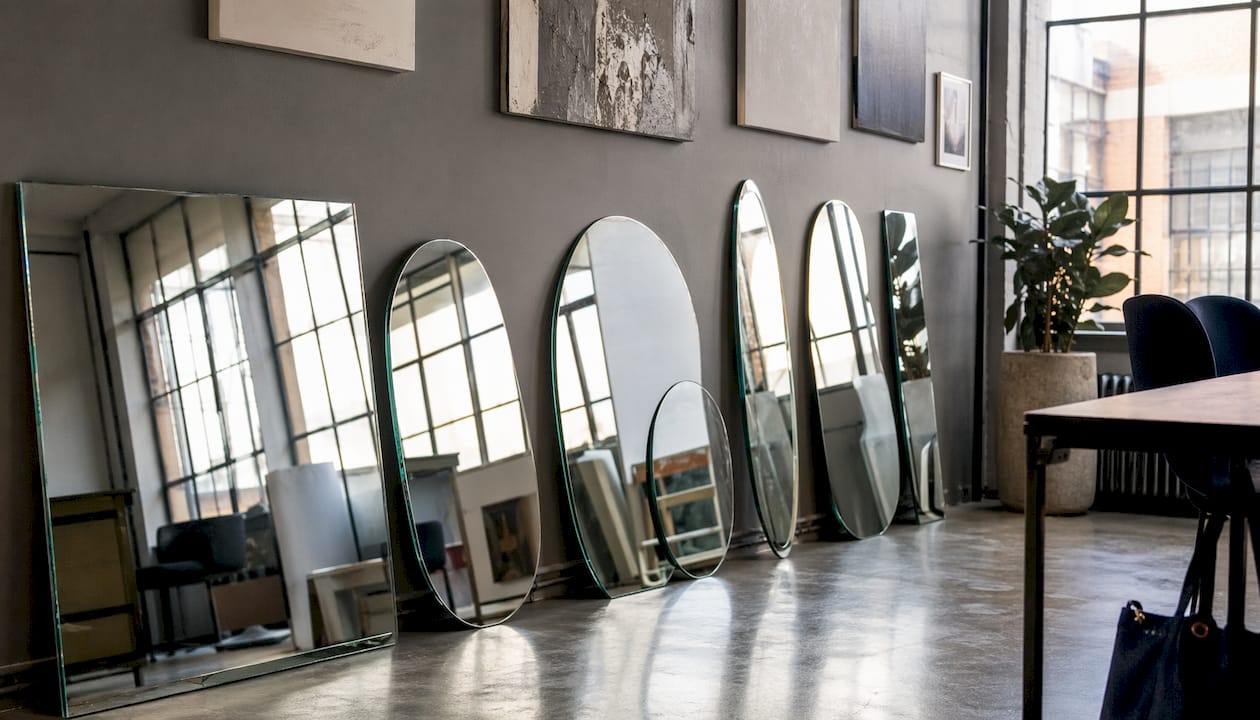
Edge finish choices typically include cut, ground, and polished options, each producing a different tactile and visual result at the perimeter. Polished edges read as refined and deliberate; ground edges offer a softer, safer profile suited to accessible spaces. For framed mirrors, material options span aluminium alloy, iron, stainless steel, MDF, and PS frame structures, with frameless construction remaining the preferred choice for contemporary and minimalist schemes. Frame colour and finish should always be confirmed against a physical sample before production, particularly for retail programmes or private-label collections.
Mounting methods and lead times
Wall mounting hardware, adhesive systems, and leaning configurations each place different structural demands on the glass and backing. Large or heavy mirrors almost always require mechanical fixings rather than adhesive alone, and the mounting method should be confirmed at the specification stage rather than resolved on site. For irregular shape mirrors, CNC cutting paths, curve consistency, and packing structure all affect both production feasibility and transportation safety, so these details belong in the brief from the outset.
Lead times vary with complexity. Regular samples typically take 7–15 days; custom shapes with special frames or LED functions can extend to 15–25 days for sampling, with mass production following at 25–40 days after approval.
Cost factors include glass type, thickness, shape complexity, edge processing, frame specification, and packaging. Irregular profiles cost more to cut and pack than rectangular ones, and Optiwhite glass carries a premium over standard float.
Quality standards and maintenance
A formal sample approval process verifying shape accuracy, finished size, edge finish, reflection clarity, frame fitting, and packing layout is the mark of a fabricator operating to professional standards. For LED-integrated mirrors, lighting position, touch switch function, and anti-fog performance should also be tested at sample stage. Once installed, mirrors are best maintained by wiping with a soft cloth and a mild, non-abrasive cleaner, keeping moisture and harsh chemicals away from the edges and backing to prevent silvering deterioration.
Pro Tip: For any irregular or organic silhouette, submit a scaled drawing or a digital file in DXF or AI format rather than a verbal description. Verbal descriptions are insufficient for curve consistency and increase the risk of production errors.
Simmonsinteriorsupply: bespoke mirrors and furniture for trade professionals
Where most suppliers offer a catalogue and a lead time, Simmonsinteriorsupply offers something rarer: a genuinely collaborative commission process, built around your project rather than around stock constraints.
Every mirror and furniture piece is handcrafted from scratch in collaboration with skilled artisans, with sizes, finishes, and materials specified to your exact requirements. For interior designers and architects working on luxury residential or hospitality projects across the City of London, that means no compromise between what the design calls for and what the supplier can actually deliver. The trade-only collection covers made-to-order mirrors alongside bespoke rugs and furniture, all accessible through a dedicated trade account. Browse the project gallery to see the range of shapes, finishes, and scales already delivered for discerning clients, then get in touch to discuss your next commission.
Key takeaways
Fitted Mirrors and Glass Ltd is the primary verified local specialist for custom mirror shapes in the City of London, while Simmonsinteriorsupply offers a fully bespoke handcrafted alternative for trade professionals seeking made-to-order luxury mirrors and furniture.
| Point | Details |
|---|---|
| Eight specs needed | Shape drawing, finished size, glass thickness, edge finish, frame material, mounting method, quantity, and packaging are required for any accurate quote. |
| Standard UK size ranges | Rectangular mirrors run 100–2,000mm; round mirrors run 130–1,500mm in diameter. |
| Glass thickness matters | 3mm for small or adhesive-mount mirrors; 4mm is the universal standard; 5mm or above is recommended for large, heavy mirrors. |
| Submit digital files for irregular shapes | DXF or AI files reduce production errors and protect curve consistency for complex silhouettes. |
| Simmonsinteriorsupply for bespoke commissions | Handcrafted made-to-order mirrors and furniture for trade professionals, with sizes and finishes specified to project requirements. |