
A rug size guide is the single most useful tool for making any room feel cohesive, well-proportioned, and deliberately designed. The right rug does not merely decorate a floor. It anchors furniture and defines zones, giving each area of a room a clear sense of purpose and scale. Size is more critical than colour or material in determining a rug's impact on a space. Get the dimensions wrong, and even the most beautiful weave will make a room feel disjointed. Get them right, and the entire interior clicks into place.
How to choose the right rug size for your living room
The living room is where most homeowners make their first and most consequential rug sizing error. The most common mistake is selecting a rug that is too small, which creates a floating island effect and makes the room appear undersized. That single error is responsible for more awkward living rooms than any other design decision.
Two furniture placement rules govern living room rug sizing. The first is the "front legs on" arrangement, where only the front legs of the sofa and chairs rest on the rug. This is the minimum acceptable standard and works well in smaller rooms. The second is the "all legs on" arrangement, which places every piece of furniture fully on the rug and creates a more formal, defined seating zone. Both approaches work, but all legs on the rug offers the more polished result.
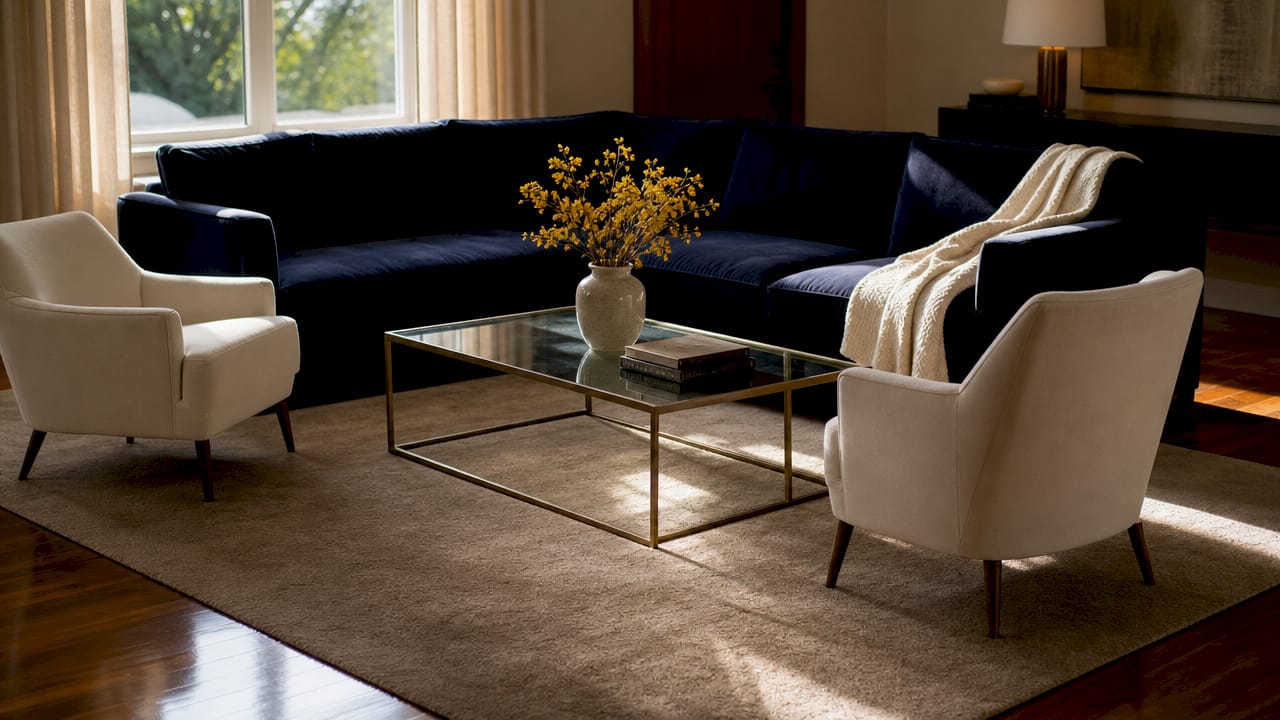
Proportion between the rug and sofa matters enormously. The rug should be at least 6–8 inches wider than the sofa on both sides. A rug narrower than the sofa creates a visually pinched seating area that feels cramped rather than considered.
The floor border is equally telling. Leave 12–18 inches of bare floor between the rug edge and the walls. Too little and the room resembles wall-to-wall carpet. Too much and the rug appears to float without purpose.
Here is a quick reference by room size:
- Small living room (up to 3m x 3.5m): a 160cm x 230cm rug typically works well
- Medium living room (up to 4m x 5m): a 200cm x 290cm rug anchors the seating area comfortably
- Large living room (above 5m x 6m): a 270cm x 360cm rug or larger is needed to fill the space with authority
Pro Tip: Use painter's tape on the floor to outline rug dimensions before you buy. Walk around it, sit in your furniture, and check it from the doorway. This single step prevents the most costly sizing mistakes.
What is the ideal rug size for bedrooms?
Bedroom rug sizing follows a clear and elegant logic. When a bed sits centred on a rug, 18–24 inches (45–60cm) of rug should be visible on each exposed side. That strip of rug provides a warm landing for bare feet each morning and creates the visual balance that makes a bedroom feel considered rather than accidental.
The most common bedroom error mirrors the living room problem: the rug is too small. A rug that barely peeks out from beneath the bed looks like an afterthought. If the rug is not clearly visible from the doorway, it is almost certainly too small for the room's proportions.
Recommended rug sizes by bed type:
- Single or twin bed: a 120cm x 180cm rug placed at the foot of the bed, or a 160cm x 230cm rug centred beneath it
- Double or queen bed: a 200cm x 290cm rug centred under the bed with nightstands sitting just off the rug edge
- King bed: a 240cm x 340cm rug or larger, allowing the full 45–60cm of visible rug on both sides and at the foot
Placement alternatives also deserve consideration. Two runners placed on either side of the bed work beautifully in narrow rooms where a large centred rug would overwhelm the space. A single runner at the foot of the bed suits a minimalist aesthetic and keeps the floor warm without dominating the room. Whichever approach you choose, nightstands should ideally sit just at the rug's edge rather than fully on or fully off it, which creates a natural visual frame.
How to select the correct dining rug size
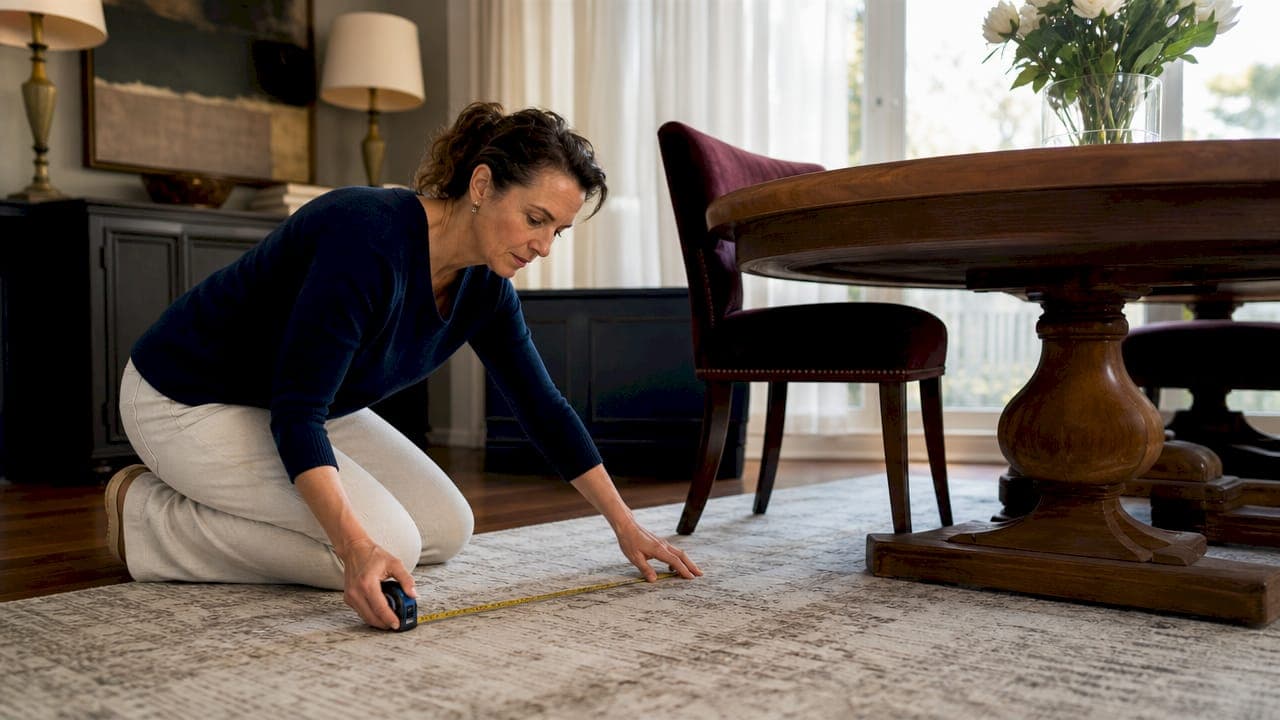
Dining room rug sizing has one non-negotiable rule, and it is precise. The rug must extend at least 24 inches beyond the table edge on all sides. This is not a stylistic preference. It is a functional requirement. When a chair is pulled out for someone to sit down, all four legs must remain on the rug. A rug that falls short of this causes chair legs to catch on the edge, which is both irritating and damaging to the rug over time.
Follow these steps to select the right dining rug:
- Measure your table. Record the full length and width, including any leaves if you use them regularly.
- Add 60cm (24 inches) to each dimension. This gives you the minimum rug size. A 90cm x 180cm table requires at least a 150cm x 240cm rug.
- Account for chair depth. Dining chairs typically extend 45–50cm when pulled out. Confirm the rug covers this distance on all sides.
- Choose a shape that mirrors the table. Rectangular tables pair with rectangular rugs. Round tables suit round or square rugs. Matching shapes creates visual harmony.
- Check the floor border. Leave at least 45cm of bare floor between the rug edge and the walls to prevent the room from feeling enclosed.
Undersizing a dining rug is the most frequent error in this room. The result is a rug that looks as though it wandered in from a smaller space, and the practical frustration of scraping chair legs across the border with every meal.
Rug sizing for hallways, kitchens, and home offices
These spaces are often overlooked in rug planning, yet they reward careful sizing just as richly as living rooms and bedrooms.
Hallways and entryways call for runners, typically 60–90cm wide and long enough to cover the majority of the corridor without ending abruptly. The runner should stop at least 15cm short of any door swing to avoid the rug catching as the door opens. In a City of London flat where entrance halls tend to be narrow and elongated, a well-chosen runner sets the tone for the entire home the moment you step inside.
Kitchens benefit from anti-fatigue runners placed in front of the sink and hob, typically 60cm wide and 90–150cm long. The rug should not extend beneath appliance doors or obstruct the fridge swing. Two shorter runners often work better than one long piece in a galley kitchen.
Home offices require a rug large enough to sit beneath the desk and allow the chair to roll freely without catching on the edge. A 160cm x 230cm rug suits most desk setups. The chair should remain fully on the rug even when pushed back to its furthest position.
Key principles for these spaces:
- Measure door swings before ordering any rug for an entryway or kitchen
- Choose low pile heights in high-traffic corridors to avoid trip hazards
- In home offices, test chair movement on the rug before committing to a size
- Runners look most intentional when they leave equal margins of bare floor on both sides
How to measure and plan before you buy
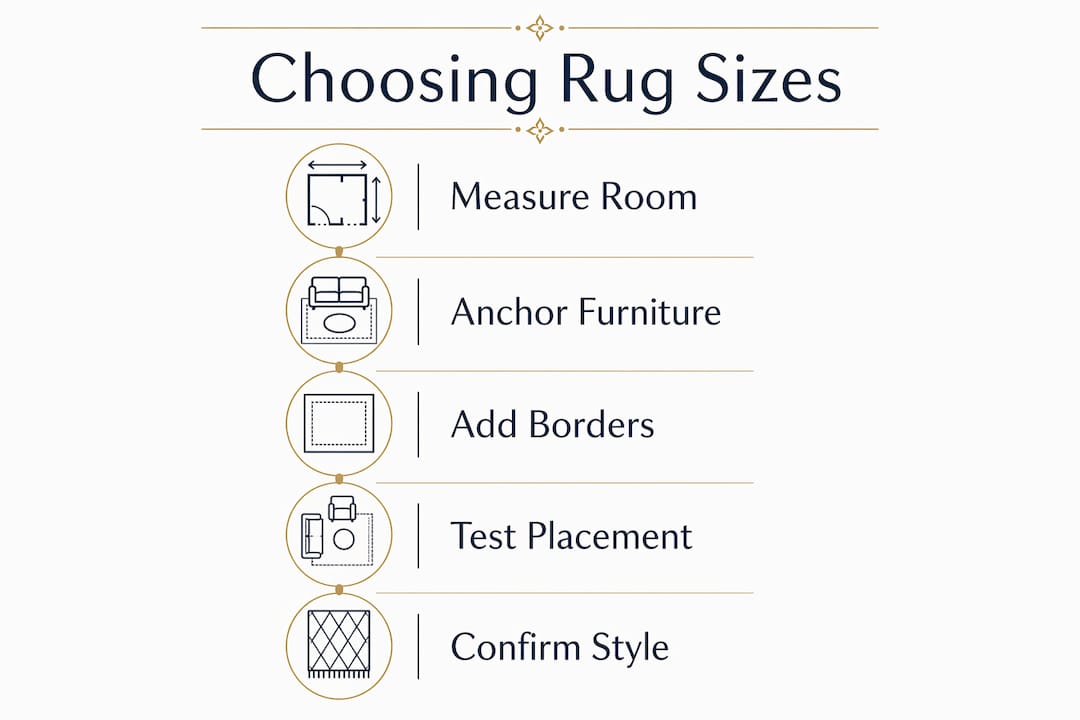
Measuring correctly before purchase is the step that separates a well-designed room from an expensive mistake. The process is straightforward when you follow it in order.
- Clear the room mentally. Sketch a rough floor plan noting the positions of all furniture, doors, and windows.
- Measure the furniture grouping, not just the floor. For a living room, measure the full seating arrangement. For a bedroom, measure the bed plus nightstands. The rug must relate to the furniture, not just the room dimensions.
- Mark the rug outline with painter's tape. Tape the exact dimensions on the floor and live with it for a day. Sit in your usual spots, walk the natural paths through the room, and open every door.
- Check door clearance. Any door that swings over the rug area needs at least 1cm of clearance above the pile height. Thick rugs can prevent doors from opening fully.
- Assess from the doorway. Stand at the main entrance to the room and look in. A correctly sized rug reads clearly from this vantage point. If you struggle to see it, it is too small.
- When uncertain, choose the larger size. Choosing the larger rug is universally better than undersizing. A generous rug makes a room feel grounded and complete.
Common errors to avoid: ignoring the 12–18 inch floor border, choosing a rug based on pattern alone, and failing to account for furniture that will be added later.
Pro Tip: Stand at the doorway after taping out your rug dimensions. This is the perspective every guest sees first, and it is the truest test of whether your chosen size commands the room with the confidence it deserves.
Key takeaways
Rug size is the single most impactful decision in a room's layout, and sizing correctly requires measuring furniture groupings, not just floor area.
| Point | Details |
|---|---|
| Anchor furniture first | The rug must relate to the furniture arrangement, not just the room's overall dimensions. |
| Apply the 24-inch dining rule | Extend the dining rug at least 24 inches beyond the table on all sides so chairs stay on the rug. |
| Use the 18–24 inch bedroom border | Visible rug on each exposed side of the bed creates comfort and visual balance. |
| Leave a floor border | Maintain 12–18 inches of bare floor between the rug edge and walls in living spaces. |
| When in doubt, go bigger | Undersized rugs create a floating island effect; a larger rug always reads better in a room. |
Why I think most people choose rugs in the wrong order
After years spent working with homeowners and interior designers across London, I have noticed a consistent pattern. People fall in love with a rug's colour or weave, buy it, and then try to make the size work. That is the wrong order entirely, and it explains why so many beautiful rugs end up looking lost in a room.
Size should be the first decision, not the last. Once you know the exact dimensions that will anchor your furniture and respect your floor borders, you can shop with genuine confidence. The pattern, pile, and colour become choices made within a defined frame rather than variables you are hoping will somehow resolve themselves.
The Simmonsinteriorsupply gallery illustrates this principle clearly. Every room shown demonstrates how a correctly proportioned rug transforms a furniture arrangement into a composed interior. The rug is never incidental. It is the foundation on which the room is built.
My honest advice: tape out your dimensions before you look at a single rug. You will shop faster, decide more confidently, and live more happily with the result. Choosing a rug is both art and measurement, and the measurement must come first.
— Luke
Simmonsinteriorsupply: bespoke rugs sized for your space
At Simmonsinteriorsupply, we understand that no two rooms are identical, and no two clients have the same vision. Our collection spans a wide range of sizes, materials, and finishes, each crafted with the care and artistry that only bespoke production allows.

Whether you are furnishing a Georgian townhouse in the City of London or a contemporary flat with open-plan living, our team is always happy to help you apply the sizing principles covered here to your specific space. Browse the full Simmonsinteriorsupply collection to find rugs that are as precisely considered as the rooms they will inhabit. Every piece can be tailored to the exact dimensions your space demands.
FAQ
What is the most common rug sizing mistake?
The most common error is choosing a rug that is too small, which creates a floating island effect and makes the room feel undersized. When uncertain, always select the larger available size.
How do I know if a rug is the right size for my living room?
The rug should be at least 6–8 inches wider than the sofa on both sides, with 12–18 inches of bare floor visible between the rug edge and the walls.
What size rug do I need for a dining table?
Add at least 24 inches (60cm) to each dimension of your table. This ensures chair legs remain on the rug when pulled out, which is the functional minimum for a dining rug.
How much rug should show around a bed?
When the bed is centred on the rug, 18–24 inches of rug should be visible on each exposed side. This provides a comfortable landing area and creates visual balance.
How can I test a rug size before buying?
Use painter's tape to mark the exact rug dimensions on your floor. Live with the outline for a day, check door clearance, and assess the proportions from the doorway before committing to a purchase.