
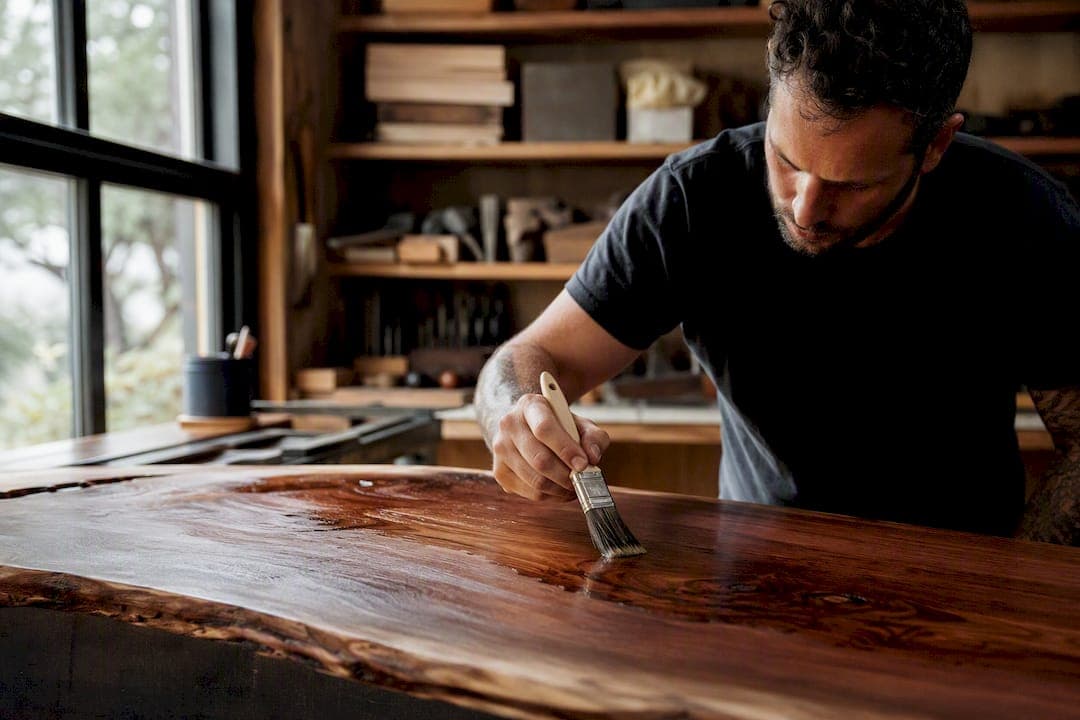
For outdoor exposed timber, a spar or marine varnish (or an exterior rated polyurethane) gives you the best combination of flexibility and UV resistance. For indoor surfaces that face constant spills, such as tabletops and wet bars, an oil-modified polyurethane or a cured epoxy resin performs best. For furniture where you want a natural, hand-rubbed character with modest upkeep, a penetrating oil or a wiped-on polyurethane suits the job.
Each answer solves a different problem. Spar varnish flexes with timber as it swells and shrinks outdoors, which rigid coatings cannot do. Oil-modified polyurethane forms a thick, cured film that shrugs off a dropped glass of red wine. Penetrating oils never crack or peel, because there is no film to crack.
- Outdoor exposed timber: spar/marine varnish or an exterior polyurethane
- Indoor wet-contact surfaces: oil-modified polyurethane or epoxy
- Low-maintenance, natural look: penetrating oils or a wiped-on polyurethane
Key Takeaways
Matching the finish to the exposure, not the other way round, is what determines whether a water resistant wood finish actually lasts.
| Point | Details |
|---|---|
| Match finish to exposure | Film-forming finishes suit constant wetting; penetrating oils suit low-contact, repairable furniture. |
| Dry wood is essential outdoors | Keep exterior timber at or below 15% moisture content before applying any coating. |
| Wiping varnish gives both | Thinning varnish significantly delivers a hand-rubbed look without losing water resistance. |
| Cure time outlasts touch-dry time | Wait for full cure, not surface dryness, before exposing a finish to water. |
| Grain and species change absorption | End grain and open-pored woods need extra coats regardless of the finish chosen. |
Table of Contents
- What does water resistant actually mean for a wood finish?
- Which water resistant wood finish suits your project?
- How do you choose the right finish for your build?
- How do you apply a finish to actually get water resistance?
- How long does a water resistant finish last, and how do you fix it?
- What safety and food-contact rules should you follow?
- Does the wood species change how water resistant the finish is?
- What mistakes cause DIY finishing to fail?
- Where to read more on wood finishing
- Frequently asked questions
- Sources
What does water resistant actually mean for a wood finish?
Water-resistant means a finish slows moisture penetration; waterproof means it stops it almost entirely, at least for a defined period. That distinction decides whether your project survives its first winter or its first dinner party.
Condensation from a cold drink, a splashed sink, or driving rain each demand different defences. A coaster ring on a coffee table is a water-resistance problem. A deck exposed to weeks of rain is closer to a waterproofing problem, and few finishes handle it without regular attention. Most coatings, including varnish and oil-modified polyurethane, slow water rather than block it outright. Only thick barrier systems such as epoxy resin and marine-grade coatings come close to genuine waterproofing, and even those need re-coating at seams and edges over time.
- Spills and condensation: most film finishes cope well
- Standing water or driving rain: only epoxy or marine systems hold up long term
- High humidity without direct wetting: penetrating oils are usually fine
Pro Tip: Choose a repairable, penetrating finish for furniture you will refinish over the years, and a film-forming finish for anything that sits in a wet bar, on a deck, or under a plant pot. Trying to make an oil finish do a varnish's job is the most common cause of disappointment.
Which water resistant wood finish suits your project?
Five finish families cover almost every DIY scenario, from a garden bench to a river table.
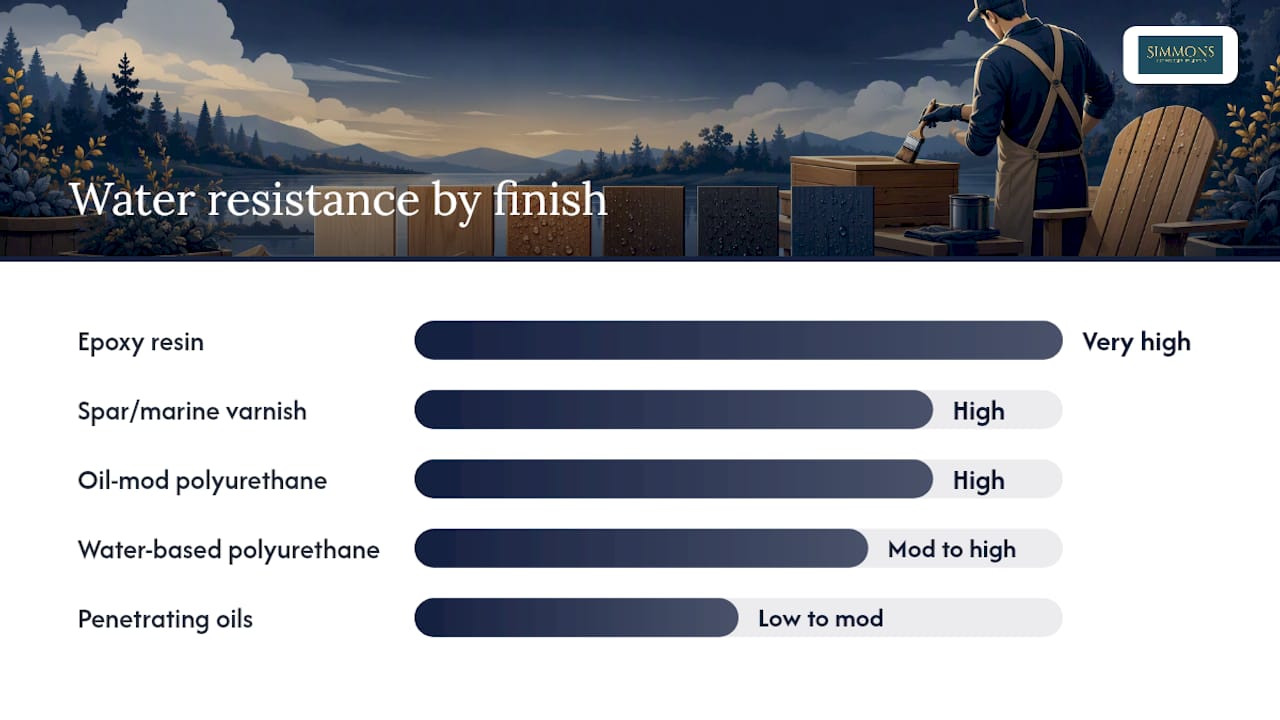
Epoxy resin forms the thickest, most waterproof barrier of any finish here, which is why it dominates river tables and bar tops. It resists standing water almost indefinitely once cured, but it is unforgiving to apply, prone to bubbles if rushed, and near impossible to touch up invisibly.
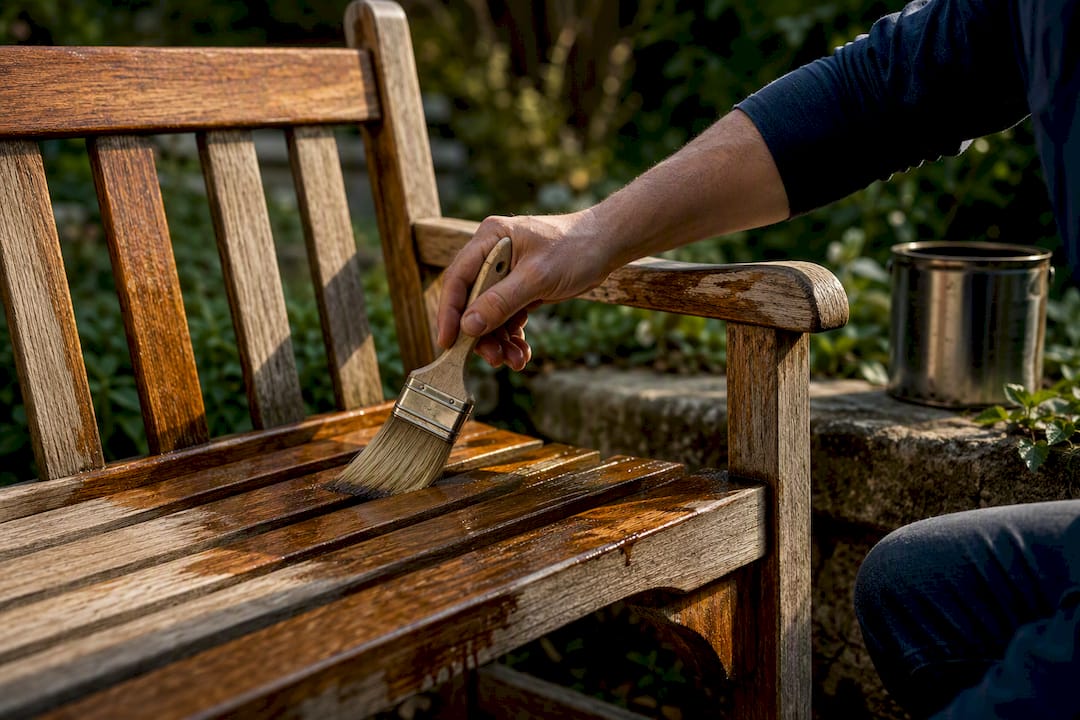
Spar (marine) varnish was developed for boat decks and handles UV and outdoor flexing better than any other clear finish. Oil-based varnish forms a hard film as its thinners flash off, giving strong water resistance, though it ambers over time and needs annual attention outdoors.
Oil-modified polyurethane is the workhorse for kitchen tables, bar tops, and heavy-use furniture. Trade guidance frequently recommends it for clients who want the warmth of a hand-rubbed oil look but need real resistance to spills, since oil alone cannot match its durability.
Water-based polyurethane dries fast, stays clear rather than ambering, and carries far lower VOCs, making it the better choice for finishing indoors with limited airflow.
Penetrating oils (tung, linseed, and proprietary blends) soak into the grain rather than sitting on top. They look and feel wonderful, and a scratch simply gets oiled again rather than sanded through a film. They offer the least water resistance of the five and need reapplication every few months on high-use surfaces.
| Finish | Best for | Water resistance | Durability | Ease of application | Appearance | Maintenance | Food-safe | Outdoor/UV |
|---|---|---|---|---|---|---|---|---|
| Epoxy resin | Tabletops, river tables | Very high | Very high | Difficult | High-gloss, glass-like | Rare recoating | Yes, once cured | Poor without UV additive |
| Spar/marine varnish | Outdoor furniture, boats | High | High | Moderate | Glossy, ambers with age | Annual | No | Excellent |
| Oil-modified polyurethane | Kitchen tables, wet bars | High | High | Moderate | Warm, hand-rubbed look | Every few years | Yes, once cured | Fair |
| Water-based polyurethane | Indoor furniture, low-VOC needs | Moderate to high | Moderate to high | Easy | Clear, low amber | Every few years | Yes, once cured | Fair with UV inhibitors |
| Penetrating oils | Decorative furniture, low-maintenance look | Low to moderate | Low | Very easy | Natural, matte to satin | Every few months | Yes, food-grade oils | Poor |
How do you choose the right finish for your build?
Answer a handful of questions before you buy a tin, because the wrong choice usually shows up months later, not on day one.
- Will the piece live indoors, outdoors, or somewhere in between (a covered porch)?
- How wet does the surface actually get: occasional condensation, or standing water?
- Do you want a natural, hand-rubbed look, or is a glossy film acceptable?
- Will food or cutlery touch the surface directly?
- How much annual maintenance are you genuinely willing to do?
Once you have those answers, work through this sequence:
- Rank the exposure level, from occasional spills to constant outdoor wetting.
- Pick the finish category that matches that exposure, using the comparison above.
- Confirm food-safety requirements if the piece is a worktop, board, or dining table.
- Test the finish on an offcut of the same timber before committing to the whole piece.
- Check the cure time on the tin and plan around it, not around your schedule.
Epoxy and marine varnish cost more upfront and demand more skill, but they buy you years between maintenance sessions. Penetrating oils cost less and go on in minutes, at the price of touching the piece up every season.
How do you apply a finish to actually get water resistance?
Preparation decides more of the outcome than the product you choose. Wood destined for outdoor use should sit at or below 15% moisture content before you open the tin, and manufacturer guidance for exterior finishes typically specifies this threshold alongside a temperature window, often somewhere between 4.5°C and 32°C.
- Sand through progressively finer grits, finishing around 180 to 220 grit, and remove all dust before coating.
- Seal porous end grain first; it drinks far more finish than face grain and is where rot usually starts.
- Apply thin, even coats rather than one thick one. Two to three coats is typical for polyurethane; some exterior water-based products specifically recommend three coats with light sanding between each.
- Respect the humidity and temperature range on the tin. Cold, damp conditions cause blushing; hot conditions cause the finish to skin over before it levels, trapping bubbles.
- Let the final coat cure fully before the piece meets water. Cured is not the same as dry to the touch, and a film that feels hard after a day can still be soft underneath for a week or more.
You get the hand-rubbed appearance clients love, with the water resistance of a full-strength varnish, because the resin content stays the same; only the working properties change.*
How long does a water resistant finish last, and how do you fix it?
Indoor film finishes on furniture can last a decade or more with light care; outdoor finishes rarely match that, because UV breaks down resins that never see direct sun indoors. A deck finish might need attention within a couple of seasons, while a vertical fence panel tends to hold up longer than a horizontal deck board simply because it sheds water and sun exposure differently.
- Wipe spills promptly and use coasters on any oil or thin-film finish
- Check outdoor pieces each spring for cracking, greying, or lifting finish
- Recoat oiled furniture every few months if it sees daily use
Manufacturer data for exterior wood coatings gives a useful benchmark: expect up to around four years on a horizontal deck and up to six years on a vertical surface before a full recoat, depending on exposure and product.
Repairing minor damage rarely means starting over. Clean the area, feather-sand the edges of the damage so there is no visible ridge, and apply one or two thin coats blending into the surrounding finish. Full stripping is only necessary once the finish has failed across most of the surface, not just at one worn corner.
What safety and food-contact rules should you follow?
Ventilate the room, wear gloves and a respirator suited to solvents, and never store oil-soaked rags in a sealed bin, since they can combust spontaneously as they cure. Solvent-borne finishes release VOCs that affect indoor air quality, so choose water-based products where ventilation is limited.
- Fully cured epoxy, cured polyurethane, and food-grade oils are widely regarded as food-safe once fully cured
- Check manufacturer certification for anything touching food directly, such as chopping boards
- Allow the full stated cure time before food contact, not just the touch-dry time
Does the wood species change how water resistant the finish is?
Open-grained hardwoods such as oak and ash have large pores that soak up finish quickly, which can mean better mechanical adhesion but also more visible grain telegraphing through a glossy film. Tight-grained species like maple or cherry take polyurethane and varnish more evenly, with fewer pinholes and a smoother sheen.
Softwoods such as pine and cedar behave differently again. Cedar contains natural oils that resist rot on their own, which is part of why it needs less aggressive finishing outdoors, while pine is soft and prone to dents that expose bare wood to moisture the moment the finish is breached. Species selection genuinely changes how a finish performs, not just how it looks, and it's worth reading a wood species selection guide before committing to a finishing plan.
End grain, wherever it appears, absorbs far more moisture than face or edge grain, regardless of species. A tabletop with exposed breadboard ends or a deck board's cut edge needs extra coats precisely there, because that is where water finds its way in first. Density matters too: denser woods like teak or ipe resist moisture uptake on their own, which is exactly why they're prized for outdoor furniture with minimal finishing at all.
What mistakes cause DIY finishing to fail?
Recoating too soon is the single most common error. A finish that feels dry after a few hours can still be curing underneath for days, and trapping that softness under a second coat leads to a soft, tacky film that never fully hardens.
Skipping the moisture check on outdoor timber is a close second. Finish applied to damp wood traps that moisture in, and the coating blisters or peels within a season, no matter how good the product is. Applying in cold or humid conditions outside the manufacturer's stated window causes blushing (a milky haze) or fisheyes where the finish refuses to level.
Over-thinning oil finishes without extending drying time between coats leaves a soft, gummy surface that never builds real protection. And brushing varnish too aggressively introduces bubbles that get trapped as the surface skins over, leaving a pitted finish that looks worse cured than it did wet. Test on an offcut first, respect the stated recoat window, and resist the urge to add a fourth coat when three were specified.
A furniture-maker's take on finish trade-offs
For daily-use tabletops, oil-modified polyurethane earns its keep against wine and water rings. Spar varnish suits exposed outdoor seating, and epoxy stays reserved for genuine river or bar-top builds. Simmons Interior Supply applies the same logic: pairing beauty with genuine functionality.
If you want that same trade-off built into a piece from the outset, Simmonsinteriorsupply works with skilled artisans to specify the right finish for how a piece will actually be used, not just how it will look on delivery day. Marine-grade projects with heavier UV and saltwater exposure benefit from specialist input too; consultancies such as the Yacht Consulting Group advise on exactly this kind of high-spec marine finishing. Browse the bespoke nest of coffee tables to see how a hand-finished surface holds up to daily use, or get in touch through Simmons Interior Supply to discuss a finish specified for your project from the start.
Where to read more on wood finishing
For deeper technical detail, the sources behind this guide are worth bookmarking directly.
- Behr's exterior finish specs: moisture limits, temperature windows, lifespan estimates
- Wood Magazine's finishing guide: varnish versus polyurethane performance
- Woodweb's hand-rubbed finish notes: oil versus film-finish trade-offs
- EPA's VOC guidance: indoor ventilation and product selection
Frequently asked questions
Is polyurethane more water resistant than varnish? Both form similar hard films once cured. Spar varnish tends to flex better outdoors and resists UV more effectively, while oil-modified polyurethane is usually tougher against abrasion indoors.
Can you make a wood finish completely waterproof? Not in any lasting sense for most furniture. Epoxy resin comes closest to a true water barrier, but even that needs re-coating at edges and seams over time.
What is the best water resistant wood finish for a kitchen table? Oil-modified polyurethane, because it withstands spills, hot mugs, and daily wiping far better than an oil-only finish while keeping a warm, hand-rubbed appearance.
Do water-based finishes protect wood as well as oil-based ones? They offer moderate to high resistance and dry faster with far lower VOCs, though oil-based varnish and polyurethane generally edge ahead on raw durability and outdoor longevity.
How often should I reapply oil to a wooden table? Every few months for daily-use pieces, or sooner if you notice the surface drying out or losing its sheen after cleaning.
Sources
- Behr Premium transparent waterproofing wood finish – product information
- Water-resistant finishes that actually work — Wood Magazine
- Hand rubbed finishes for furniture — Woodweb knowledge base
- What are volatile organic compounds (VOCs)? — EPA
- ZAR® exterior water base poly high performance – product page