
Bouclé can absolutely be cleaned and kept looking beautiful — the key is acting gently, acting quickly, and always checking the care label before you reach for any product. The moment a spill lands, blot it with a clean, dry cloth (press and lift; never wipe). Then pause and read the care tag sewn into your piece. That small label carries a cleaning code: W (water-based cleaners safe), S (solvent only), WS (either, with care), or X (vacuum only, no liquids). Everything else follows from that code. The Martindale rub count stamped on a fabric specification sheet tells you how much abrasion the weave can withstand before it begins to show wear — a figure that shapes both your daily habits and your choice of cleaner.
Immediate do's:
- Blot spills at once with a dry microfibre cloth, pressing straight down
- Check the care tag before applying any liquid or product
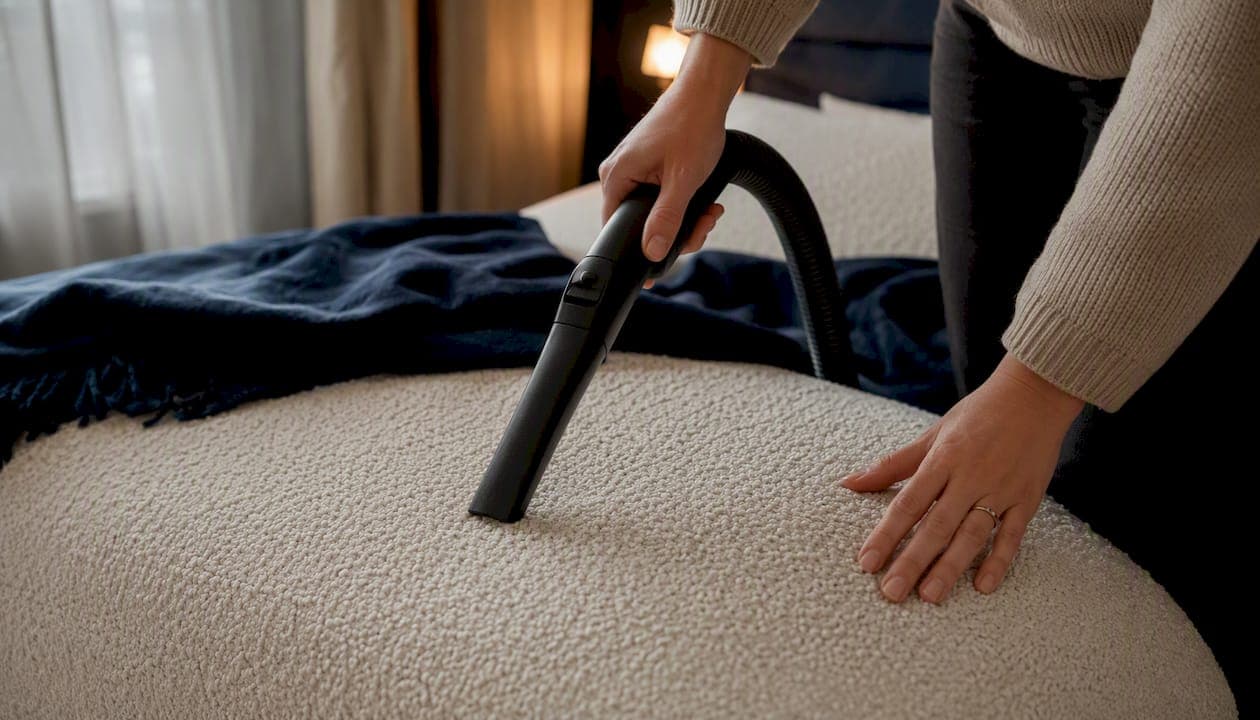
- Set your vacuum to its lowest suction setting before touching the fabric
- Test any cleaner on a hidden seam or underside panel first
Immediate don'ts:
- Never rub a spill sideways — it mats the loops and spreads the stain
- Never apply heat (hairdryer, steam iron) to speed drying
- Never assume water is safe without checking the code
Pro Tip: Before you buy or commission a bouclé piece, photograph the care label and save it to your phone. When a spill happens at 11 pm, you will not be hunting for a label tucked under a sofa cushion.
Key takeaways
Proper bouclé fabric care comes down to three habits: act immediately when spills occur, always check the cleaning code before applying any product, and maintain the surface gently and consistently to prevent problems from developing.
| Point | Details |
|---|---|
| Check the care code first | W, S, WS, or X determines which cleaners are safe — never skip this step. |
| Blot, never rub | Press and lift with a dry microfibre cloth; rubbing crushes loops and spreads stains permanently. |
| Martindale rub count matters | Specify a sufficiently high rub count suited for everyday residential or heavier domestic use, depending on expected wear. |
| Call a professional early | Set-in stains, S/X-coded fabrics, and widespread soiling are beyond safe home treatment. |
| Simmonsinteriorsupply bespoke commissions | Trade clients can specify bouclé by rub count and loop tightness for pieces built to last. |
Table of Contents
- What is bouclé and why does its texture change how you clean it?
- How should you care for bouclé day to day?
- How do you spot-clean bouclé safely, step by step?
- How do you treat specific stains on bouclé?
- What tools and products are safe for bouclé in the UK?
- Bouclé do's and don'ts: a quick safety checklist
- When should you call a professional cleaner for bouclé?
- Is bouclé durable enough for busy homes?
- Your printable bouclé maintenance checklist
- Why gentle care is the right approach for bespoke upholstery
- Bespoke bouclé upholstery, specified and crafted to last
- Sources
What is bouclé and why does its texture change how you clean it?
Bouclé (from the French bouclé, meaning "looped" or "curled") is a yarn-based textile woven or knitted from looped, curled, or knotted fibres to create its characteristic nubby, cloud-like surface. You will find it on sofas, armchairs, cushions, and headboards — anywhere a designer wants tactile warmth alongside visual softness. The loops themselves are the defining feature, and they are also the source of every cleaning challenge.
Three factors determine how your specific bouclé behaves under cleaning:
- Loop size and tightness: Tighter, smaller loops resist snagging and absorb less liquid; larger, looser loops are more vulnerable to pulling and hold moisture longer.
- Fibre content: Wool-blend bouclés are naturally resilient but can felt if over-wetted; synthetic blends (polyester, acrylic) tend to be more moisture-tolerant but can pill with friction.
- Backing: A woven or bonded backing stabilises the loops and reduces distortion during cleaning; unbacked bouclé is more fragile.
As Classic Modern Fabrics explains, loop structure, fibre content and backing together determine how prone a bouclé is to snagging and how it responds to moisture. Rubbing, heat and aggressive wetting all risk crushing or matting those loops permanently — which is why the cleaning method matters as much as the cleaning product.
How should you care for bouclé day to day?
Consistent, light maintenance is the single most effective thing you can do for bouclé upholstery. Homes and Gardens recommends weekly vacuuming with a soft brush attachment and low suction as the foundation of any bouclé care routine — and it is sound advice. Most of the grit and debris that eventually damages looped fibres never becomes a stain; it simply sits in the weave until friction grinds it in. A gentle weekly vacuum removes it before that happens.
Weekly tasks:
- Vacuum on the lowest suction setting using a soft-brush head (never a rotating beater bar, which catches and pulls loops)
- Use a lint roller for surface fluff, pet hair and fine debris between vacuums
- Inspect seams and armrests for any pulled loops or early pilling
Monthly tasks:
- Brush the surface lightly with a soft natural-bristle brush to lift flattened loops and even out wear
- Rotate and flip removable cushions to distribute compression evenly
- Check high-wear zones (seat fronts, armrests) for signs of thinning or distortion
Pro Tip: For pet hair that clings stubbornly to loops, lightly dampen a rubber glove and sweep it across the surface in one direction. The static lifts hair without snagging the weave — far safer than a stiff lint brush.
Stamps Home Furniture notes that bouclé's looped texture traps dirt differently to flat weaves, but weekly vacuuming handles most of that maintenance load. The problems arise when routine care is skipped and debris becomes embedded.
How do you spot-clean bouclé safely, step by step?
The correct sequence for a fresh spill is straightforward, but the order matters enormously. Follow these steps and you will resolve most everyday accidents without damaging the weave.
- Blot immediately. Press a clean, dry microfibre cloth straight down onto the spill and lift. Repeat with a fresh section of cloth. Never wipe sideways.
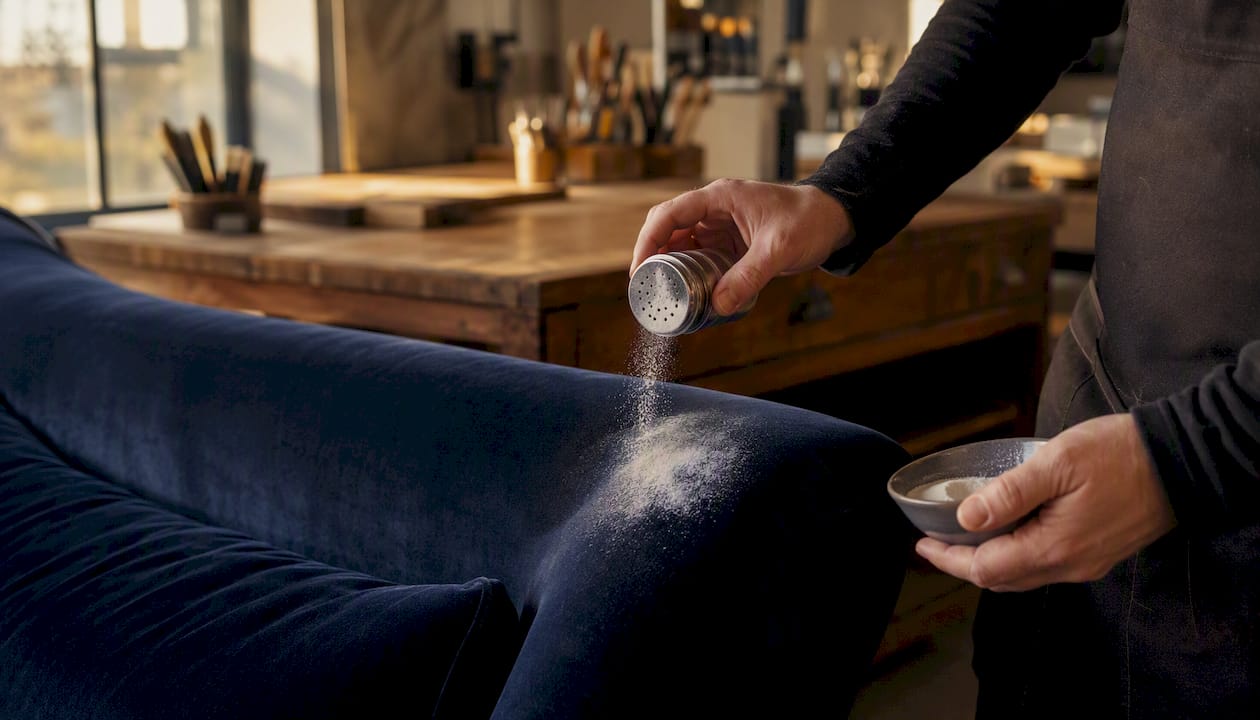
- For oil-based spills, sprinkle a small amount of bicarbonate of soda or a dry absorbent powder over the area. Leave for 10–15 minutes to draw out the grease, then vacuum gently.
- Check the care code. If the tag reads W or WS, a mild soap solution is safe. If it reads S, use a solvent-based upholstery spot cleaner only. If it reads X, stop and call a professional.
- Test your cleaner. Apply a small amount to a hidden seam or the underside of a cushion. Wait five minutes and check for colour change, shrinkage or loop distortion.
- Apply and dab. Using a clean microfibre cloth, dab the solution onto the stain with gentle, straight-down pressure. Work from the outer edge inward to avoid spreading.
- Remove soap residue. Blot with a cloth dampened with plain cold water (W or WS fabrics only) to lift any soap, then blot dry.
- Air dry naturally. Keep the piece away from direct sunlight and radiators. Never use a hairdryer.
For a mild soap solution on W or WS fabrics, mix one teaspoon of pH-neutral upholstery soap with 500 ml of cool water and stir gently to avoid excess foam. As D and G Flooring advises, this blot-test-dab sequence is the recommended home approach for most common spills.
Never rub a bouclé stain. Rubbing crushes the loops, spreads the stain laterally, and can cause permanent matting that no amount of grooming will reverse. Press and lift — always.
Wundaguard warns that many bouclés — particularly those coded S or WS — are vulnerable to watermarks and flattened loops when wetted at home, which is why checking the code before step three is non-negotiable.
How do you treat specific stains on bouclé?
Different stains call for different first moves. Here is a concise guide ranked roughly by the risk of causing permanent damage if handled incorrectly.
Red wine and coloured drinks (moderate risk): Blot immediately to remove as much liquid as possible, then apply a small amount of table salt to absorb the remainder. Once dry, vacuum the salt away. If a mark persists and the code is W or WS, dab with a mild soap solution as described above. A persistent red-wine stain on S-coded fabric warrants a professional call rather than further home attempts.
Oil and grease (moderate-to-high risk): Resist the urge to add water. Apply bicarbonate of soda or a dry absorbent powder, leave it to work for 15–20 minutes, then vacuum. Follow with a solvent-based spot cleaner if the code allows, or an enzyme-based upholstery cleaner for W/WS fabrics. Water applied first will spread an oil stain rather than lift it.
Ink and dye transfer (high risk): These are among the most likely to set permanently. Test a small amount of isopropyl alcohol on a hidden area first; if the fabric tolerates it, dab very lightly with a cotton bud. For S-coded fabrics, low-moisture professional cleaning is the safer route from the outset.
Pet stains and odours (moderate risk, high if left): Blot liquid immediately, then apply an enzyme-based upholstery cleaner, which breaks down the biological compounds responsible for both the stain and the odour. If the smell persists after the surface dries, the liquid has likely reached the cushion padding — at that point, professional cleaning is the only reliable solution.
Pro Tip: Before calling a professional cleaner, photograph the stain clearly and note when it happened and what caused it. That information helps the cleaner choose the right method and reduces the risk of a second attempt making things worse.
What tools and products are safe for bouclé in the UK?
Choosing the right tools is as important as choosing the right technique. The following categories cover everything you are likely to need for home maintenance and spot treatment.
Recommended tools and products:
- Soft-brush vacuum attachment (no rotating beater bar)
- Lint roller or rubber glove for surface debris and pet hair
- Clean white microfibre cloths (white avoids dye transfer onto pale bouclé)
- Soft natural-bristle brush for grooming and loop-lifting
- Dry absorbent powder (bicarbonate of soda, cornstarch, or a proprietary upholstery powder)
- pH-neutral upholstery soap or gentle fabric shampoo
- Enzyme-based upholstery cleaner for organic stains (pet accidents, food) on W or WS fabrics
- Low-moisture solvent-based spot cleaner for S-coded fabrics
- Fabric shaver on its lowest setting for managing pilling (use sparingly and never on pulled loops)
What to avoid:
- Bleach or any chlorine-based product
- Household multi-purpose sprays with high alcohol or solvent content
- Steam cleaners or steam irons applied directly to the fabric
- Stiff scrubbing brushes
- Beater-bar vacuum heads
- Hot water (always use cool or lukewarm)
UK upholstery care suppliers stock pH-neutral fabric shampoos and enzyme cleaners suitable for domestic use; look for products labelled specifically for upholstery rather than general carpet cleaners, which often contain surfactants too aggressive for looped weaves.
Bouclé do's and don'ts: a quick safety checklist
Do:
- Blot spills immediately with a dry cloth, pressing straight down
- Check the care code before applying any product
- Test every cleaner on a hidden area first
- Vacuum weekly on low suction with a soft-brush head
- Rotate cushions monthly to even out wear
- Call a professional for set-in stains, widespread soiling, or any S or X-coded fabric
Don't:
- Rub, scrub, or wipe a stain sideways
- Soak the fabric or apply excessive moisture
- Use heat to dry (no hairdryers, no radiators, no direct sunlight)
- Cut pulled loops — push them back gently with a blunt tool instead
- Apply untested solvent sprays
- Use a beater-bar vacuum head
S and X-coded bouclés are not suitable for home wet cleaning. Applying water to an S-coded fabric can leave permanent watermarks and flatten loops irreversibly. If you are unsure of your fabric's code, treat it as S-coded until you can confirm otherwise.
When should you call a professional cleaner for bouclé?
Some situations are simply beyond safe home treatment, and recognising them early saves the fabric. Call a professional when:
- The stain has been present for more than 24–48 hours and has begun to set
- The soiling is widespread rather than a single spot
- The fabric is coded S or X
- A home spot-cleaning attempt has left a ring or flattened area
- Pet odour persists after surface treatment, suggesting the padding is affected
When you do call a professional, the method they use matters as much as their experience. Wundaguard recommends low-moisture and dry-extraction methods for bouclé, specifically because standard wet shampooing risks watermarks and loop flattening. Ask any prospective cleaner the following before booking:
- Have you cleaned bouclé upholstery before?
- What method will you use, and does it involve high moisture or heat?
- Will you check the fabric's cleaning code before starting?
- What is the expected drying time?
For sofas in regular daily use, a professional clean once a year is a reasonable baseline. Low-traffic accent chairs or guest-room pieces can typically go 12–18 months between professional cleans, provided the weekly maintenance routine is followed.
Is bouclé durable enough for busy homes?
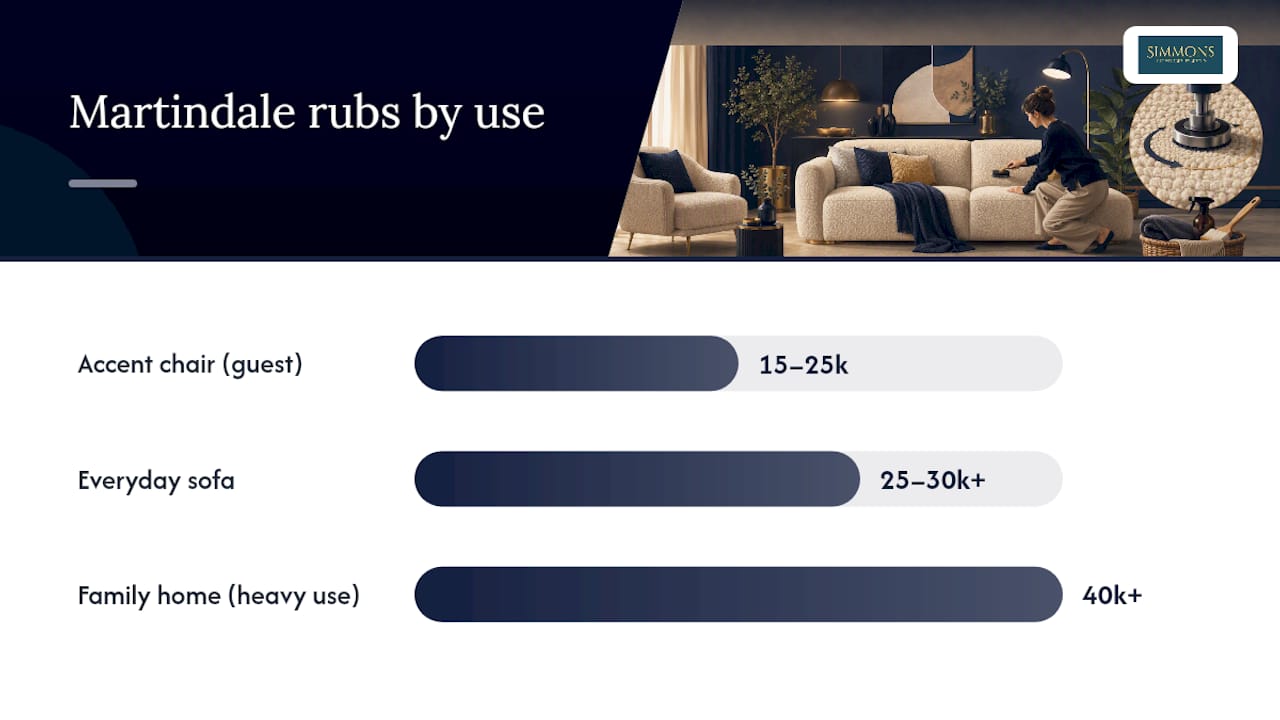
Bouclé sits in an interesting middle ground. It is not as forgiving as a performance fabric or leather, but it is far from fragile when specified and maintained correctly. The Martindale rub count is the standard abrasion measure used by UK upholsterers and interior specifiers: the higher the number, the more friction the fabric withstands before showing wear.
D and G Flooring's guidance sets the practical thresholds clearly: 25,000–30,000+ rubs for everyday residential use, and 40,000+ for heavier domestic use. A tight-loop bouclé at 40,000+ rubs is a genuinely durable choice for a family sitting room; a loose-loop decorative weave at 15,000 rubs belongs on a guest-room chair that sees light use.
| Use context | Recommended Martindale rub count | Suitability |
|---|---|---|
| Accent chair, guest room | 15,000–25,000 | Low-traffic use only |
| Everyday residential sofa | 25,000–30,000+ | Suitable with regular maintenance |
| Family home, heavier daily use | 40,000+ | Recommended minimum |
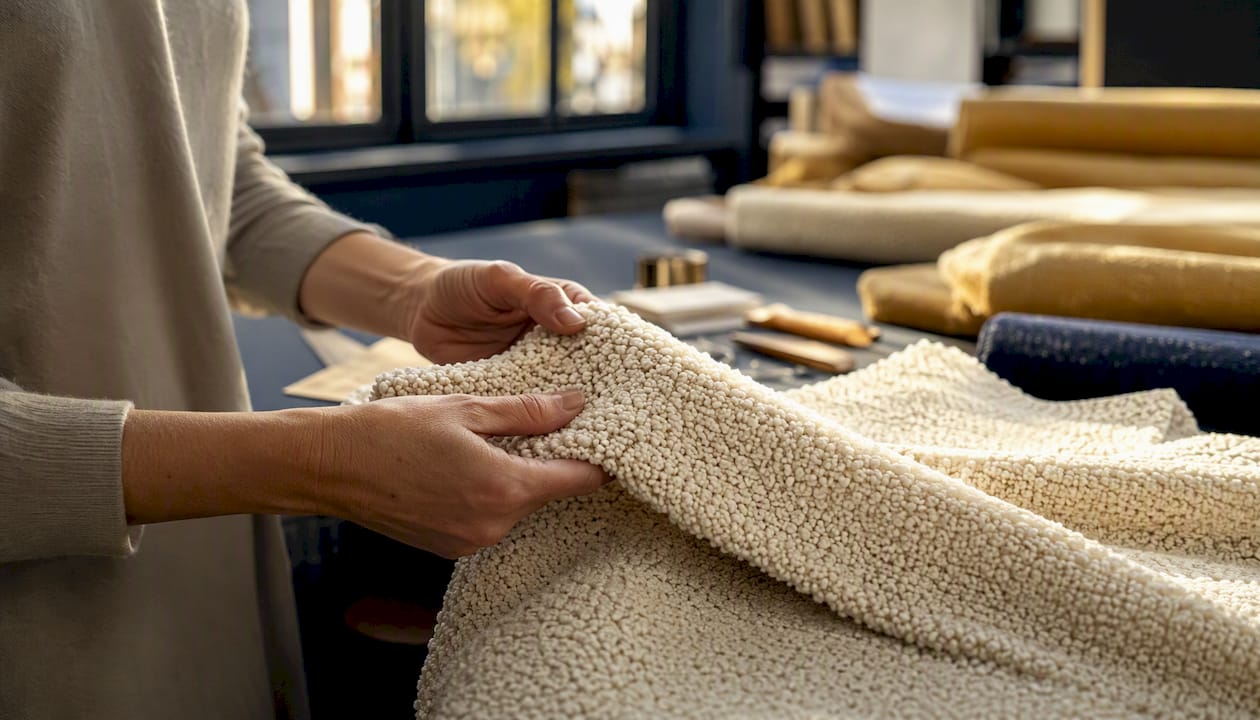
When assessing a swatch before commissioning, run a simple pull test: grip a small section of the surface between two fingers and tug gently. If loops pull free easily, the weave is too loose for a high-traffic seat. A well-constructed bouclé should feel secure and spring back.
Bouclé is a considered choice for adult sitting rooms, home offices, and statement bedroom chairs. Homes with cats — whose claws catch loops with devastating efficiency — or young children who treat sofas as climbing frames are better served by a performance-blend bouclé with a tight loop and a high rub count, or by a different fabric category altogether.
Pro Tip: When commissioning bespoke upholstery from a trade supplier, always request the Martindale rub count in writing and specify a minimum of 30,000 rubs for any piece that will see daily use. A supplier who cannot provide this figure is not giving you the information you need to make a sound specification.
Your printable bouclé maintenance checklist
Save or print this checklist and keep it somewhere accessible — inside a kitchen drawer, photographed on your phone, or pinned inside a cupboard door near your cleaning supplies.
Daily:
- Blot any spills immediately; never leave liquid to soak in
- Remove crumbs and surface debris by hand or with a lint roller
- Keep shoes, pens, and sharp jewellery away from upholstered surfaces
Weekly:
- Vacuum on low suction with a soft-brush attachment
- Lint roll or rubber-glove sweep for pet hair and fine debris
- Inspect seams and armrests for pulled loops or early pilling
Monthly:
- Rotate and flip removable cushions
- Brush the surface gently with a natural-bristle brush to lift loops
- Check high-wear zones for signs of compression or thinning
Annually:
- Book a professional low-moisture clean for sofas in regular daily use
- For low-traffic pieces, professional cleaning every 12–18 months is sufficient
- Review the care label and update your cleaning kit if products have expired
Printing tip: copy this checklist into a notes app or word processor, increase the font to 14pt, and print on A5 card for a durable reference card.
Why gentle care is the right approach for bespoke upholstery
There is a tendency, when a beautiful sofa develops a mark, to reach for the strongest product available. It is an understandable instinct — but with bouclé, it is almost always the wrong one. The looped structure that gives this fabric its sculptural warmth is also what makes it unforgiving of aggressive treatment. A harsh solvent applied without testing, or a vigorous scrub in a moment of frustration, can flatten loops permanently and alter the surface character of a piece that was chosen precisely for that texture.
What strikes me most, having worked with interior designers and trade clients on bespoke upholstered commissions, is how rarely damage comes from the original spill. It comes from the response to it. A red-wine splash, blotted promptly and left to air dry, often leaves no trace. The same spill, scrubbed with a household spray and dried with a hairdryer, can leave a flattened patch and a faint ring that no amount of grooming will reverse.
The care steps in this guide are not cautious for caution's sake. They reflect how bouclé is actually constructed: a looped yarn held in place by a backing, with a surface that responds to pressure, heat and moisture in ways that flat weaves simply do not. Treat it gently, maintain it consistently, and it will hold its character for years. Specify it well from the outset — tight loops, a meaningful rub count, a quality backing — and the maintenance becomes genuinely manageable.
Bespoke bouclé upholstery, specified and crafted to last

Simmonsinteriorsupply works with interior designers, architects, and private clients across the UK to commission handcrafted upholstered pieces built to precise specifications — including bouclé fabrics selected for their rub count, loop tightness, and long-term performance. Every commission is made to order, with custom sizing and finish options, so the piece fits both the space and the brief from the outset.
For trade clients, Simmonsinteriorsupply offers specification advice on fabric selection, including guidance on choosing a bouclé suited to the intended use and traffic level. Pieces are delivered with white-glove care, and the team is available to advise on aftercare from the moment a commission is confirmed.
Browse the Simmonsinteriorsupply gallery to see bespoke upholstered pieces in context, or get in touch via the trade commissions page to discuss a project, request a swatch, or explore complementary pieces such as the bespoke nest of coffee tables designed to sit alongside upholstered seating.
Sources
- Boucle Fabric: Everything You Need to Know (2026) - D and G Flooring
- How to Clean a Boucle Couch Without Flattening It | Wundaguard
- How to clean bouclé fabric | Homes and Gardens
- Is Bouclé Easy to Clean? Practical Care Tips – Stamps Home Furniture
- Bouclé Fabric 101: How to Care for and Sew the Modern Interior Favourite