
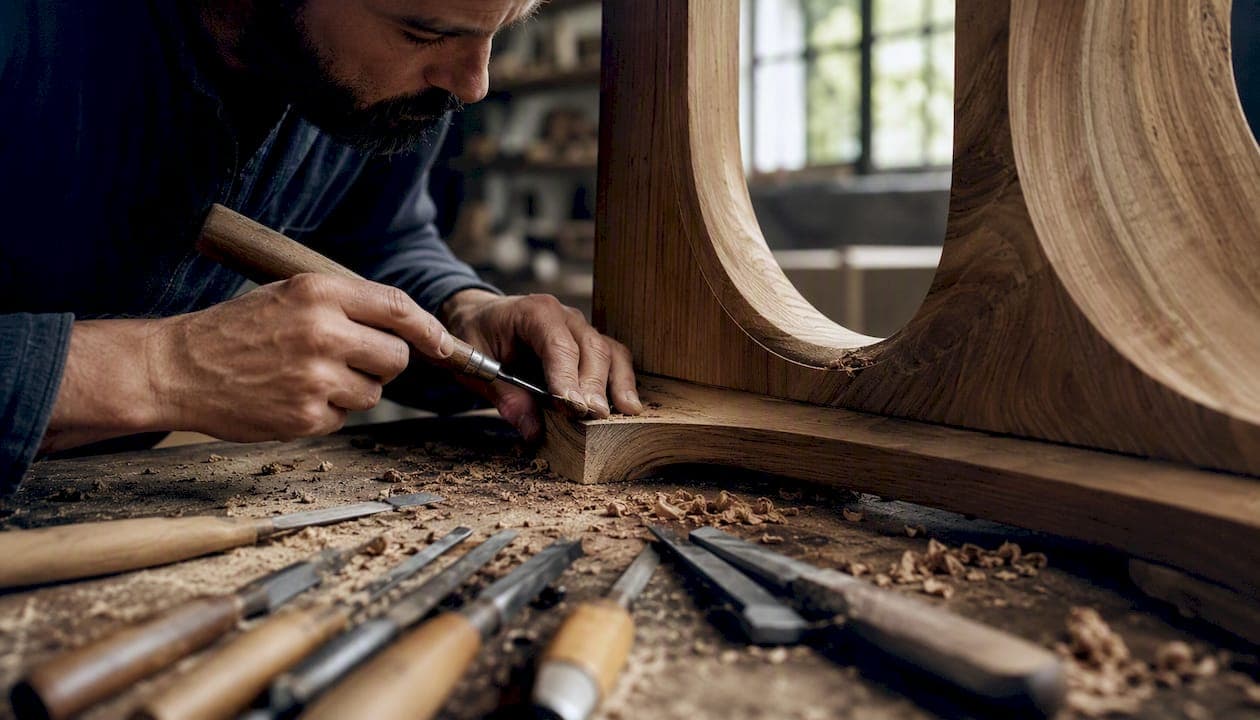
Commissioning bespoke furniture is a collaborative, custom design-and-make process: you define what you need, find a skilled maker, agree a budget and timeline, and work through a series of approvals until a piece built precisely for your space arrives at your door. According to House & Garden, many commissions start at a substantial budget and take several weeks, though complexity and the maker's reputation push both figures considerably higher. You can begin today.
- Measure your space — record height, width, depth, and any awkward angles or alcoves before you contact anyone.
- Gather visual references — save images from Pinterest, Instagram, or magazines that capture the style, material, and finish you have in mind.
- Contact two or three makers — share your brief, ask for an initial conversation, and compare how they respond to your requirements.
Simmonsinteriorsupply works with homeowners, interior designers, and architects on exactly this kind of commission, from statement tables to fitted joinery. More on their process later in this guide.
Key takeaways
Commissioning bespoke furniture requires a clear written brief, a realistic budget starting around £5,000, and a timeline of at least 12–20 weeks from brief to delivery.
| Point | Details |
|---|---|
| Start with a written brief | Cover function, dimensions, materials, budget band, and timeline before contacting any maker. |
| Budget and timeline realistically | Commissions commonly start at around £5,000 and take 12–20 weeks; complex fitted joinery sits at the upper end. |
| Vet makers thoroughly | Check recent portfolio work, ask for detail shots, confirm insurance, and arrange a site visit before committing. |
| Approve in writing at every stage | Sign off drawings, samples, and any scope changes in writing to protect both parties and control cost. |
| Simmonsinteriorsupply | Offers handcrafted bespoke commissions for homeowners, designers, and architects, with measured surveys, detailed drawings, and white-glove delivery. |
Table of Contents
- How to commission bespoke furniture: which pieces are worth it?
- How to write a brief that a maker can actually use
- Where to find a maker and how to choose the right one
- How bespoke furniture is priced and what to budget
- What does a typical commissioning timeline look like?
- Materials, joinery, and finishes: what to look for
- Design approvals, prototypes, delivery, and aftercare
- Common pitfalls and how to avoid them
- How Simmonsinteriorsupply handles commissions
- Ready to start your commission with Simmonsinteriorsupply?
- Sources
How to commission bespoke furniture: which pieces are worth it?
Not every room calls for a bespoke piece, and not every budget stretches to one. The clearest case for commissioning is where a standard size simply will not do, or where the piece needs to carry serious functional weight.
Fitted case goods are the strongest argument. Wardrobes, kitchen cabinets, and bespoke shelving built into an alcove extract every centimetre from a room that a freestanding unit cannot reach. As The Independent notes, fitted case goods consistently top the list of high-value commission categories precisely because they solve unusual layouts that off-the-shelf furniture ignores.
Beyond storage, the categories where bespoke genuinely earns its cost include:
- Statement dining and refectory tables — non-standard lengths, unusual timber species, or sculptural bases that no catalogue stocks.
- Upholstered seating — sofas and armchairs where the depth, arm height, or fabric choice is dictated by a specific room or client need. A bespoke sofa commission is one of the most personal investments a room can hold.
- Bedroom fitted joinery — beds with integrated storage, dressing rooms, and headboard walls where the architecture demands a tailored response.
- Decorative occasional pieces — nest of coffee tables, side tables, and console tables where a distinctive material or silhouette anchors a scheme.
Pro Tip: When budget is limited, prioritise built-in storage over decorative pieces. A bespoke wardrobe or alcove shelving unit adds measurable square footage to a room and holds its value in a way that a statement side table, however beautiful, rarely does.
How to write a brief that a maker can actually use
A clear brief is the single most important thing you can bring to a first conversation with a maker. Vague instructions produce vague quotes, and vague quotes produce surprises at invoice stage.
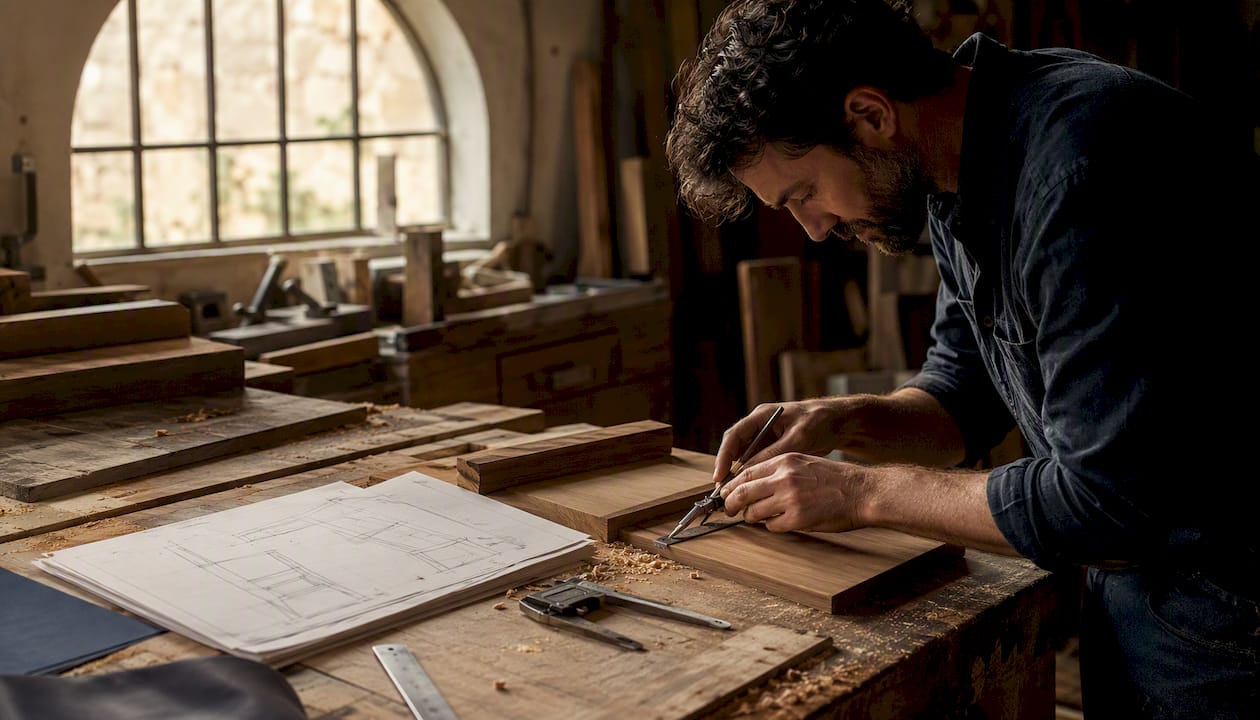
What your brief must include
Every workable brief covers these eight points:
- Function — what the piece must do (store, seat, display, divide, support).
- Dimensions — your maximum and minimum measurements, including ceiling height, door clearances, and any structural intrusions such as skirting boards or pipes.
- Style references — three to five images that show the aesthetic direction, even if the final piece will differ.
- Materials — preferred timber species, upholstery fabric, metal finishes, or glass types. If you are unsure, say so and ask the maker to advise.
- Budget band — a realistic range, not a single figure. Makers use this to calibrate complexity before they spend time on drawings.
- Timeline — when you need the piece delivered, and whether that date is fixed or flexible.
- Use cases — who will use it, how often, and any special requirements (children, pets, heavy daily use, hospitality environment).
- Required finishes — painted, oiled, lacquered, or upholstered, and any colour references or paint codes.
Measurement tips
Measure the space three times and record the smallest figure. Account for skirting board depth, cornice projection, and the swing arc of any adjacent doors. For dining tables, a sizing guide is a useful cross-reference before you commit to dimensions in your brief.
What to attach
- Photographs of the space from multiple angles, taken in good light.
- A simple floor plan sketch, even hand-drawn, with dimensions marked.
- A moodboard or saved image folder.
- Any fabric or material swatches you already have.
- A list of items the piece needs to store or accommodate.
The Fine Furniture Guild notes that makers typically request detailed briefs before they can offer sketches or visualisations, so the more complete your document, the faster the design stage moves.
Where to find a maker and how to choose the right one
The best makers are not always the most visible. As House & Garden points out, many skilled craftspeople maintain minimal websites and are far more discoverable through Instagram, where recent workshop posts and finished-project images give a truer picture of current capability than a static portfolio page updated years ago.
Where to look
- Instagram and Pinterest — search by material or style (e.g. "solid oak fitted wardrobes UK") and follow makers whose aesthetic matches yours.
- The Furniture Makers' Company and the British Furniture Confederation — both maintain directories of vetted trade members.
- Interior design trade shows — events such as Decorex and Design Centre Chelsea Harbour, which bring makers and designers together in one place.
- Trade recommendations — if you are working with an interior designer, their network of trusted workshops is often the fastest route to a reliable maker.
Questions to ask at first contact
- Can you share three recent projects similar to mine, with close-up detail shots?
- What is your current lead time, and is that likely to change before my delivery date?
- Do you carry public liability insurance and offer a written warranty?
- How do you handle changes once manufacture has started?
- What does your payment schedule look like?
Pro Tip: Ask for short videos of shop-floor work, not just finished photographs. Drawer action, joint quality, and finishing technique are far easier to assess in a ten-second clip than in a polished lifestyle image.
Red flags to watch for
- Reluctance to show the workshop or share references from previous clients.
- Evasive answers about payment terms or process milestones.
- No written contract or specification document offered.
- A portfolio that shows only one type of piece, with no evidence of the joinery complexity your project requires.
A site visit or measured survey is the natural next step after shortlisting. Expect the maker to visit your space, take their own measurements, photograph the area, and ask questions your brief may not have covered. This visit costs nothing with most makers and is where the real design conversation begins.
How bespoke furniture is priced and what to budget
Bespoke pricing is not arbitrary, but it is rarely transparent until you understand the variables. The cost of a commission reflects labour hours above almost everything else, which is why complexity of joinery and the maker's experience level drive the final figure more than material cost alone.
The main cost drivers
- Joinery complexity — dovetailed drawers, mitred frames, and curved or carved elements all add significant bench time.
- Material choice — solid hardwoods such as walnut, oak, and ash cost considerably more than veneered engineered boards, though both can produce excellent results.
- Specialist hardware — soft-close mechanisms, bespoke handles, and integrated lighting add cost that is easy to underestimate at brief stage.
- Finishes — hand-applied lacquers and specialist paints take multiple coats and drying time; they add days to the schedule and cost accordingly.
- Prototyping — the Fine Furniture Guild confirms that makers may charge separately for physical models or prototypes, particularly when a design uses unfamiliar techniques.
- Maker reputation and location — a London workshop with a long waiting list commands a premium that a regional maker of equal skill may not.
A typical payment schedule
- Deposit on commission — usually 30–50% of the agreed total, paid before design work begins. This is standard practice across the industry and protects the maker's time.
- Stage payment at manufacture start — commonly a further 25–30%, paid once drawings are approved and materials ordered.
- Final payment on delivery — the remaining balance, typically settled before or on the day of installation.
Discuss the schedule at first contact. As the Fine Furniture Guild advises, agreeing payment terms early prevents misunderstandings that can stall a project mid-manufacture.
Controlling cost without cutting quality
- Simplify the detailing: a clean, unfussy design often costs less and ages better than an ornate one.
- Choose durable but economical materials where they will not be seen: secondary timbers for carcass interiors, for example.
- Use standardised component sizes where possible to reduce cutting waste and bench time.
- Avoid scope changes after manufacture begins. Every change after sign-off carries a cost premium, sometimes a significant one.
What does a typical commissioning timeline look like?
Lead times in bespoke furniture are longer than most clients expect, and the gap between expectation and reality is one of the most common sources of frustration. Planning around the full timeline from the start avoids the disappointment of a delayed room reveal or a missed move-in date.
The Independent reports that full production commonly takes 14–20 weeks depending on the type of furniture and scale of the project. For complex fitted joinery, that figure sits at the upper end.
Phase-by-phase breakdown
Smithers of Stamford's commissioning timeline maps the process into four phases with typical durations:
- Initial conversation and brief — 1–3 weeks.
- Design and development — 2–4 weeks (sketches, technical drawings, revisions, and approvals).
- Craftsmanship and manufacture — 4–12+ weeks, depending on complexity.
- Delivery and installation — 1–2 days on site.
Finishing adds time that many clients overlook. Solid wood needs to acclimatise to the room's humidity before installation, and lacquers and oils require curing time between coats. Factor at least two additional weeks into any schedule that involves specialist finishing.
Milestone checklist to agree with your maker
- Drawings approved and signed off in writing.
- Material and finish samples signed off before ordering.
- Manufacture start date confirmed.
- Delivery and installation date locked in the contract.
- Final payment schedule tied to milestones, not to calendar dates alone.
Two sample timelines
Simple occasional table — brief to delivery in approximately 8–10 weeks: two weeks for design and approval, six to seven weeks for manufacture and finishing, one day for delivery.
Fitted bedroom joinery — brief to installation in approximately 18–22 weeks: three weeks for brief and site survey, four weeks for detailed drawings and revisions, twelve to fourteen weeks for manufacture and finishing, two days for installation and snagging.
Materials, joinery, and finishes: what to look for
The material choices you make at brief stage determine how a piece performs over decades, not just how it looks on delivery day. A well-specified commission in the right materials will outlast several generations of mass-produced alternatives.
Timber choices
- Solid hardwoods (oak, walnut, ash, cherry) — the benchmark for longevity and repairability. They move with seasonal humidity changes, which is normal and manageable with correct finishing. A wood species selection guide is worth consulting before committing to a species.
- Veneered engineered boards — dimensionally stable, cost-effective for large flat panels, and available in virtually any species. The quality of the substrate and the veneer thickness determine how long they last.
- Painted MDF — smooth, consistent, and ideal for painted cabinetry where grain is not desired. Vulnerable to moisture and impact at edges.
Construction quality cues
Look for these when reviewing a maker's portfolio or visiting the workshop:
- Dovetail joints on drawer boxes — a reliable indicator of hand-skill and structural integrity.
- Solid wood drawer sides rather than thin ply or MDF.
- Mortise-and-tenon or dowelled frame construction for chairs and tables under load.
- Carcass backs in solid ply, not hardboard, for fitted pieces that need to carry weight.
Finishes and maintenance
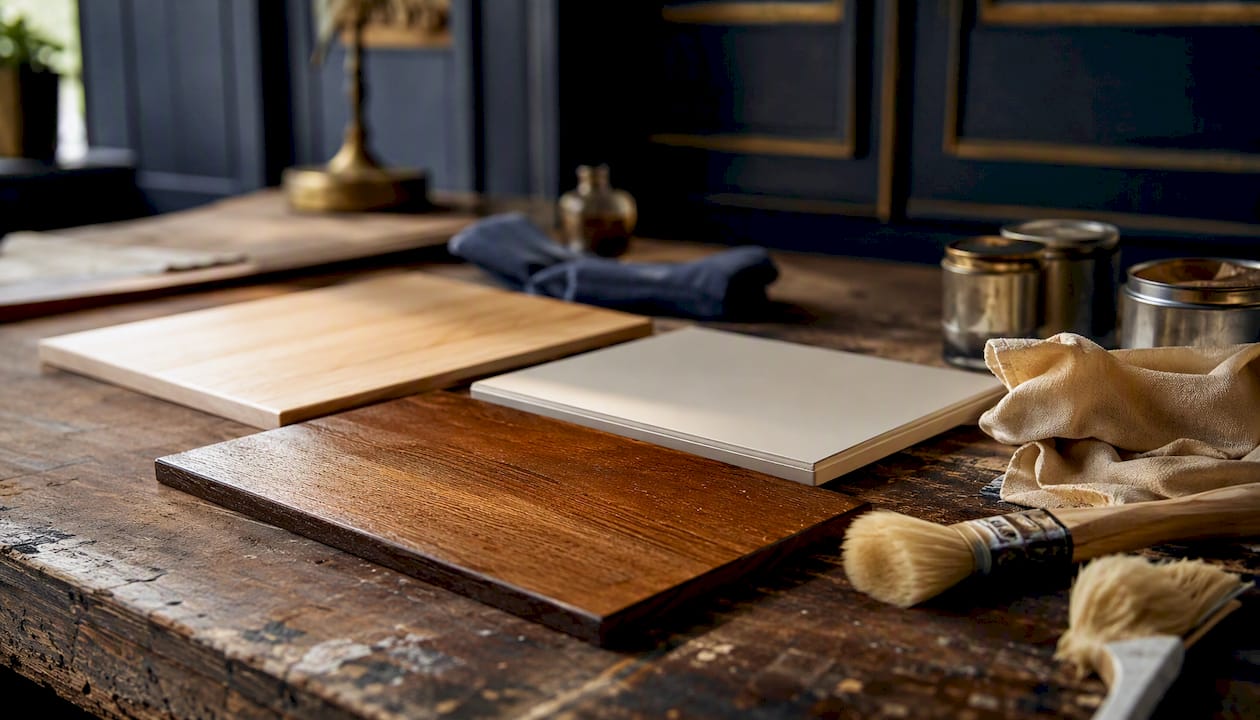
Hard-wax oils (Osmo and Rubio Monocoat are widely used) offer a natural look and are straightforward to maintain and repair. Lacquers provide a harder, more durable surface but are more difficult to touch up. Painted finishes in eggshell or full gloss require a well-prepared substrate and a skilled sprayer for a result that holds up to daily use.
On sustainability: specify FSC-certified or responsibly sourced timber wherever possible. The FSC certification guide for UK trade explains what to look for on a supplier's documentation and why chain-of-custody certification matters for both ethics and planning applications.
Design approvals, prototypes, delivery, and aftercare
The approval stages are where a commission either tightens into something precise or drifts into something approximate. Each sign-off is a contractual moment: once you approve a drawing or a sample, changes carry a cost.
What approval documents mean
- Sketches and concept drawings — exploratory, not binding. Use these to confirm direction, not detail.
- Technical drawings — dimensioned, scaled, and specific. Approving these commits both parties to the measurements and construction method shown.
- 3D visualisations — useful for understanding how a piece will read in the room, but not a substitute for a technical drawing. Colours and proportions can look different in render versus reality.
As the Fine Furniture Guild explains, makers commonly provide sketches and renders as part of the design stage, but physical models or prototypes are usually an additional cost. They are worth requesting when a design is genuinely experimental or when a client has not commissioned before and needs to understand scale.
When to request a prototype or sample
Prototypes are advisable when the design uses a new material combination, an unusual structural approach, or a finish the maker has not applied before. For more straightforward commissions, a finish sample on a small board and a material swatch are usually sufficient to sign off before manufacture begins.
Delivery checklist
Before the delivery date, confirm:
- Access route measured — door widths, stairwell dimensions, and any tight corners between the entrance and the final position.
- Whether the piece arrives assembled or flat-packed for on-site assembly.
- Who is responsible for installation and whether specialist fixings are needed.
- A final walkthrough agreed for the day of delivery to check for transit damage and confirm fit.
For complex fitted pieces, a white-glove delivery service handles packing, transport, installation, and debris removal, which is worth the additional cost for high-value commissions.
Aftercare and warranty
- Ask for written care instructions specific to the finish and material.
- Confirm the warranty period and what it covers (structural defects, finish failure, movement in solid wood).
- Keep a record of the timber species and finish product used so touch-up work is straightforward years later.
Common pitfalls and how to avoid them
Most commission problems are predictable, and almost all of them trace back to the same root causes: an unclear brief, an unrealistic timeline, or a change made after manufacture began.
Do and don't
- Do agree every dimension in writing before approving technical drawings.
- Do build a 10–15% contingency into your budget for scope adjustments.
- Don't assume the maker's lead time includes your approval time. Every week you take to review drawings is a week added to the schedule.
- Don't commission a piece that cannot physically enter the room. Measure every doorway, corridor, and stairwell on the delivery route before the brief is finalised.
- Don't change the brief after manufacture has started without a written change order and an agreed cost.
Access and installation
Assembled delivery is preferable for quality, but not always possible. A wardrobe that fits the room may not fit the staircase. Discuss on-site assembly with your maker at brief stage, not on delivery day. For large fitted pieces, plan for two days of installation and a snagging visit a week later.
Pro Tip: Agree a formal change-control process at the start of the commission. Any alteration to the approved specification should be submitted in writing, costed by the maker within 48 hours, and signed off before work continues. This single habit prevents the majority of end-of-project disputes.
How Simmonsinteriorsupply handles commissions
Simmonsinteriorsupply works with interior designers, architects, and private clients on handcrafted bespoke furniture, made-to-order rugs, and mirrors, each customisable in size and finish. Their commissioning workflow follows a clear sequence:
- Enquiry — share your brief, dimensions, and reference images via the website or trade account.
- Measured survey — a site visit to confirm dimensions, assess access, and discuss materials and finishes in the context of the actual space.
- Design — detailed drawings and finish samples prepared for client approval.
- Quote and contract — a written specification, staged payment schedule, and agreed delivery date.
- Manufacture — handcrafted production by skilled artisans, with milestone updates.
- Delivery and installation — white-glove delivery and on-site installation, with a final walkthrough.
Simmonsinteriorsupply typically includes detailed technical drawings, material and finish samples, and staged payments as standard. Their project gallery shows the breadth of work, from sculptural occasional pieces to fitted residential joinery. The bespoke nest of coffee tables is a useful example of how customisable sizing and finish options translate into a finished piece that holds its own in a considered interior scheme.
Trade professionals and interior designers can access bespoke commission services and account pricing through the trade page. For those new to the brand, the brand story gives a clear sense of the craft philosophy behind every piece.
A maker's perspective on what commissioning really asks of you
The commissions that work best are rarely the ones with the largest budgets. They are the ones where the client arrives with a clear sense of what the piece must do, a realistic understanding of time, and a genuine willingness to trust the maker's judgement on the details that matter most.
Patience is not a passive quality in this process. It is the thing that allows a design to be refined rather than rushed, a finish to cure properly rather than be hurried out of the workshop, and a relationship between client and maker to produce something neither could have arrived at alone. The satisfaction at the end of a well-run commission is not just in the piece itself. It is in knowing that every decision was made deliberately, with full understanding of what it would cost and why it was worth it.
Ready to start your commission with Simmonsinteriorsupply?
Where most furniture searches end in compromise, a commission with Simmonsinteriorsupply begins with the opposite premise: your space, your proportions, your finish. The concrete advantage here is straightforward. You are not adapting a standard size to an awkward room or settling for a catalogue finish that is close but not quite right. Every piece is made from scratch, by hand, to a written specification you have approved.
For designers and architects, the trade account gives access to bespoke commission pricing and made-to-order collections of rugs and mirrors alongside the furniture range. For private clients, the process begins with a brief and a site visit. Browse the bespoke nest of coffee tables as one example of what a finished commission looks like, then get in touch via Simmonsinteriorsupply to share your brief and request a quote.
Sources
A short selection of reputable resources used in this guide, each suited to a different stage of the commissioning process:
- How to commission bespoke furniture | House & Garden
- How to commission bespoke furniture – and the benefits it can bring | The Independent
- The Bespoke Furniture Commissioning Process: A Timeline from Brief to Installation
- How to commission bespoke furniture | Fine Furniture Guild