
Most bespoke commissions run from around six weeks for a small side table to six months or more for fitted joinery, and the number a workshop first quotes you is almost never the whole story. That "lead time" typically covers production only, the weeks of actual making, not the design consultation, the queue for a bench slot, or delivery. What genuinely moves your finish date is how fast you approve drawings and samples once the clock starts.
TL;DR:
- Client approval of drawings and samples significantly impacts the overall lead time, often more than the workshop's actual manufacturing speed.
- Fitted kitchens, whole-house systems, and rugs typically have longer schedules due to site adjustments, structural work, or complex construction processes.
- Material lead times, such as timber acclimatization and fabric sourcing, can add weeks to project timelines and must be factored into planning.
- Starting your planning backwards from the desired installation date and approving samples early can substantially reduce delays.
- Providing detailed specifications and a target delivery window upfront offers the most accurate estimate and helps avoid unforeseen postponements.
Table of Contents
- What is a typical custom furniture lead time by item?
- What happens during each phase of a bespoke commission?
- What actually determines how long your piece takes?
- How can you shorten or de-risk your delivery schedule?
- What Simmons Interior Supply sees from the workshop floor
- What the industry gets wrong about lead time
- Get a lead time estimate for your commission
- Sources
- FAQ
What is a typical custom furniture lead time by item?
The range depends heavily on what you're commissioning and how the workshop defines "lead time." Some quote production only; others quote everything from deposit to delivery. Getting that distinction clear before you sign anything saves considerable frustration later.
Small freestanding pieces tend to move fastest, while anything upholstered, hand-knotted, or fitted to a room's exact dimensions slows things down considerably. Rugs are a category of their own, since construction method dictates almost everything about how long they take.
| Piece | Typical range | What it usually covers |
|---|---|---|
| Small freestanding piece (side table, stool) | 6 weeks | Total elapsed time |
| Upholstered sofa or armchair | 10–16 weeks | Total elapsed time |
| Dining table (bespoke joinery) | 8–12 weeks making; 5–7 months | Production only vs total |
| Fitted cabinetry / wardrobes | 8–12 weeks | Total elapsed time |
| Whole-house joinery systems | 16 weeks or more | Total elapsed time |
| Hand-knotted custom rug | around a year | Production plus finishing |
Fitted kitchens and whole-house systems routinely exceed these windows once site surveys, structural adjustments, or bespoke ironmongery enter the picture. Rugs are the outlier most people underestimate: a fully custom hand-knotted commission can run to the better part of a year.
What happens during each phase of a bespoke commission?
Every custom piece moves through the same broad stages, though the time spent in each varies wildly by workshop and complexity.
- Design and specification. A straightforward brief, agreed dimensions, a known finish, and a simple silhouette typically take a few weeks to firm up into working drawings. Anything with structural engineering or unusual materials prolongs this phase.
- The production queue. Once you approve the design and pay a deposit, you're reserving a slot in the maker's schedule rather than triggering immediate work. Busy workshops carry visible waitlists running from a few weeks to several months, and this is the stage clients most often overlook when estimating a finish date.
- Active making. This is what most quoted "lead times" actually refer to. A dining table might spend 8–12 weeks on the bench; joinery-heavy pieces take longer still.
- Finishing and curing. Multi-coat lacquers, oils, and waxes need time to cure properly between applications. Finishing alone can take 10 days to two weeks even in controlled conditions, longer for complex or hand-applied finishes.
- Delivery and installation. Scheduling white-glove delivery and site access is its own small logistics exercise, particularly for large or fitted pieces.
Understanding where you sit in this sequence at any given moment is the single best way to know whether a delay is normal or worth a phone call.
What actually determines how long your piece takes?
Three forces do most of the work here: what it's made from, how complex the design is, and what's happening elsewhere in the workshop's diary.
- Timber acclimatisation. Solid wood typically requires a period of climate-controlled acclimatisation before working, as rushing this step risks warping once the piece reaches its final environment.
- Fabric and mill lead times. Bespoke upholstery fabrics sourced from specialist mills can carry their own multi-week production schedule, separate from the furniture itself.
- Stone, glass, and specialist hardware. Cut-to-size stone tops and custom-cast hardware are frequently the longest single component lead time on a project, longer than the frame or carcass.
- Craft complexity. Intricate joinery, curved forms, and hand-applied finishes all add bench hours. For rugs, production time scales roughly in proportion to knot density, so switching from hand-knotted to hand-tufted construction can save many weeks.
- Seasonality and backlog. Demand spikes ahead of key selling seasons and holiday installs push queues out further than usual.
- International shipping. Imported materials or components add customs and freight variability on top of the maker's own schedule.
Any one of these can shift a quote by weeks; several stacked together are why two seemingly similar commissions can land months apart.
How can you shorten or de-risk your delivery schedule?
The single biggest lever you control is speed of approval, not the workshop's speed of making.
- Start planning from your installation date backwards. Work out when the piece needs to be on site, then subtract the phases above to see whether your timeline is realistic.
- Approve samples and drawings promptly. Every week a proof sits in your inbox is a week added to the finish date, not subtracted from anywhere else — which is why adopting audit-ready finishes quantity takeoff for estimators can help avoid costly bid-stage rework and delays.
- Choose stocked materials where sensible. A standard timber species or an in-stock fabric can shave weeks off a bespoke build without compromising the design.
- Accept sensible tolerances. A millimetre-perfect fit rarely justifies the extra fabrication time it demands.
- Confirm site readiness early. Delivery windows slip when a site isn't ready to receive a piece, not when the workshop is behind.
Pro Tip: Approving finish samples in the first week rather than the fourth is usually worth more to your finish date than any amount of chasing the workshop for updates later.
What Simmons Interior Supply sees from the workshop floor
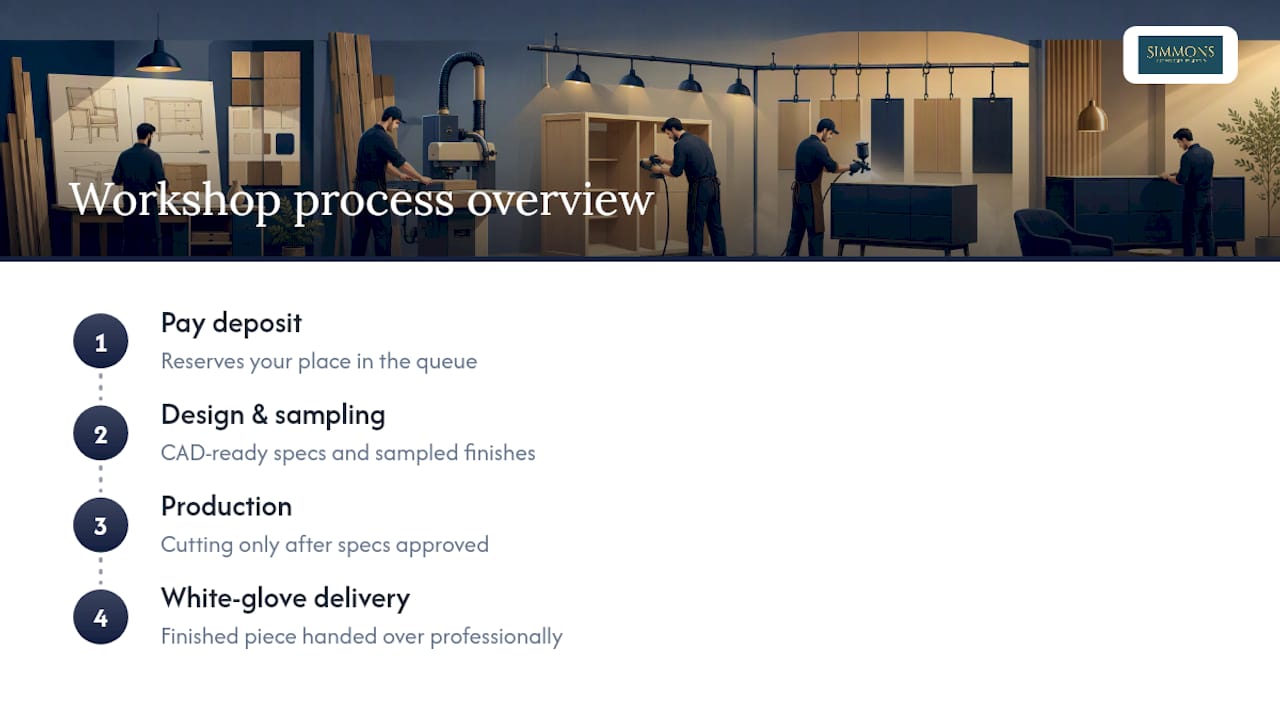
A deposit reserves your place in the queue, it doesn't start the saw running that afternoon, which is precisely why the busiest makers carry the longest waitlists. Simmons Interior Supply builds every commission around bespoke dimensions, CAD-ready specifications, and sampled finishes before a single joint is cut, then hands the finished piece over through white-glove delivery. If you want an accurate estimate rather than a guess, tell us your dimensions, your preferred materials, and your target delivery window at first enquiry.
What the industry gets wrong about lead time
Most advice on this topic treats lead time as a fixed number a workshop hands you, when it's really a negotiation between your decisions and the maker's diary. The conventional framing, "expect X weeks", quietly assumes you'll approve every drawing and sample within a day of receiving it. In practice, the biggest single swing factor on any commission I've studied isn't the joinery or the finish. It's how long a client sits on a proof before signing it off.
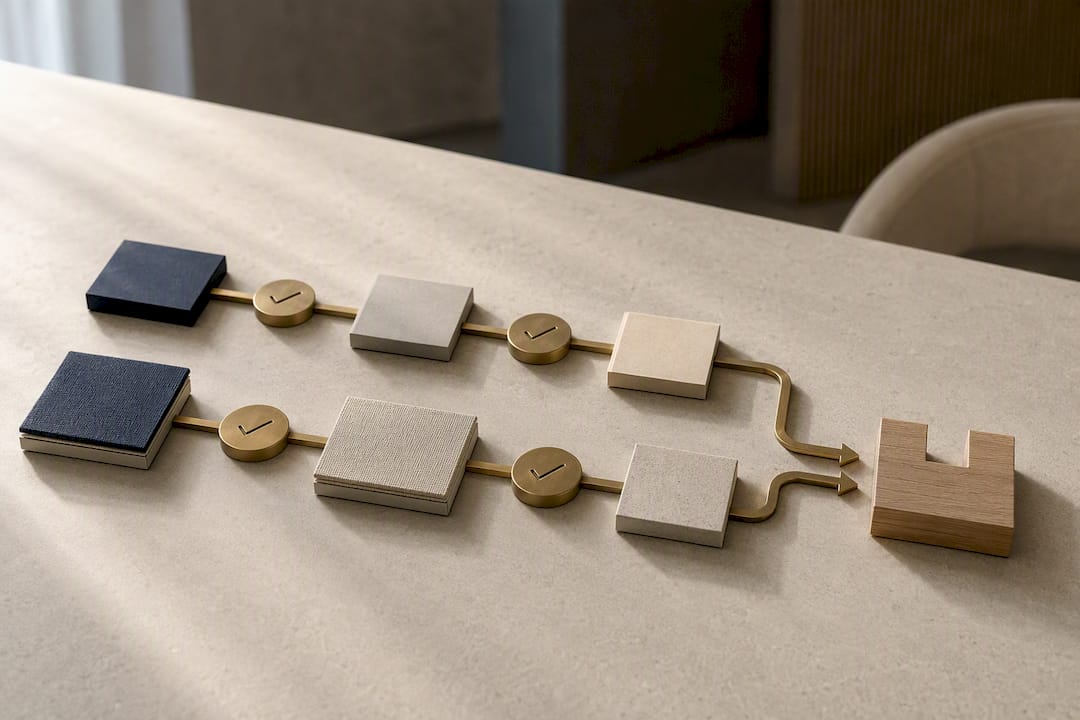
That's an uncomfortable truth for anyone hoping a published range will tell them exactly when their sofa arrives. It won't, not on its own. What the range gives you is a floor: the fastest the piece could realistically move if every approval happens on the day it lands. Add your own historical decision speed to that floor and you'll get a far more honest estimate than any workshop's headline figure.
If there's one thing worth prioritising above all else, it's treating the design and sampling phase as the schedule, not a formality before the "real" work starts. Rugs make this obvious, since knot density alone can shift a total by months, but the same logic quietly applies to every fitted piece and upholstered frame you'll ever commission.
— Luke
Get a lead time estimate for your commission
A practical alternative to guessing at a finish date from a generic online range is to start with a bespoke drawing sized to your space and specified in your chosen materials, with finish samples confirmed before production begins and white-glove delivery arranged once the piece is ready.

To get an accurate estimate rather than a rough industry figure, provide your dimensions, preferred timber or fabric, and target delivery window when you enquire, the same details typically used internally to schedule a commission. If you'd like a sense of scale and finish first, browse a commission like the bespoke nest of coffee tables to see what a fully custom, made-to-order piece looks like before you request your own quote.
Sources
Timing ranges and phase descriptions draw on The Revealry's guide to bespoke lead times, MRETTY's furniture lead time guide, Kapetto's rug lead time guide, and the Consumer Rights Act 2015 for deposit terms.
FAQ
What does "lead time" actually mean in furniture?
Lead time usually refers to production time, the weeks a workshop spends actively making your piece, rather than the full elapsed time from enquiry to delivery, which also includes design, queueing, and finishing.
Why is my furniture delivery taking longer than quoted?
Delays commonly stem from the production queue between deposit and bench start, slow sample or drawing approvals, or material lead times like timber acclimatisation and mill fabric orders, none of which always appear in an initial quote.
What is the typical lead time for material delivery?
It varies by material: timber often needs around a month of acclimatisation, fabric mills carry their own multi-week schedules, and cut stone or specialist hardware frequently takes longer than the furniture frame itself.
What is the 2/3 rule for sofas?
There's no universal industry rule by that name for sofa lead times; upholstered pieces typically take 10 to 16 weeks total, and asking your maker to define what their quoted figure includes matters more than any rule of thumb.
How can I get a more accurate custom furniture turnaround estimate?
Provide precise dimensions, your preferred materials and finishes, and your target delivery window at enquiry stage, the same detail Simmons Interior Supply asks for when scheduling a commission into production.