
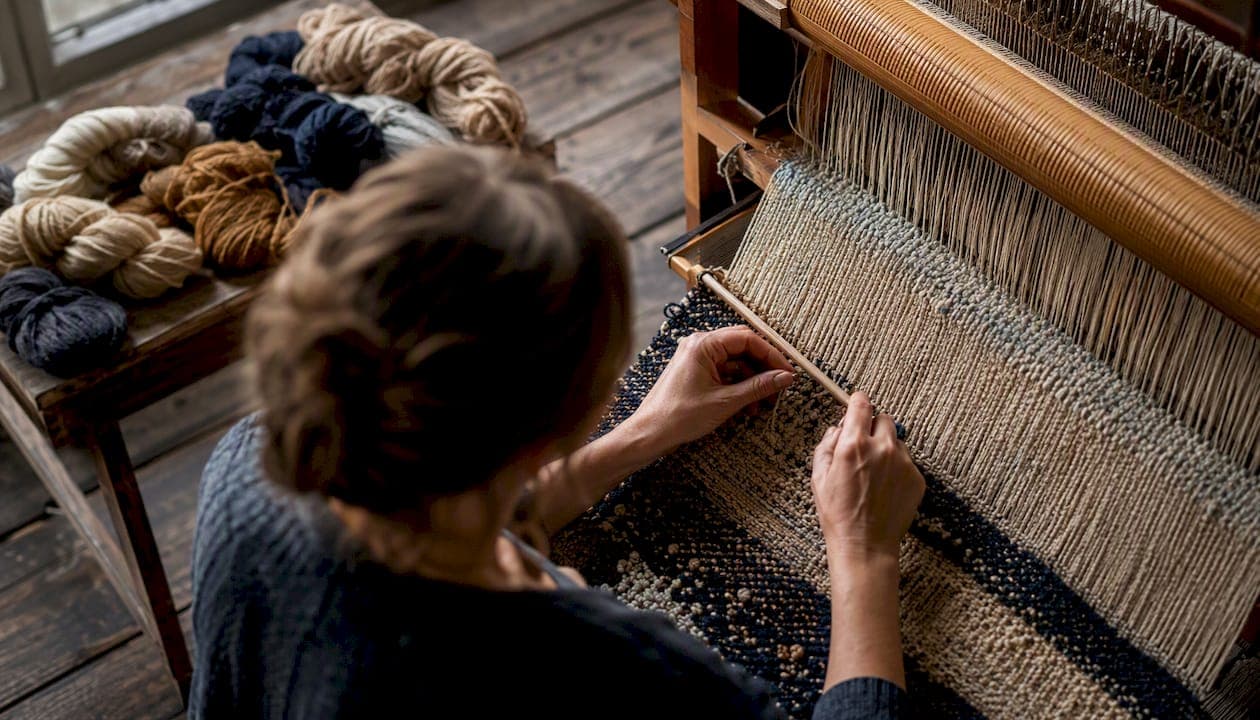
A bespoke rug moves through five stages: brief, design development, sampling, production and finishing, typically taking a few months for hand-tufted pieces and up to several months for hand-knotted commissions. Before signing off, your maker should provide:
- A written specification (size, fibre, pile height, construction)
- A digital colourway mockup
- A physical yarn or strike-off sample
- Scheduled production milestone updates
Key Takeaways
The custom rug design process succeeds when the brief, sampling and construction choice are locked in before weaving begins, not adjusted mid-production.
| Point | Details |
|---|---|
| Brief before design | Provide measured dimensions, clearances and Pantone references so the maker can scope cost accurately. |
| Approve physical samples | Never sign off a colourway from a screen; request a yarn card or strike-off first. |
| Match construction to budget | Choose hand-knotted, hand-tufted, flatweave or power-loom based on detail needs and lead-time tolerance. |
| Build in buffer time | Add two to four weeks beyond the quoted lead time for hospitality-scale or hand-knotted commissions. |
| Simmonsinteriorsupply manages the full sequence | Trade consultation, specification document, sampling and white-glove delivery run under one point of contact. |
Table of Contents
- What does a custom rug design process need to achieve?
- How do you write a brief for a bespoke rug maker?
- From concept to CAD: how rug designs get approved
- Which fibres and finishes suit a bespoke rug?
- Hand-knotted, hand-tufted, flatweave or power-loom: which construction fits your brief?
- How do you size and place a bespoke rug correctly?
- What does sampling, approval and the production timeline actually involve?
- What finishing and quality checks happen before delivery?
- How does Simmonsinteriorsupply manage a trade rug commission?
- What designers get wrong when briefing a rug maker
- Bring your rug concept to Simmonsinteriorsupply
- Frequently asked questions
- Sources
What does a custom rug design process need to achieve?
A bespoke rug is rarely just a floor covering. It sets scale, anchors furniture groupings, softens acoustics in open-plan spaces, and carries pattern rhythm through a scheme. Before sketching anything, the brief needs to nail these objectives:
- Correct scale relative to the seating or dining arrangement
- Colour and pattern harmony with existing fabrics and finishes
- Durability suited to footfall (hallway versus formal drawing room)
- Acoustic softening where hard flooring dominates
- Realistic maintenance expectations for the client's lifestyle
Pro Tip: As a starting rule, a rug should extend at least 20 to 30 centimetres beyond the outer edge of a seating group, so every piece of furniture has at least its front legs resting on it.
How do you write a brief for a bespoke rug maker?
A vague brief produces a vague quote. Give your maker the same rigour you would give a joinery contractor.
Include these essentials:
- Room plan with measured dimensions
- Furniture layout, including planned additions
- Desired rug size and shape
- Traffic level (light, moderate, heavy)
- Colourway references, ideally Pantone or PMS codes
- Target pile height and texture
- Budget range and installation deadline
Technical clearances matter more than most briefs allow for. Door swing arcs, chair pull-back distance, and stair landing depths all dictate the rug's usable footprint, and they are far easier to resolve on paper than after weaving begins.
- Photograph the room with a scale reference (a metre rule works)
- Build a moodboard with fabric swatches, not just images
- Annotate measured photos with clearance zones
- Attach any Pantone references rather than screen colours alone
From concept to CAD: how rug designs get approved
Design development runs through distinct checkpoints, and each one is a chance to catch a problem before it becomes yarn.
- Concept sketch — establishes motif, layout and general proportion
- Scaled CAD or graph — for hand-knotted work, this becomes a naksha, a pixel-accurate map that tells knotters exactly where each colour sits
- Colourway development — the palette gets tested against your actual scheme references
- Digital mockup in-plan — the design overlaid on a floor plan or room render
- Strike-off or sample — the first physical proof of concept
Knot density, measured in knots per square inch (KPSI), governs how much detail the graph can render. A fine floral motif needs a much higher KPSI than a bold geometric, which directly affects both price and weaving time, as Kapetto's breakdown of hand-knotted construction sets out.
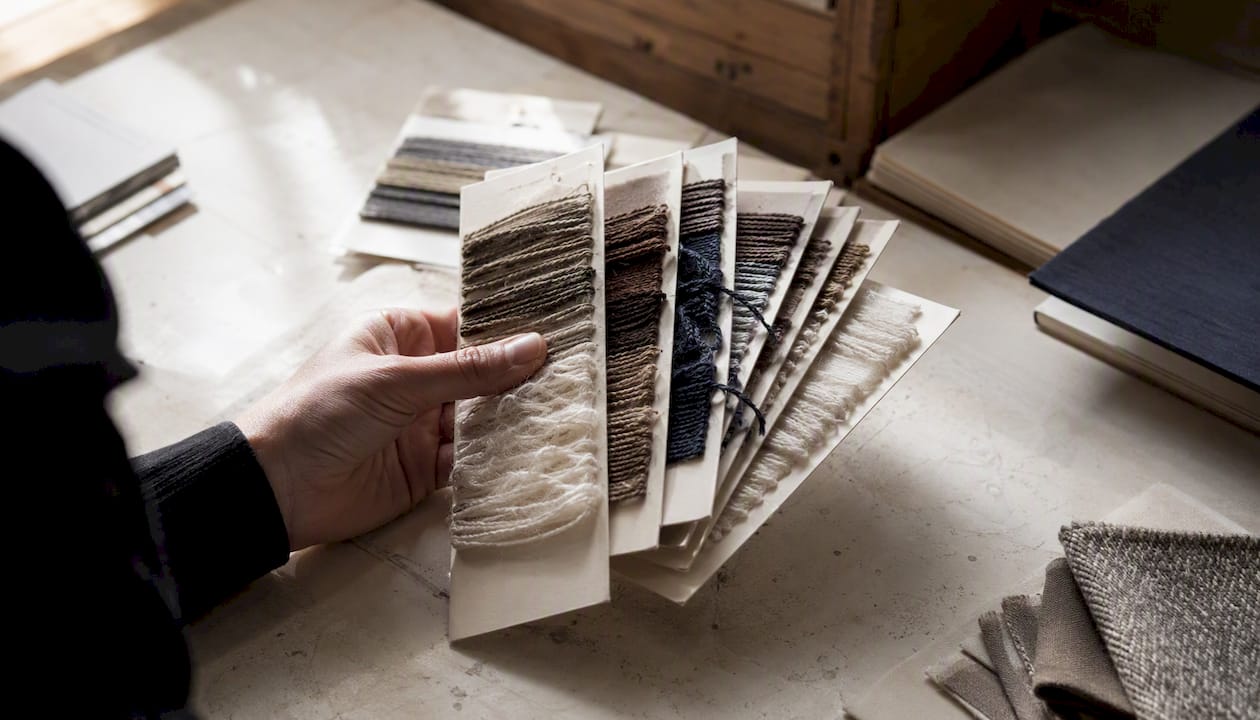
Pro Tip: Never approve a new colourway from a screen alone. Monitor calibration varies, and dye behaves differently across fibres. Insist on a physical yarn card or strike-off before signing off.
Which fibres and finishes suit a bespoke rug?
Fibre choice decides how the rug looks, feels and ages. New Zealand wool holds colour saturation well and resists crushing, making it a reliable default for high-traffic areas. Indian and Xinjiang wools offer a softer, more lustrous hand, often favoured for hand-knotted heirloom pieces. Silk and viscose (sometimes marketed as banana silk) introduce sheen and highlight detail, but both mark more readily underfoot. Jute and blended yarns sit at the more casual, budget-conscious end.
- Cut pile: crisp motif definition, plush underfoot
- Loop pile: durable, better acoustic damping, flatter visual
- Cut-and-loop: sculptural texture, ideal for tonal patterns
- Carved or shorn finishes: raise pattern edges for a three-dimensional effect
- Abrash: intentional tonal variation across the field, common in hand-knotted work
Pile height above roughly 12 to 15 millimetres tends to soften pattern resolution, so a densely detailed motif generally performs better at a lower pile.
Hand-knotted, hand-tufted, flatweave or power-loom: which construction fits your brief?
Construction choice is the single biggest lever on both price and lead time.
- Hand-knotted: the finest detail resolution, longest lead times (often several months per the Nodus Rug production breakdown), highest budget band, best suited to intricate or heirloom motifs
- Hand-tufted: faster turnaround, strong design flexibility, mid-range cost, good for bold contemporary patterns
- Flatweave: low pile, casual character, quicker production, suits transitional or outdoor-adjacent spaces
- Power-loom: fastest and most cost-effective, best for simpler geometrics or repeat patterns at scale
Higher knot or tuft density sharpens detail but adds both cost and weaving time, since every additional knot per square inch multiplies the total count across the field.
Pro Tip: When a client's budget won't stretch to full hand-knotted work, a hybrid approach, hand-tufted field with hand-knotted borders, often preserves the design's most visible detail where it matters most.
How do you size and place a bespoke rug correctly?
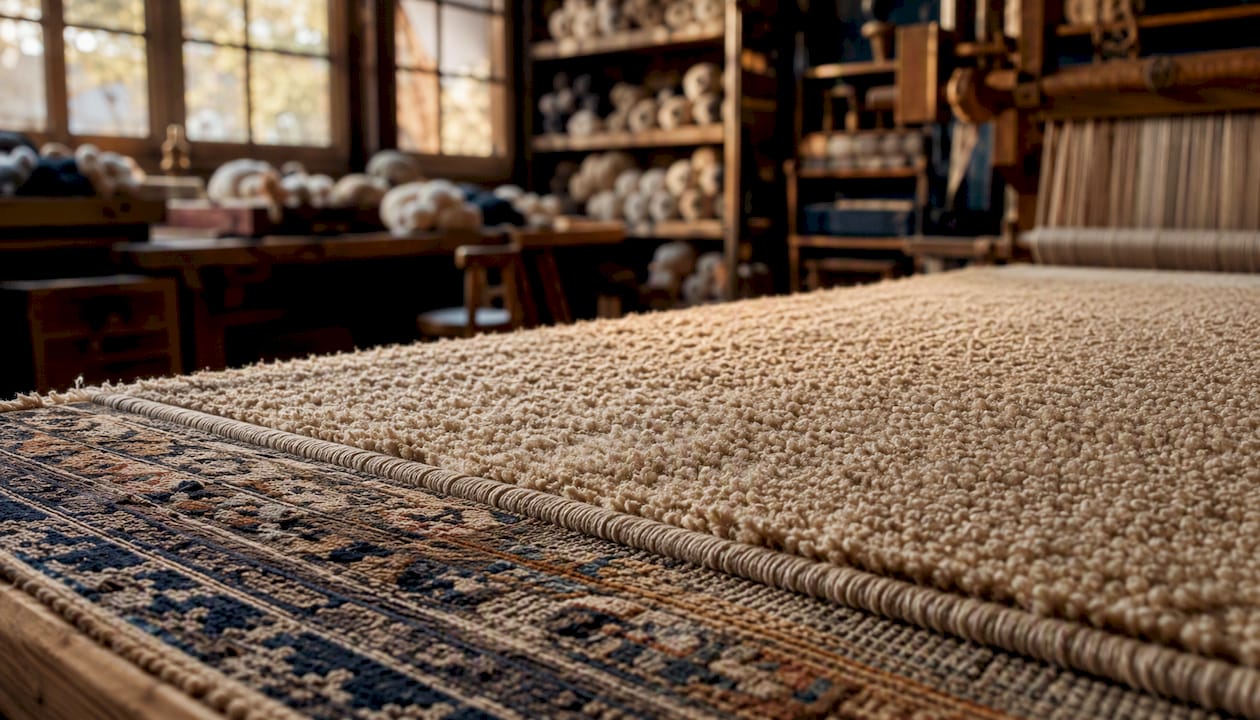
Sizing mistakes are among the most common specification errors on interior projects. In living rooms, the rug should sit under at least the front legs of every seating piece. Dining rugs need roughly 60 to 75 centimetres of clearance beyond the table edge on all sides, so chairs stay on the rug when pulled back. Under a bed, the rug should extend 45 to 60 centimetres past the sides and foot. Runners in circulation spaces generally work best with 10 to 15 centimetres of floor visible on either side.
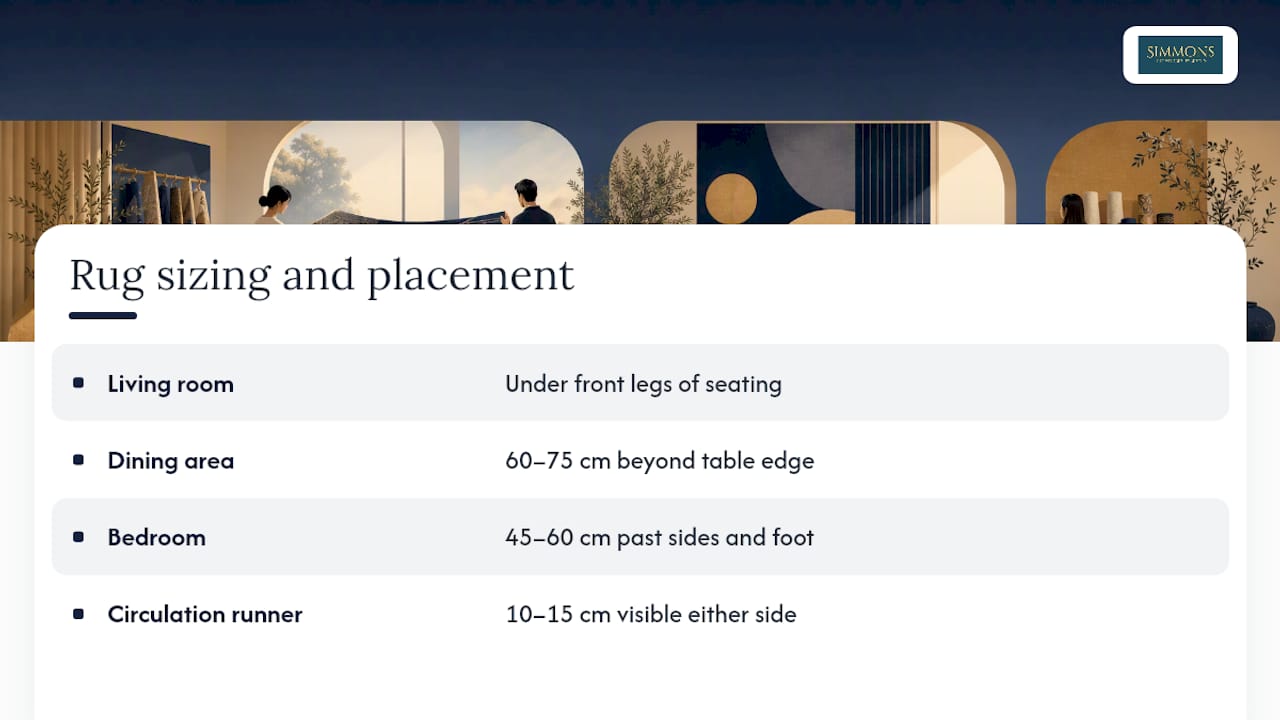
Irregular room geometries, curved staircases, angled bay windows, bespoke joinery, often call for a shaped or panelled rug rather than a standard rectangle. Simmonsinteriorsupply's own rug size guide sets out the full numeric rules of thumb and diagrams for these scenarios.
What does sampling, approval and the production timeline actually involve?
Commission guides generally break the workflow into consultation, specification, sampling, production, finishing and delivery, and each stage adds its own time.
Sampling comes in three tiers:
- Yarn samples — quick colour and fibre checks, added days
- Small strike-offs — a scaled section proving pattern and colour together, adding one to two weeks
- Full-size sample panels — reserved for large hospitality orders, adding several weeks but removing almost all risk
Indicative lead times vary by construction: hand-tufted rugs often land within a few months, hand-knotted commissions frequently run into several months once graph development, dye batching and weaving are accounted for. High-end bespoke creation is often framed across five stages from feasibility through delivery, with total timelines commonly spanning five to eight months for complex pieces, according to Nodus Rug's process overview.
Cost is driven by size, knot or tuft density, fibre choice, whether a colourway is new or repeated, shape complexity, and any request to expedite production. Build in a two to four week buffer beyond the quoted lead time for hospitality-scale projects, since dye lot matching and shipping rarely land exactly on schedule.
What finishing and quality checks happen before delivery?
Once weaving finishes, the rug still needs washing, tensioned stretching and drying, edge clipping or carving, and a final inspection, the stage where the rug's true geometry and pile bloom become visible.
Request documented checks against:
- Dimensional accuracy versus the agreed spec
- Colour match to the approved strike-off
- Pile evenness across the full field
- Edge binding and foundation integrity
For delivery, ask whether rolling and protective packing are standard, and whether white-glove installation with on-site blocking is available for large or heavy-pile pieces.
How does Simmonsinteriorsupply manage a trade rug commission?
A typical trade commission with Simmonsinteriorsupply follows the same disciplined sequence: an initial trade consultation, a written specification document, a sampling stage before production begins, scheduled milestone updates, and coordinated delivery.
For trade clients, we generally expect:
- A measured room plan and furniture layout
- Approved colourway references before weaving starts
- Sign-off on any physical strike-off sample
Trade clients can review completed commissions in our gallery, and white-glove delivery is available for finished pieces, protecting the investment on high-value or hospitality-scale orders.
Pro Tip: Ask any maker, including us, for a written milestone schedule at the outset. A commission without dated checkpoints is far harder to manage against a client's installation deadline.
What designers get wrong when briefing a rug maker
The most common snag I've seen described in trade guides isn't fibre choice or budget, it's colour approval happening too late, on a laptop screen, under office lighting that has nothing to do with the finished room. By the time a client sees the physical rug, the "approved" colour has already shifted in their mind.
Settle texture and colour expectations against a physical yarn sample, in the actual room, before production begins. It costs a week. It saves a re-weave.
Bring your rug concept to Simmonsinteriorsupply
Simmonsinteriorsupply gives trade clients something most rug suppliers don't: a single point of contact who manages your specification, sampling and delivery under one roof, rather than juggling a maker, a courier and a separate installation team.
Our trade resources cover specification support from the first measured brief through to strike-off approval, and white-glove delivery protects finished pieces on their way into the room. If you're weighing up construction options for an upcoming scheme, our gallery shows completed bespoke commissions across pile types and finishes, and our bespoke coffee table collection demonstrates the same custom-to-size approach we apply to rugs.
To start a trade commission, visit our main enquiry page and share your room dimensions, colour references and deadline, we'll return a specification document with realistic lead times within days.
Frequently asked questions
How long does the custom rug design process usually take? Hand-tufted commissions often complete in eight to twelve weeks. Hand-knotted pieces frequently take several months once graph development, dye batching and weaving are factored in.
What's the difference between a strike-off and a full sample? A strike-off is a small woven section proving colour and pattern together. A full-size sample panel is a larger proof, reserved for hospitality-scale orders where risk needs to be minimised before committing to full production.
Does knot density affect price as much as size? Yes. Higher KPSI sharpens detail but multiplies the total knot count across the field, which drives both cost and weaving time independently of overall rug size.
Can irregular room shapes be accommodated in a custom rug? Bespoke shapes and panelled layouts are standard for curved staircases, angled bays or fitted joinery, provided the maker receives a measured plan early in the brief.
Sources
- How Hand-Knotted Rugs Are Made: Step-by-Step Process | Kapetto
- How do you create a custom rug? The 4 stages of the custom rug — Nodus Rug