
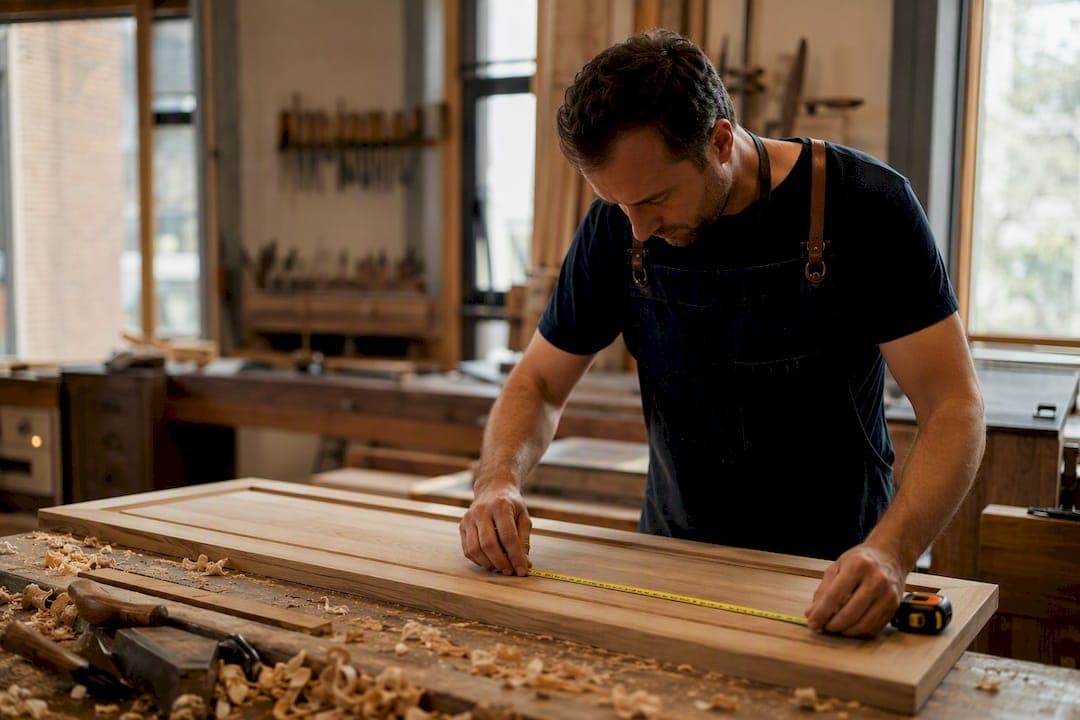
Made-to-measure furniture is a piece produced by adapting an existing design or template to fit a specific room or set of client measurements, rather than being designed from a blank page. That single distinction separates it from bespoke, where a maker drafts an entirely original pattern for you.
The verdict, in one line: made-to-measure means a customised fit from an adjusted template; bespoke means an original design built from scratch.
- Made-to-measure (MTM): an existing pattern altered to your dimensions
- Bespoke: a wholly original design, drafted for one client only
- Made-to-order/custom: broad, loosely used terms that can mean either
Key Takeaways
Made-to-measure furniture adapts an existing design to your measurements, while bespoke furniture is built from an entirely original pattern.
| Point | Details |
|---|---|
| Core distinction | Made-to-measure adjusts a base template; bespoke drafts an original pattern from scratch. |
| Labels aren't proof | The ASA's 2008 ruling means "bespoke" and "made to order" overlap legally, so verify process, not wording. |
| Process to check | Ask about pattern drafting, measurement counts, fittings, and joinery before committing. |
| Cost and timeline | Made-to-measure typically costs less and moves faster than bespoke, more than off-the-shelf. |
| Where Simmons fits | Simmons Interior Supply delivers both made-to-measure adjustments and full bespoke commissions for trade and residential clients. |
Table of Contents
- What does made-to-measure furniture mean in practice?
- How does made-to-measure differ from bespoke and made-to-order?
- What is the typical made-to-measure production process?
- What should you expect to pay for made-to-measure furniture?
- When should you choose made-to-measure over bespoke?
- How do you vet a furniture maker before commissioning?
- How Simmons Interior Supply approaches made-to-measure commissions
- Request a made-to-measure or bespoke quote
- Sources
What does made-to-measure furniture mean in practice?
In furniture terms, made-to-measure means a workshop starts with a proven base design (a carcass shape, a sofa frame, a wardrobe module) and adjusts its dimensions, proportions and details to fit your room or brief. It sits between ready-made and full bespoke, borrowing standardisation from the former and personalisation from the latter, and it typically blends machine cutting with hand-finishing rather than relying on pure hand craftsmanship throughout, as Wikipedia's overview of the term sets out.
What actually changes when a piece goes made-to-measure? Usually:
- Dimensions — depth, width, height adjusted to an alcove, a stairwell, or a client's proportions
- Finishes — timber species, veneer, upholstery fabric or lacquer colour
- Joinery details — drawer configuration, leg style, hardware
- Fit-specific features — a plinth height for underfloor heating, a sofa depth for a shallow bay window
A fitted wardrobe built to an awkward loft ceiling, a console table stretched to fill a narrow hallway, or a sofa deepened by 10cm to suit a client's proportions are all textbook made-to-measure furniture examples. Merriam-Webster's definition of "made-to-measure", meaning "fashioned to measurements specifically required," applies just as cleanly to a sideboard as it does to a suit.
How does made-to-measure differ from bespoke and made-to-order?
The clothing trade drew this distinction long before furniture did, and the logic transfers almost directly. Bespoke starts with a pattern cut from nothing, built around one client's exact requirements, with several rounds of review before the final piece is made. Made-to-measure starts with an existing pattern, adjusted to fit, usually reviewed once at most. Made-to-order is the vaguest of the three: it simply means the item didn't exist until you ordered it, which is why Cambridge Dictionary's entry for "made to order" covers everything from a factory-run rug to a one-off dining table.
| Factor | Made-to-measure | Bespoke |
|---|---|---|
| Starting point | Adjusted base pattern | Original pattern, drafted from scratch |
| Measurements taken | Client or room dimensions against a template | Extensive, individual measurement sets |
| Fittings/reviews | Typically none or one | Often multiple, iterative |
| Labour mix | Machine plus hand-finishing | Predominantly hand-built |
| Typical lead time | Weeks | Months |
That table matters more than it looks, because the labels themselves are unreliable. The UK Advertising Standards Authority's 2008 ruling grouped bespoke and made-to-measure together under the broader banner of "made to order," which means a brand can call something bespoke without any legal obligation to prove an original pattern exists, as Nathan Tailors explains in detail. The practical upshot: judge the process a workshop actually follows, not the word on its website.
Pro Tip: Ask a maker three questions before you commission anything: do they draft an individual pattern or adjust a standard one, how many fittings or sign-off stages are included, and can they show you a sample or a previous project in a comparable finish? The answers reveal more than any label.
What is the typical made-to-measure production process?
Most MTM furniture commissions follow a similar sequence, whether you're ordering a sofa or a run of fitted joinery:
- Measurement — the room or item is measured against the base template's tolerances
- Template and design selection — you choose the base design and specify adjustments
- Material selection — timber, upholstery, hardware and finish are confirmed
- Manufacture — the workshop cuts and assembles to the adjusted specification
- Delivery or single fitting — the finished piece arrives, sometimes with one on-site check
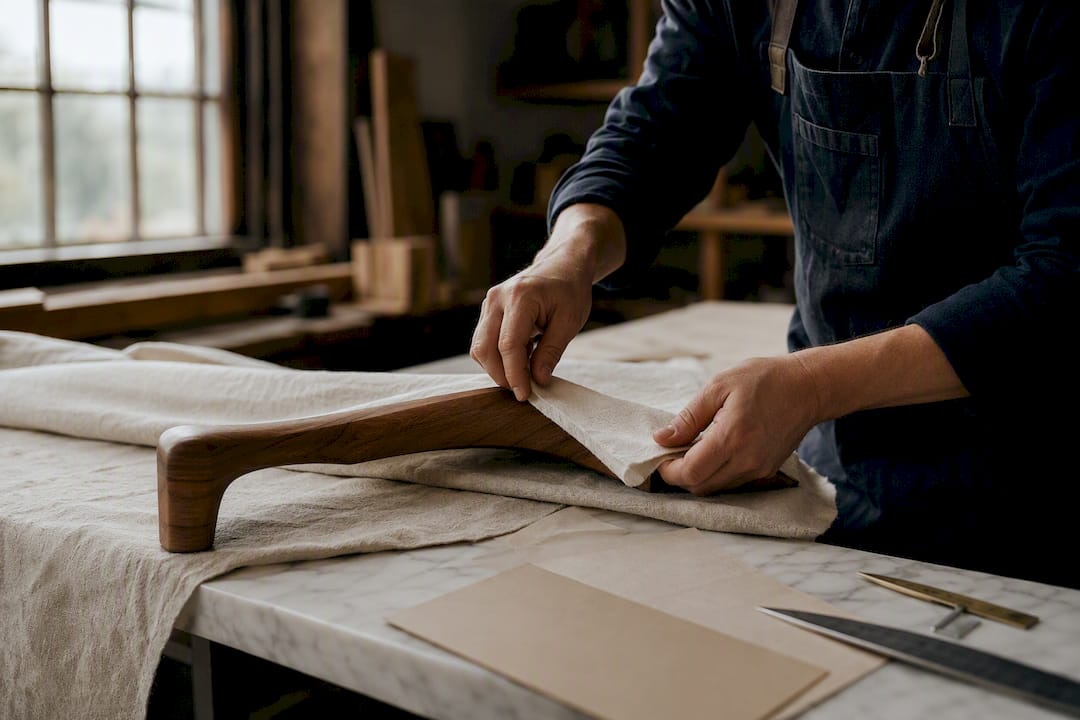
Lead times vary, but MTM generally moves faster through this sequence than bespoke work, because there's no original pattern to draft and refine, according to the Wikipedia entry on made-to-measure production. Complex finishes, imported materials or hospitality-scale orders extend the timeline; a simple dimensional change to a standard design shortens it.
At handover, you should receive a written measurement record and care notes as standard. A workshop that retains your template on file, as many trade suppliers do, saves time on any future reorder.
What should you expect to pay for made-to-measure furniture?
Made-to-measure furniture generally costs more than ready-made because of the labour involved in adjusting patterns and cutting to size, but materially less than full bespoke, where an entirely original design absorbs far more design and prototyping time. Industry comparisons consistently place MTM in that middle band, offering most buyers a meaningfully better fit than off-the-shelf furniture without the premium that bespoke commissions carry, as Bhambi's breakdown of the cost differences sets out.
Price alone won't tell you about quality, though. Look instead at construction: solid timber joinery versus a veneered carcass, mortise-and-tenon or dowel joints versus staples and glue, and how the wood species is specified rather than left vague. A written warranty and clear aftercare guidance are good signs; a maker who can't describe their frame construction in plain terms is a warning sign.
Pro Tip: If a quote is dramatically cheaper than comparable trade prices, ask specifically what's been substituted, whether it's timber species, joint type, or upholstery density, before you sign off.
When should you choose made-to-measure over bespoke?
Made-to-measure earns its keep in rooms and projects where full bespoke would be overkill. Awkward alcoves, sloped ceilings, and stairwells that need a console a few centimetres narrower than standard are classic cases. Repeated units, such as a run of banquette seating across a restaurant, also suit MTM, because the base template only needs drafting once.
- A homeowner with a bay window that's 8cm shallower than standard sofa depth
- A hotel ordering forty identical headboards at slightly non-standard widths
- A designer working to a tight programme where bespoke's longer lead time isn't viable
- A client whose dimensions or brief are only moderately unusual, not wholly unique
Where a room or brief genuinely defies any existing template, bespoke remains the right call.
How do you vet a furniture maker before commissioning?
Before you commit, ask a workshop directly:
- Do you draft an individual pattern, or adjust an existing one?
- How many measurements are taken, and how many fittings or reviews are included?
- Which joinery methods and finishes will be used on this piece?
- Can you show photographs or references from a comparable past project?
Watch for vague answers about "bespoke craftsmanship" with no process detail behind them, an absence of any written measurement record, unrealistically short lead times for a complex commission, or unclear warranty terms. When comparing quotes, resist choosing on price alone. The cheapest quote often means a corner has been cut somewhere in the timber, the joinery, or the finish.
How Simmons Interior Supply approaches made-to-measure commissions
At Simmons Interior Supply, a made-to-measure commission begins with precise measurement of the room or client brief, followed by adjustment of a proven base design, before finish and hardware options are confirmed with the designer. Trade clients typically ask us to confirm joinery method and timber species upfront, and to see finish samples before committing to a full production run.
- Trade documentation and specification sheets available on request
- Finish samples provided ahead of manufacture
- Past commissions viewable in our project gallery
Pro Tip: Ask to see how a base design has been adapted for a previous client's dimensions. It tells you more about a workshop's process than any brochure copy.
Why this distinction matters for designers
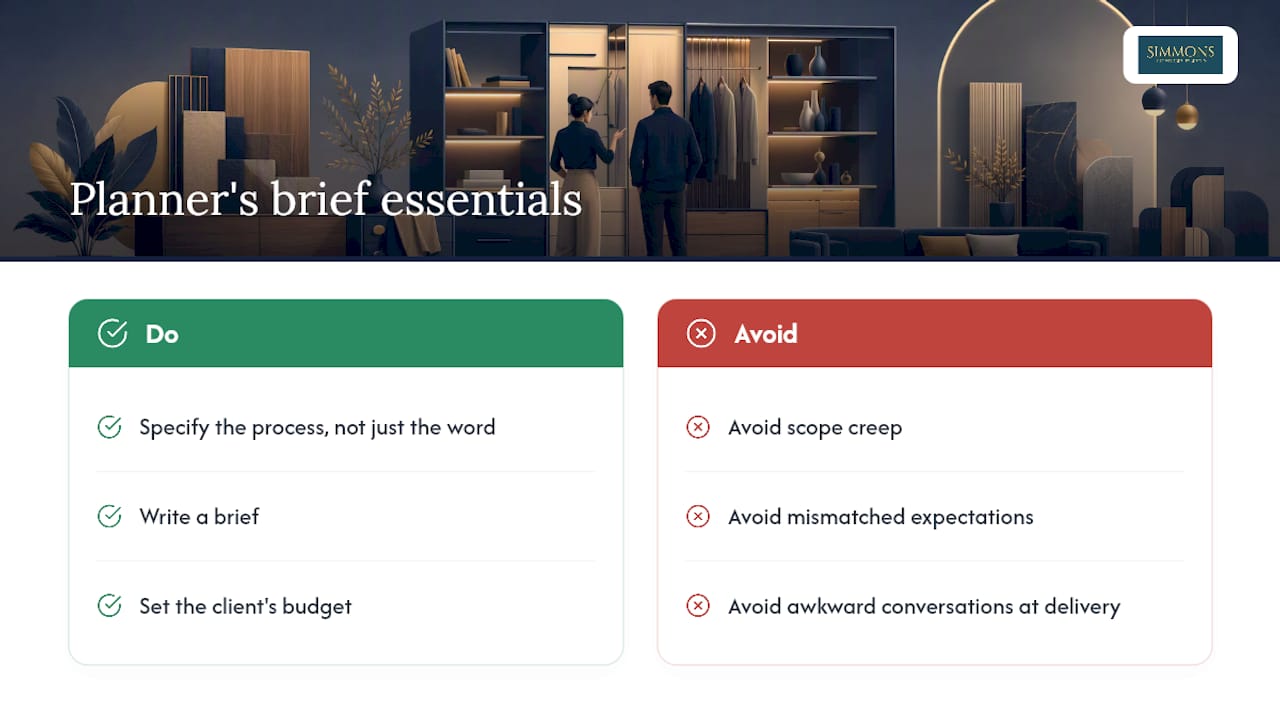
Clarity about made-to-measure versus bespoke changes how you write a brief and set a client's budget. Specify the process, not just the word, and you avoid scope creep, mismatched expectations and awkward conversations at delivery.
Request a made-to-measure or bespoke quote
Simmons Interior Supply works from both directions: made-to-measure adjustments to proven designs for tighter budgets and timelines, and full bespoke commissions when a room genuinely calls for an original piece. For trade clients specifying rugs, mirrors or seating alongside furniture, our trade-only collections sit within the same specification process, so designers aren't juggling separate suppliers for related pieces.
What you get working with us:
- Finish and material samples before you commit to production
- Trade pricing and specification documentation on request
- White-glove delivery for finished pieces
- Direct specification support from initial brief to handover
If you want to see the process applied to a finished piece, view our bespoke nest of coffee tables and request a trade quotation for your own commission.
Sources
- Made-to-measure
- made to order
- Bespoke vs Made-to-Measure vs Off-the-Rack: What's Actually Different (2026) | Nathan Tailors
- Bespoke vs Made-to-Measure Suits NYC | What's the Difference? | Bhambi's