
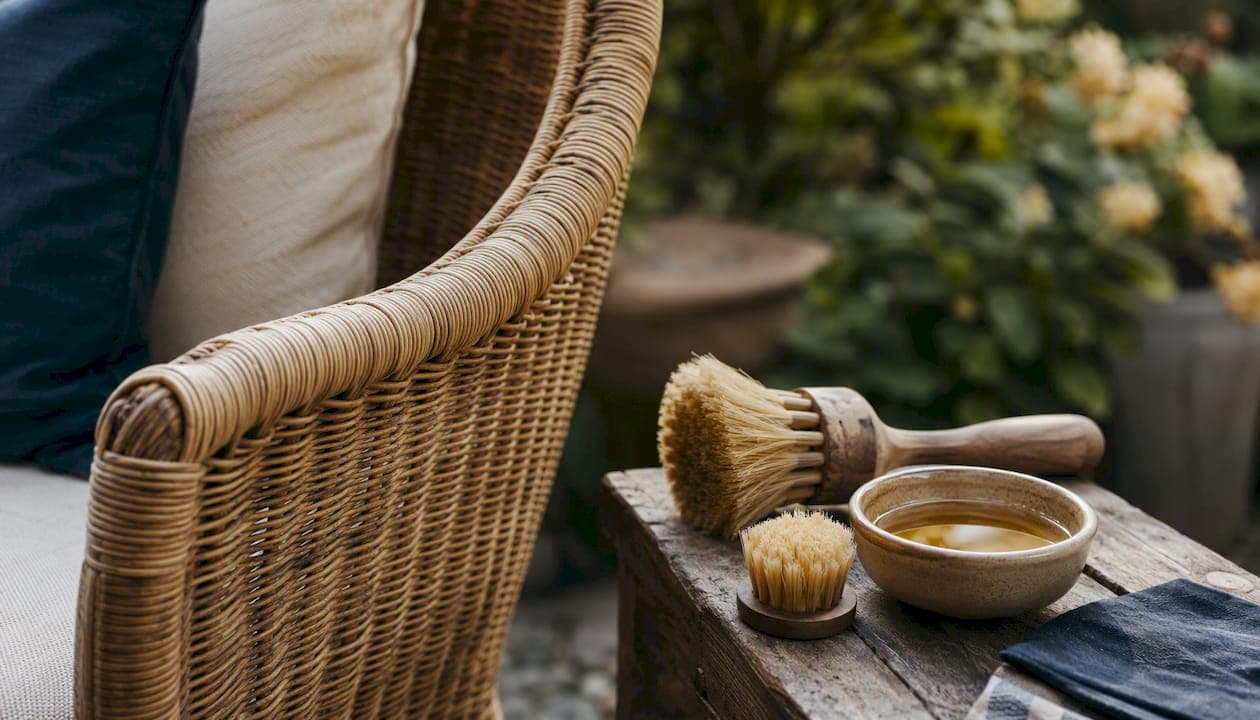
A soft-bristled brush once a week, a barely damp microfibre cloth once a month, and a thin coat of boiled linseed oil twice a year for natural rattan. That is the whole routine. Follow it, and your rattan furniture will hold its elegance through years of daily use, languid summer afternoons and the damp grey months that a British winter reliably delivers.
What to do this afternoon:
- Dust every surface with a soft-bristled brush, working along the weave
- Wipe any visible marks with a barely damp microfibre cloth and a drop of mild washing-up liquid
- Dry the piece immediately with a second dry cloth and leave it in good airflow
- If you own natural rattan and haven't conditioned it in six months, add boiled linseed oil to your shopping list
- Check for any loose strands or soft spots that might indicate early mould
Key takeaways
Consistent rattan furniture care requires weekly dusting, monthly damp-wiping, twice-yearly conditioning for natural rattan, and proper covered storage through the UK winter.
| Point | Details |
|---|---|
| Weekly dusting is non-negotiable | A soft-bristled brush used weekly prevents grit from damaging joints and weave. |
| Natural and synthetic need different care | Natural rattan must never be soaked; polyrattan tolerates a low-pressure hose rinse. |
| Condition natural rattan twice a year | Boiled linseed oil applied every six to twelve months keeps fibres supple and crack-resistant. |
| Store covered and dry for winter | Clean fully, dry completely, then store indoors or under a breathable cover raised off damp ground. |
| Know when to call a professional | Structural joint failure, returning mould, or a bespoke piece are clear signals to seek expert restoration. |
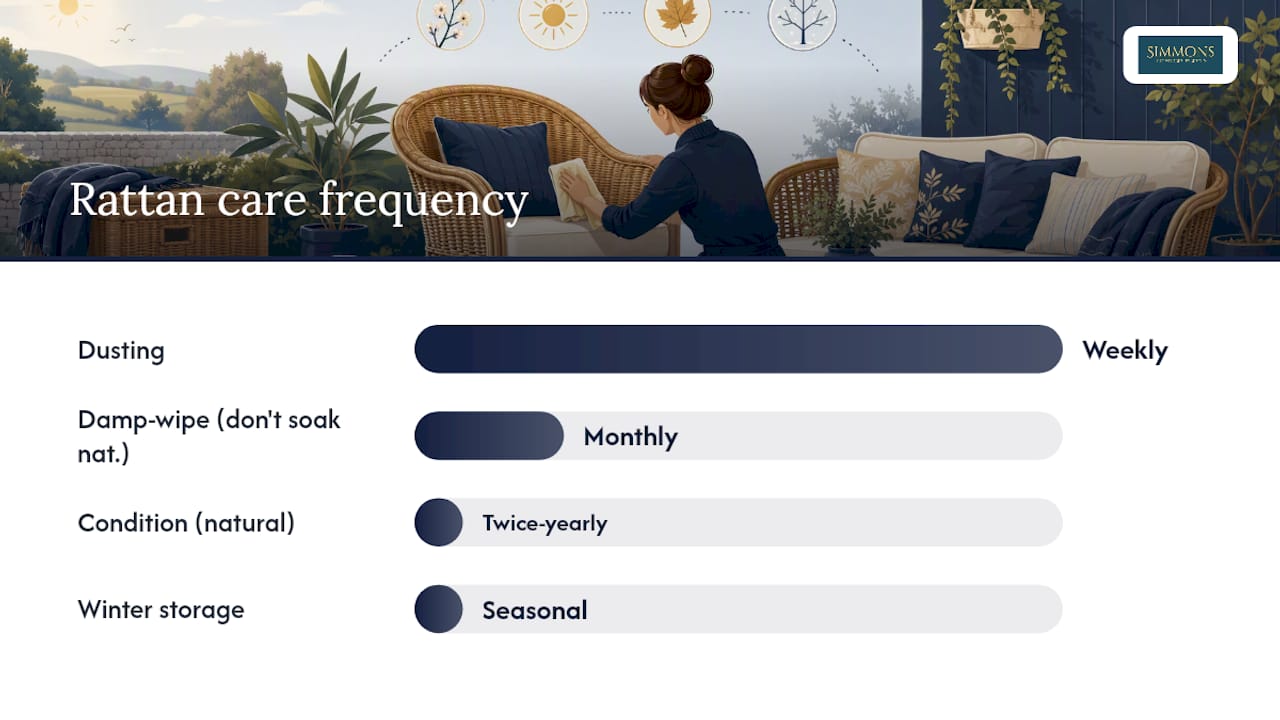
Table of Contents
- How natural rattan and polyrattan differ — and why it changes everything
- How to clean natural rattan step by step
- How to clean polyrattan and resin wicker outdoor pieces
- Treating stains, mildew and small repairs at home
- How to protect and store rattan furniture through a UK winter
- What tools and products should you buy in the UK?
- How often should you clean rattan, and what does it cost?
- Common mistakes that damage rattan — and how to avoid them
- When should you call a professional restorer?
- A practical note on living with rattan
- Sources
How natural rattan and polyrattan differ — and why it changes everything
Understanding which material you own is the single most useful thing you can do before reaching for any cleaning product. The care requirements are genuinely different, and using the wrong approach on the wrong material causes most of the damage owners later regret.
Natural rattan is a climbing vine, harvested and woven into furniture using the cane webbing patterns and rattan weave patterns that give each piece its distinctive, organic character. The fibres are porous and breathe naturally, which makes them beautiful and responsive to their environment. That same porosity means they absorb moisture readily, swell when wet, and can crack when they dry out too fast. Indoor heating and air conditioning are particular hazards: natural rattan is not moisture-friendly and should be treated with the 'gentle, dry and slow' principle at every stage of cleaning.
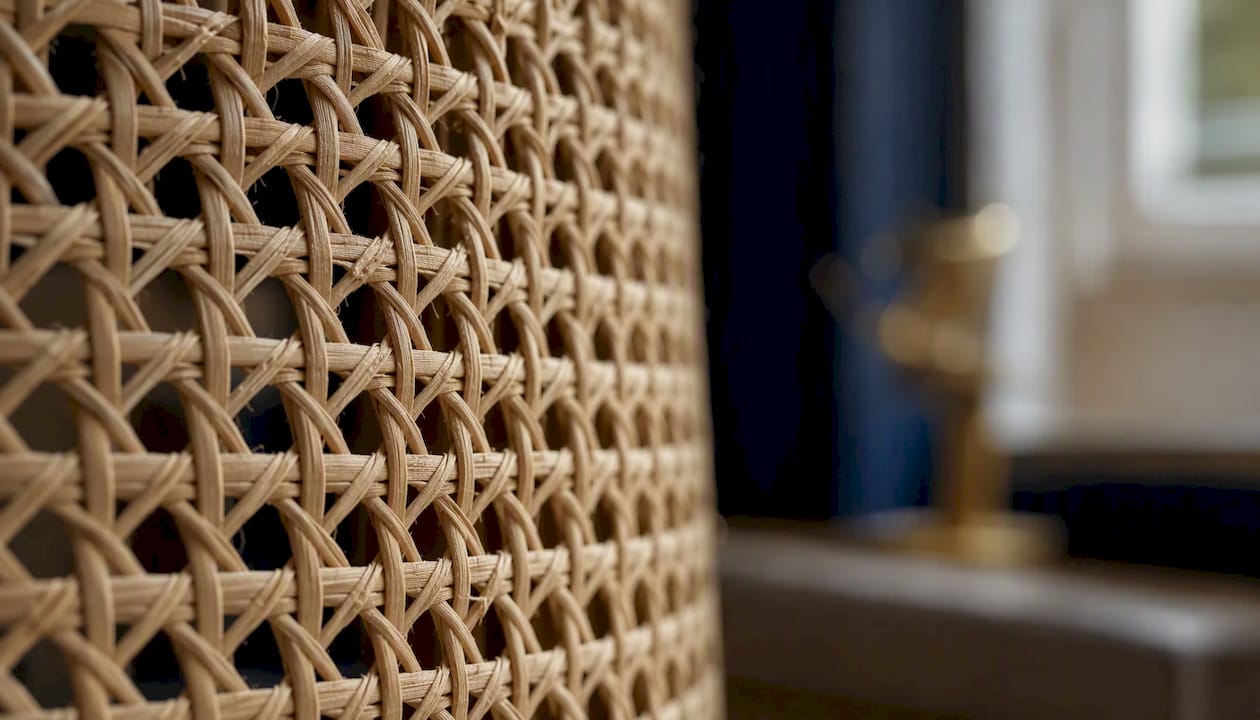
Polyrattan (also called resin wicker or synthetic wicker) is woven from extruded polyethylene or PVC strands. It mimics the look of natural cane weave but tolerates far more water, UV exposure and temperature variation. Most outdoor rattan garden furniture sold in the UK today is polyrattan, which is why it can sit through a British summer without the conditioning rituals natural fibre demands.
A quick identification check at home:
- Weight: natural rattan is noticeably lighter than synthetic
- Texture: run a fingernail along a strand; natural cane has slight irregularities, synthetic feels uniform and slightly waxy
- Colour variation: natural rattan shows warm tonal shifts along each strand; polyrattan tends to be consistent throughout
- Flexibility: gently flex a strand tip; natural rattan is more brittle at the ends, synthetic bends without resistance
Once you know which material you have, the steps that follow will make immediate sense.
How to clean natural rattan step by step
Natural rattan responds best to gentle, infrequent moisture and thorough drying every single time. The sequence below works for indoor pieces and for natural rattan kept in sheltered outdoor spaces such as a covered veranda.
-
Dry-dust first. Use a soft-bristled brush to sweep dust and debris from every crevice, working along the grain of the weave. Follow immediately with a vacuum cleaner fitted with a soft brush attachment to lift particles from deeper within the rattan weave patterns. Skipping this step and going straight to a damp cloth pushes grit into the fibres and causes micro-abrasions.
-
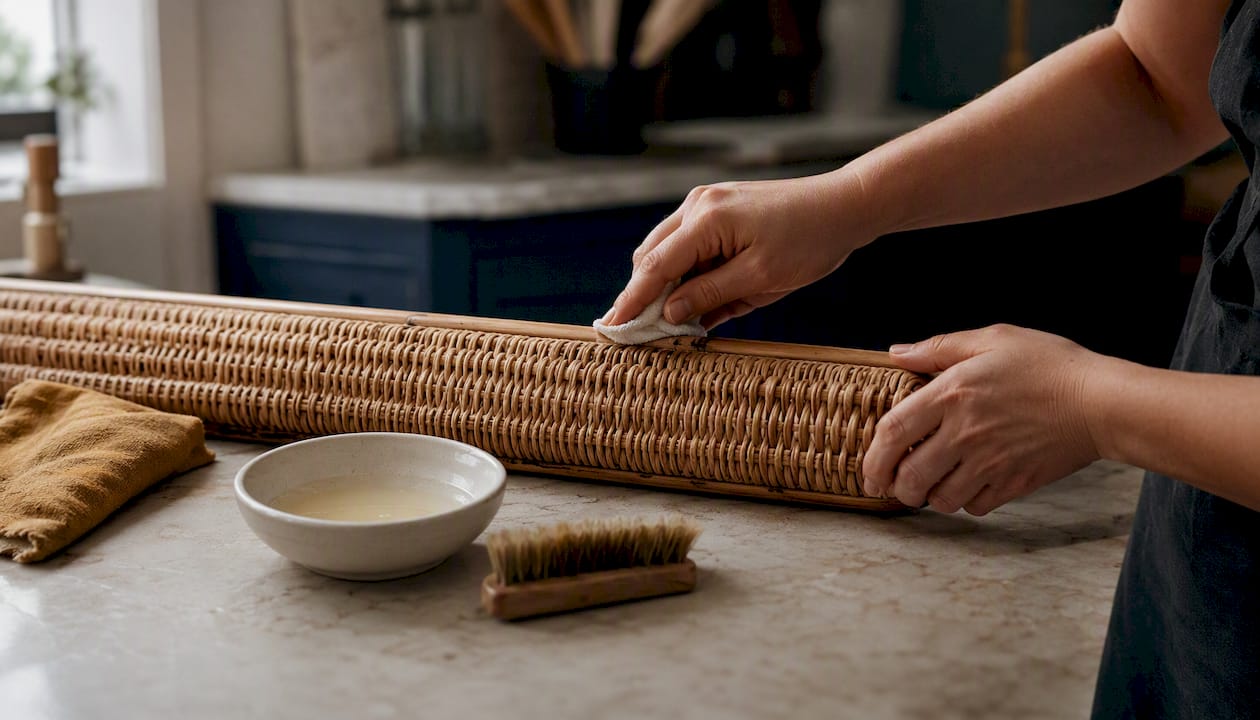
Prepare your cleaning solution. Add two or three drops of mild washing-up liquid to a bowl of warm water. The solution should be barely sudsy. Wring a microfibre cloth until it is almost dry — it should leave no drips when held above the bowl.
-
Wipe along the grain. Work in the direction of the weave, section by section. For spills, blot rather than rub; rubbing spreads the stain and forces liquid deeper into the fibre. Dust weekly and wipe spills immediately with a barely damp cloth to prevent staining from setting.
-
Dry immediately. Follow the damp cloth with a dry microfibre cloth, absorbing as much residual moisture as possible. Then move the piece to a well-ventilated spot and allow it to air-dry fully before use or storage. Avoid radiators, hairdryers and direct hot sun — rapid heat drying causes the fibres to contract unevenly and split at the joints.
-
Condition twice a year. Once the piece is completely dry, apply a thin coat of boiled linseed oil using a soft cloth, working it into the weave. Leave it for fifteen minutes, then buff off any excess. Conditioning natural rattan every six to twelve months with boiled linseed oil or a beeswax-based product keeps the fibres supple and resistant to cracking. Varnished rattan benefits from a clear varnish reapplication after extended wear rather than oil conditioning; paraffin oil can address creaking joints on lacquered pieces.
Pro Tip: Position natural rattan pieces away from radiators and air-conditioning vents. The repeated cycle of hot dry air followed by ambient humidity is what causes joints to become brittle and creak — not age itself.
How to clean polyrattan and resin wicker outdoor pieces
Synthetic rattan is considerably more forgiving, which is why it suits the British outdoor setting so well. The routine is simpler, and you have more latitude with water and cleaning agents.
-
Weekly brush and monthly wipe. Brush off loose debris with a soft-bristled brush each week during the warmer months. Monthly, wipe down with a microfibre cloth dampened in a mild washing-up liquid solution (the same two-to-three drops per bowl ratio as for natural rattan).
-
Seasonal deep clean. Two or three times a year, mix a slightly stronger solution and use a soft sponge to scrub the weave more thoroughly. A garden hose and a soft sponge are effective for cleaning many polyrattan garden pieces, provided the furniture is dried fully before storage.
-
Stubborn mildew on synthetic weave. A dilute bleach solution (one part household bleach to ten parts water) is acceptable for polyrattan only. Apply with a soft brush, leave for no more than five minutes, then rinse thoroughly with clean water. Never use bleach on natural rattan or varnished pieces.
-
Hose and pressure-washer guidance. A low-pressure rinse with a garden hose is fine for polyrattan. If you use a pressure washer, fit a broad fan nozzle, keep it at least 30 cm from the surface, and use the lowest pressure setting the machine allows. Avoid pressure washers entirely on natural rattan — the force frays the weave and forces water into the structural joints.
-
Rinse and dry. Always rinse soap residue off completely and allow the piece to dry in open air before covering or storing.
Pro Tip: Fit a UV-resistant, breathable outdoor furniture cover over polyrattan pieces when they are not in regular use. A cover that traps moisture underneath does more harm than no cover at all — look for covers with ventilation panels or ties that allow airflow at the base.
Treating stains, mildew and small repairs at home
Most damage that looks alarming is actually straightforward to address at home, provided you act quickly and use the right materials.
Mould and mildew
Surface mildew on natural rattan responds well to a solution of one part white vinegar to four parts water. Apply with a soft cloth, work gently into the affected area, then wipe clean with a barely damp cloth and dry the piece thoroughly in good ventilation. For polyrattan, the dilute bleach solution described above is more effective for persistent mildew.
Stain removal by type
- Oil and grease: blot immediately with a dry cloth, then apply a small amount of washing-up liquid directly to the spot, work in gently with a soft brush, and rinse with a barely damp cloth
- Food and drink: blot (never rub), then clean with the mild washing-up liquid solution; for tannin stains from tea or coffee, a dilute white vinegar solution on natural rattan lifts the mark without bleaching the fibre
- Ink: dab with a cloth barely moistened with rubbing alcohol, working from the outside of the stain inward; dry immediately
Minor repairs
- Split or loose joints: apply a small amount of wood adhesive or PVA glue, press the joint firmly together, and hold with a clamp or tape for at least two hours before use.
- Loose or fraying cane strands: trim cleanly with sharp scissors flush to the weave. Do not pull the strand — pulling unravels the surrounding pattern.
- Shallow surface scratches: sand lightly with 180–220 grit sandpaper along the grain, then condition the area with boiled linseed oil.
Signs that DIY is not the right approach:
- Structural joints that flex or creak under normal sitting weight
- Large sections of weave missing or unravelling from the frame
- Deep mould that reappears after two or more cleaning attempts
- A bespoke or heirloom piece where matching the original finish matters
How to protect and store rattan furniture through a UK winter
The British climate asks more of outdoor furniture than most European climates: mild but persistently damp autumns, cold and occasionally freezing winters, and unpredictable springs. A seasonal rhythm protects both natural rattan and polyrattan from the cumulative damage that damp and temperature swings cause.
Seasonal schedule
- Summer (May to August): light clean every one to two weeks; deeper cleans every few months and a full seasonal inspection to spot early wear. Check for UV fading on polyrattan and apply a UV-protective spray if the colour is beginning to dull.
- Autumn (September to October): clean at the end of the gardening season, allow pieces to dry completely, then prepare for storage. Condition natural rattan before storing.
- Winter (November to March): store indoors where possible — a spare room, utility room or dry loft is ideal. If indoor storage is not an option, use a breathable outdoor furniture cover and raise pieces off damp ground on wooden blocks or a pallet.
- Spring (April): inspect for mould, loose weave and joint movement before bringing pieces back into regular use. Re-condition natural rattan and reapply any protective finishes.
Storage checklist
Indoor storage:
- Clean and fully dry before storing
- Store in a ventilated space — avoid airtight rooms where condensation builds
- Keep off cold concrete floors (use a rug or wooden boards underneath)
- Do not stack heavy items on top of woven seats
Covered outdoor storage:
- Use a breathable cover, not a sealed plastic sheet
- Raise pieces off damp ground
- Avoid unventilated sheds where moisture accumulates; a shed with a vent or gap at the eaves is preferable to a sealed one
- Garages can work well if they are dry, but many UK garages suffer from rising damp — check the floor and walls before committing
What tools and products should you buy in the UK?
The right toolkit costs very little and prevents the kind of damage that costs a great deal to repair. Here is what to look for.
Essential toolkit:
- Soft-bristled brush: look for natural bristles or fine synthetic bristles; avoid stiff wire brushes entirely
- Vacuum cleaner with a soft brush attachment: the attachment matters — a hard plastic nozzle scratches lacquered and varnished rattan
- Microfibre cloths: lint-free and highly absorbent; keep two to hand (one damp, one dry) during every clean
- Mild washing-up liquid: any standard UK brand works; the key is dilution — two to three drops per bowl, no more
- Boiled linseed oil: available from most UK hardware and DIY retailers; choose a food-grade or furniture-grade version for indoor pieces
- Breathable outdoor furniture cover: look for covers with ventilation panels, UV-resistant fabric and ties or elasticated hems that secure in wind
Where buyers go wrong:
- Choosing abrasive scrubbing brushes that fray the weave within a season
- Using undiluted household bleach on natural rattan, which strips the fibre and causes irreversible discolouration
- Buying sealed plastic covers that trap condensation underneath
Pro Tip: Before using any new product on a visible surface, test it on a small, inconspicuous area — the underside of a seat or the back of a leg — and leave it for 24 hours. This single habit prevents most accidental damage.
How often should you clean rattan, and what does it cost?
Rattan furniture care does not demand much time when the routine is consistent. The problems arise when cleaning is deferred for a full season and a light job becomes a restoration project.
Frequency and time guide:
- Weekly dusting: 5–10 minutes per piece; a soft brush and nothing else
- Monthly wipe-down: 15–20 minutes; mild washing-up liquid solution and microfibre cloths
- Twice-yearly conditioning (natural rattan): 30–45 minutes including drying time; boiled linseed oil and a soft cloth
- Annual deep clean and inspection: 1–2 hours; full clean, mould check, joint inspection and re-protection
Typical UK supply costs (approximate):
- Soft-bristled brush: £3–£8
- Microfibre cloths (pack of 10): £5–£12
- Boiled linseed oil (500 ml): £6–£12
- Breathable furniture cover (chair or two-seater): £15–£35
- Professional cleaning or minor restoration: costs vary widely by restorer and piece complexity; a local upholstery or furniture restoration specialist will provide a quote after inspection
With proper maintenance, natural rattan furniture can last many years. The cost of a brush and a bottle of linseed oil is negligible against the cost of replacing a well-made piece.
Common mistakes that damage rattan — and how to avoid them
Most rattan furniture that fails prematurely has been damaged by one of a small number of avoidable errors. Knowing them in advance is the most practical form of care.
Never do these:
- Soak natural rattan in water or leave it standing in rain without cover
- Use a pressure washer on natural rattan or on any varnished piece
- Apply undiluted bleach to natural fibre — it weakens and discolours the cane irreversibly
- Place natural rattan directly beside a radiator or in the path of an air-conditioning vent
- Store rattan on damp grass, bare concrete or in an unventilated space over winter
Safety reminders when treating mildew:
- Always dilute bleach carefully (one part bleach to ten parts water for synthetic rattan only)
- Work in a well-ventilated area and wear rubber gloves
- Rinse the piece thoroughly after treatment and dry fully before use
- Keep children and pets away from the area while the solution is active
When should you call a professional restorer?
Some damage is beyond what a careful homeowner can safely address, and attempting a DIY repair on a structurally compromised or bespoke piece often reduces its value rather than restoring it.
Signs you need a professional:
- Structural joints that flex, creak or have separated from the frame
- Large sections of weave missing, unravelling or detached from the core structure
- Deep mould that returns within days of cleaning, indicating penetration into the frame timber
- An heirloom, antique or bespoke piece where matching the original weave pattern, finish or provenance matters
What a professional restoration typically involves:
- Weave repair or full re-weaving of damaged sections using matched cane or rattan
- Structural timber repair or replacement of the internal frame
- Re-finishing: stripping, sanding and reapplying lacquer, varnish or paint to match the original
- Mould treatment at depth, including treatment of the timber frame beneath the weave
For owners of genuinely bespoke or high-value pieces, the craftsmanship standards at Simmonsinteriorsupply offer a useful benchmark for what skilled restoration can achieve — and when replacement with a made-to-order piece becomes the more considered choice.
Pro Tip: Before contacting a restorer for a quote, clean the piece as thoroughly as you safely can, photograph every area of damage clearly, and note the approximate age and provenance of the furniture. A restorer who can see the problem clearly and understand the piece's history will give you a more accurate and useful estimate.
A practical note on living with rattan
There is something quietly satisfying about a piece of rattan furniture that has been properly looked after — the way the weave stays tight, the colour deepens slightly with conditioning, and the whole thing simply holds together through years of use. In my experience, the weekly brush is the habit that prevents the most expensive repairs. It takes five minutes and it keeps grit from working its way into the joints where it acts like sandpaper every time someone sits down.
One habit that professional restorers mention consistently: keep airflow behind and beneath rattan pieces, particularly when they are stored or positioned against a wall. Trapped damp is the quiet enemy of both natural and synthetic weave. Rotate cushions regularly too — uneven compression over time distorts the seat weave beneath.
At Simmonsinteriorsupply, we work closely with clients who own bespoke and handcrafted pieces that deserve more than a generic care routine. If you have a woven piece of particular value or provenance and you are unsure whether to attempt a repair yourself, we are always happy to offer guidance. Our bespoke furniture collection also gives a sense of the craftsmanship standards worth preserving.
Sources
The following sources informed this guide and offer additional detail on specific aspects of rattan care:
- How to clean and care for rattan furniture
- How to care for garden furniture
- How to Care for Rattan and Cane Furniture – Esteller
- Rattan Furniture Care 101: Cleaning, Protection & Seasonal Maintenance Tips...
- How to Clean Rattan Furniture: A Step-by-Step Guide for Indoor and Outdoor Pieces - Honeywell Rattan
- Rattan Garden Furniture Care Guide