
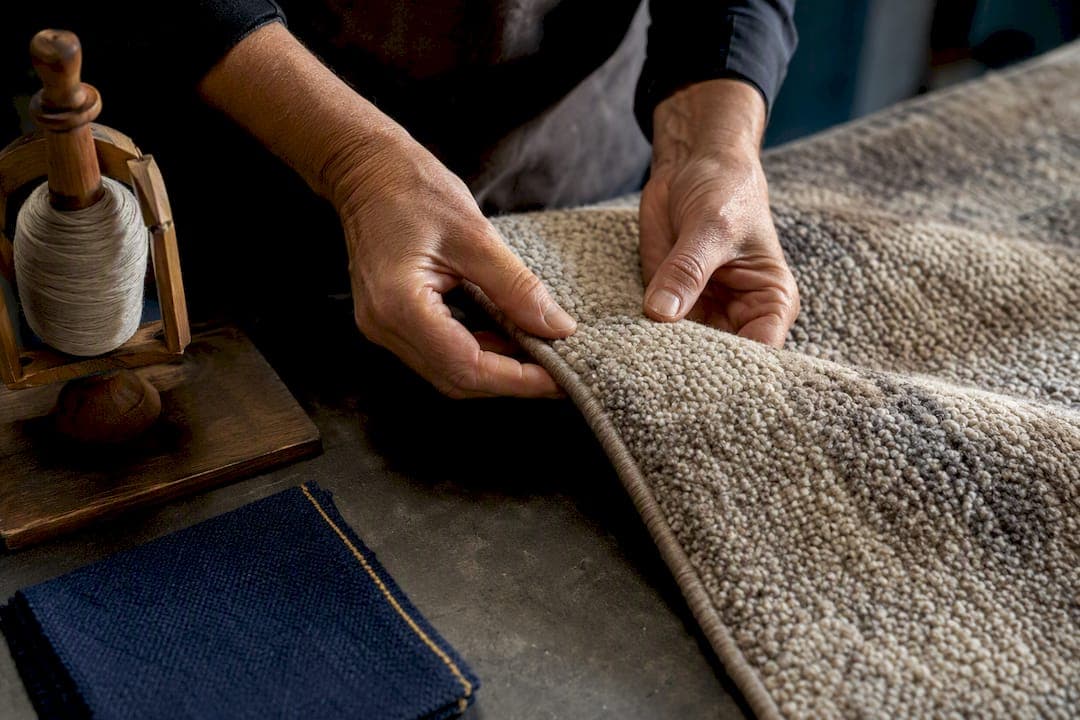
Plan for 23 to 45 weeks on a hand-knotted commission, 12 to 20 weeks for hand-tufted, and as little as 4 to 8 weeks for flatweave or machine-loomed pieces. Every custom rug lead time depends on construction, size, complexity and how briskly approvals move through your desk. As a working rule, budget four to eight months for hand-knotted work and three to four months for hand-tufted, then request a strike-off sample the day you commission.
TL;DR:
- Hand-knotted rugs require approximately 23 to 45 weeks for production, depending on knot density, fibre type, and artisan availability.
- Hand-tufted and loomed rugs can be completed within 5 to 20 weeks, with simpler designs and standard yarns reducing lead times.
- The sampling or strike-off phase adds 3 to 5 weeks, and approval delays during this stage significantly impact the overall schedule.
- Speeding up the order can involve switching to faster construction methods, paying for priority production, or using air freight for shipping.
- Final lead times must include design, approval, sample, production, and shipping, with buffers recommended for hand-knotted pieces to prevent delays.
Table of Contents
- How long do custom rugs take by construction type?
- What are the phases of a custom rug production timeline?
- What factors change a custom rug's lead time?
- How can you speed up a custom rug order?
- Custom rug project planner: a week-by-week checklist
- What trade experience tells you about custom rug timelines
- A note on scheduling from the editorial desk
- Commission a bespoke rug through Simmons Interior Supply
- Sources
- FAQ
How long do custom rugs take by construction type?
Construction dictates almost everything about a rug production timeline, and the gap between methods is wider than most specification sheets let on. Hand-knotted pieces sit at the top of the scale because artisans build them thread by thread, and lead times typically run 23 to 30 weeks from an approved commission, stretching to 31 to 45 weeks once sampling and shipping are folded in. Knot density, measured in knots per square inch (KPSI), is the multiplier here: a coarse 80 KPSI piece moves noticeably faster off the loom than a fine 300 KPSI silk rug of the same size.
Hand-tufted and loomed rugs cut that window substantially. A skilled workshop can punch and finish a tufted piece in a fraction of the hours a hand-knotted equivalent demands, and some makers quote dispatch windows as tight as two to three weeks for straightforward tufted orders, with knotted or loomed variants landing closer to five to six weeks once production and finishing are combined. Flatweaves and machine-tufted rugs are the quickest route of all, though they cap out on the intricacy of pattern they can carry.
| Construction | Typical lead time | Main driver of variance |
|---|---|---|
| Hand-knotted | 23 to 45 weeks | KPSI, artisan availability, silk or mixed fibres |
| Hand-tufted / loomed | 5 to 20 weeks | Design complexity, dye lot changes |
| Flatweave / machine-tufted | 2 to 8 weeks | Size, colour count, standard yarn stock |
A few things push any of these ranges higher, whatever the construction:
- Bespoke colour matching against a paint or fabric reference, rather than a standard palette
- Silk, bamboo silk or blended fibre yarns, which run slower through both dyeing and weaving
- Oversized formats beyond around 12 by 15 feet, which strain loom width and artisan scheduling alike
What are the phases of a custom rug production timeline?
Every commission moves through the same five phases, whatever the workshop. The clock starts at design sign-off, not at your first enquiry email, so a vague brief costs you real weeks before production has even begun.
- Design and approval (1 to 4 weeks): finalising size, pattern, colourway and pile height before anything is quoted for production.
- Sampling or strike-off (3 to 5 weeks): a physical swatch or corner sample confirming colour, texture and knot quality against the design intent, which trade practice treats as part of the critical path, not an optional extra.
- Core production: the longest and least flexible phase, driven by construction, size and factory queue.
- Finishing, quality control and pre-shipment inspection (1 to 2 weeks): binding, trimming, washing and a final check before the rug leaves the workshop.
- Shipping and customs: sea freight typically adds several weeks, while air freight compresses transit at a higher cost, with customs clearance adding a smaller fixed delay at either end.
What factors change a custom rug's lead time?
Size scales close to linearly with labour hours. NP Rugs' published examples put a 5 by 8 foot rug at roughly seven to eight weeks of production, against 11 to 12 weeks for a 9 by 12 foot piece in the same construction, so doubling the area doesn't quite double the time, but it comes close.
Knot density multiplies rather than adds to that figure. A fine 250 to 300 KPSI silk rug can take two to three times longer to knot than an 80 to 100 KPSI wool piece of identical dimensions, because every extra knot per square inch requires more artisan hours, not more machine speed.
- Complex repeat patterns and multi-colour dye runs slow both sampling and the main weave.
- Seasonal demand spikes and factory order queues can add several weeks with no change to your own specification.
- Regional material shortages (certain wool grades, specific silk lots) occasionally stall a start date entirely.
Pro Tip: Send your artwork and colour references in the first design meeting, not after the quote. Every week spent finalising the pattern after sampling has begun is a week added to your finish date, not absorbed into it.
How can you speed up a custom rug order?
- Switch construction where the design allows. Moving from hand-knotted to hand-tufted can save many weeks, and Jubi's own comparisons suggest the quality compromise is modest for most residential and hospitality settings.
- Pay for a priority production slot. Most workshops will expedite a queue position for a surcharge, typically shaving two to four weeks off the core production window.
- Upgrade to air freight. Trading sea for air on the shipping leg saves the most calendar time of any single lever, at a proportionally higher cost per rug.
- Fall back on stock or semi-custom. A near-match from an existing collection, resized or recoloured within standard tolerances, can bridge a gap while the full bespoke piece is still on the loom.
Custom rug project planner: a week-by-week checklist
Paste this into your project programme and adjust the buffer at each step:
- Brief and deposit (Week 0): lock size, construction, colourway and pile height before you request pricing.
- Sample request and approval (Weeks 1 to 5): turn the strike-off around within 48 hours of receipt; every extra day here delays the start of production.
- Production start (Week 5 onward): the core window, typically 16 to 24 weeks for hand-knotted, far shorter for tufted or flatweave.
- Finishing, inspection and shipping: book installation dates only once the rug has cleared quality control, never against the original quote date.
Build a two to four week buffer beyond any supplier estimate for hand-knotted pieces, and a smaller one for faster constructions.
What trade experience tells you about custom rug timelines
Bespoke commissions typically involve close collaboration between client, designer and artisan from the first sketch, which is precisely where most delays start or stop. Luke's practical advice to trade clients: approve the strike-off sample within days, not weeks, and resist late colour or pattern changes once weaving has begun.
Production is the least forgiving phase in the entire process. Lock your design early, approve samples fast, and the rest of the schedule tends to hold itself together.
A note on scheduling from the editorial desk
The biggest scheduling error isn't a slow workshop, it's an underestimated approval stage. Build your buffer around sampling and sign-off, not just production, and your dates will hold.
— Luke
Commission a bespoke rug through Simmons Interior Supply
Some suppliers work directly with trade clients and individual buyers to commission rugs, mirrors and furniture built to the dimensions and finish a project actually needs, rather than pushing you toward whatever happens to be in stock.

To get a realistic lead-time estimate for your own project, tell us the intended size, preferred construction, colour references and installation date, and we'll map the phases against your programme before you commit. Our bespoke furniture collection, alongside the trade-only Signature rug collection from Colbourns, gives designers a starting point whether the brief calls for a fully custom knot or a faster semi-custom route. For projects where design decisions still need pinning down, our guide to the custom rug design process walks through what to lock in before you request a quote. Get in touch through the Simmons Interior Supply site to start the conversation on your next commission.
Sources
- Custom Rug Lead Times: What Every Designer Needs to Plan For | Kapetto
- Custom Rug Sourcing for Interior Designers: The Full Guide | NP Rugs
- Jubi custom rug timeline | Jubi Rugs
FAQ
How long does it take to get a custom rug?
Most custom rugs take between 5 and 45 weeks depending on construction, with hand-knotted pieces at the long end and flatweave or machine-tufted options finishing fastest.
How long do rugs take to make?
Production alone, excluding design and shipping, typically runs 16 to 24 weeks for hand-knotted rugs and as little as two to three weeks for tufted constructions.
How long does shipping take once a custom rug is finished?
Sea freight commonly adds several weeks to the total custom rug lead time, while air freight shortens transit at extra cost; customs clearance adds a small fixed delay either way.
How much should a custom rug cost?
Cost depends heavily on construction, fibre and size, so current pricing for bespoke pieces is generally available directly through the supplier's site rather than a fixed published rate.
Does a faster construction mean lower quality?
Not necessarily. Hand-tufted and flatweave rugs sacrifice some of the density and longevity of hand-knotted work, but for most residential and hospitality interiors the difference is modest against the weeks saved.