

A custom rug design gives you a floorcovering built precisely to your dimensions, palette and material brief, rather than a compromise pulled from a warehouse run. It suits homeowners finishing a difficult room, interior designers specifying for a client, and hospitality buyers who need dozens of identical pieces to hold up under daily footfall. Whoever commissions it, the process asks you to settle a handful of decisions before a single knot is tied or a fibre dyed:
- Size and shape — the exact footprint your room and furniture demand
- Fibre and construction — wool, cotton, jute, synthetic or printed velvet, hand-knotted or flatwoven
- Pile height and texture — from close-cropped flatweave to deep, plush knots
- Backing and finish — anti-slip layers, fringe, binding or a woven border
- Lead time and budget — the trade-offs between speed, detail and price
Key Takeaways
A bespoke rug succeeds when size, fibre and construction are matched to the room's traffic and furniture, and when the brief and sampling stages are never rushed.
| Point | Details |
|---|---|
| Match fibre to use-case | Choose wool or hand-knotted construction for longevity, synthetics or printed faces for hospitality washability. |
| Size against furniture, not floor | Front sofa legs on the rug, dining chairs fully clear when pulled out. |
| Never skip physical swatches | Screen mock-ups can't show true colour, pile depth or sheen under your own lighting. |
| Budget for lead time by technique | Printed and tufted pieces ship in weeks; hand-knotted commissions take considerably longer. |
| Commission through a staged process | Simmons Interior Supply guides trade clients through brief, technical drawing, swatches and sign-off before production. |
Table of Contents
- Materials and construction for bespoke rug creation
- How do you measure and size a custom rug?
- Which shape suits your room and furniture layout?
- What does the design process actually involve?
- What affects price and how long will it take?
- Which finishing options suit your rug?
- How do you care for a bespoke rug?
- What trade buyers get wrong when commissioning a rug
- How Simmons Interior Supply supports bespoke rug commissions
- Sources
Materials and construction for bespoke rug creation
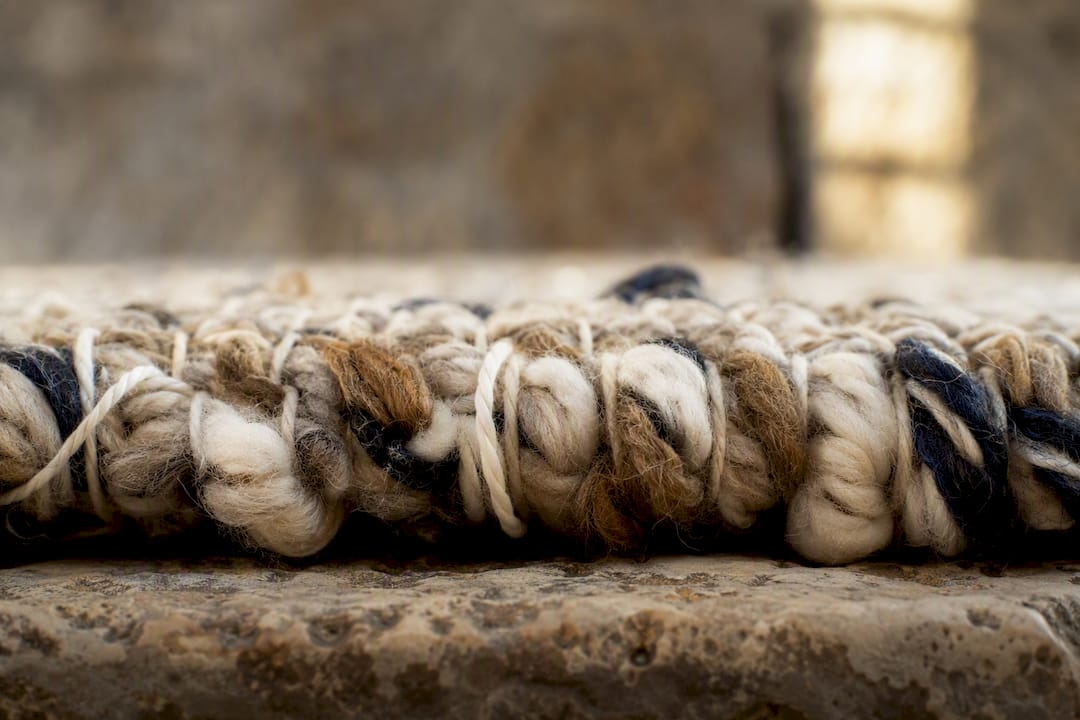
The fibre you choose sets the tone before pattern or colour enters the conversation. Wool remains the standard for hand-knotted and hand-tufted rugs because it resists crushing and hides soil between cleans. Cotton works well in flatweaves and casual pieces, offering a crisper, cooler finish at a lower cost than wool. Jute brings texture and warmth to low-traffic spaces but wears faster underfoot and dislikes moisture. Synthetics such as polypropylene and nylon suit high-traffic hospitality settings where washability and colour stability under UV light matter more than natural fibre character.
Printed and velvet-faced rugs use dye sublimation to reproduce photographic or graphic artwork with genuine fidelity, which makes them the right route for logo mats, art reproductions or bold personalised patterns that hand-knotting cannot render economically. These typically pair with anti-slip latex or jute-bonded backing, which is worth specifying whenever a rug sits on hard flooring or in a passage with regular foot traffic.
Construction method decides how the rug ages. Hand-knotted wool rugs can last decades and improve in appearance as the pile settles. Hand-tufted rugs offer similar looks at a lower price but with a shorter working life, since the tufted pile is glued rather than woven into the backing. Flatweaves resist matting entirely but show wear at high-traffic edges sooner.
Pro Tip: Ask for a swatch in both daylight and lamplight before committing to a fibre; wool and synthetic faces reflect light very differently once a rug is laid flat under a pendant.
How do you measure and size a custom rug?
Sizing mistakes are the most common reason a beautiful rug looks wrong once it's down. In a living room, the front legs of your sofa and chairs should sit on the rug, with the rug extending at least a few inches beyond the seating group rather than stopping short beneath it. In a dining room, the rug needs enough clearance that dining chairs stay on the rug even when pulled fully out, which usually means adding around 60 to 70 centimetres beyond the table's footprint on every side. Bedrooms follow a gentler rule: the rug should extend beyond the sides and foot of the bed by a comfortable margin, so bare feet land on rug rather than floorboard.
Layering rugs, a popular custom rug design idea for rooms that need texture without overwhelming pattern, follows its own maths. Designers recommend the top rug run at roughly two-thirds the size of the base rug, with the neutral base extending 12 to 18 inches beyond the decorative layer on all sides. That proportion keeps the base looking intentional rather than like an off-cut peeking from underneath.
Before finalising dimensions:
- Measure the room's full width and length, noting doorways and fixed furniture.
- Mark out the intended rug footprint with masking tape and live with it for a day.
- Check furniture legs against the marked outline, front legs on, back legs optional.
- Confirm doorway swing and traffic paths remain clear.
- Add your layering or margin allowance if using a base-and-top arrangement.
Our own rug size guide walks through room-by-room examples if you want visual references before you commit.
Which shape suits your room and furniture layout?
Rectangles remain the default for a reason: they echo the geometry of most rooms and furniture groupings, and they're the easiest shape to size confidently against a sofa or dining table. Round rugs earn their place under circular tables, in reading nooks, or wherever you want to soften a room dominated by straight lines and hard corners. Runners solve the long, narrow spaces that rectangles waste, hallways, galley kitchens, and the strip beside a bed.
- Choose a runner for corridors and bedside placement where width is constrained
- Choose round to break up angular furniture groupings or define a single seat
- Choose custom-cut shapes for bay windows, curved staircases or irregular open-plan zones
- In open-plan layouts, let the rug define each zone, dining, seating, working, rather than one rug trying to unify the whole floor
Odd-shaped rooms are exactly where bespoke commissioning earns its cost over anything off the shelf.
What does the design process actually involve?
Every strong bespoke rug design ideas brief starts with the same four ingredients: intended use, expected traffic level, the furniture it needs to sit beneath, and colour references, ideally physical swatches rather than screen colours. A clear brief speeds production and reduces rework, and it's the single biggest factor separating a smooth commission from a frustrating one.
Once the brief lands, sampling begins. Digital mock-ups are fine for early colour and pattern conversations, but physical swatches are non-negotiable before production on anything hand-knotted or hand-tufted, since screens cannot show pile depth, sheen or true colour under your own lighting.
The strongest commissions we see move through the same staged sequence: brief, then a technical drawing confirming scale and pattern repeat, then physical swatches, then a full-size mock-up or photomontage, then sign-off. Skipping a stage is almost always where costly reworks creep in on long-lead woven pieces.
That staged approval, outlined in our own process guide, exists because a hand-knotted rug can take weeks to correct once weaving starts. Technical stages cover pattern repeat, border and edge detail, and a scaled drawing the weaver works from directly.
Before production begins, expect a final quality-control step: a physical swatch check against the technical drawing, and written sign-off from the client or specifying designer.
- Brief: use case, traffic, furniture, colour references
- Technical drawing: scale, pattern repeat, edge and border detail
- Swatches and mock-up: physical proofing before weaving starts
- Sign-off: written approval that locks the specification
What affects price and how long will it take?
Price on a bespoke rug moves with five levers: size, weaving technique, fibre, pattern complexity, and finishing detail. A flatweave in cotton or wool costs considerably less per square metre than a hand-knotted piece with a fine knot count and intricate border, simply because hand-knotting is measured in weeks of skilled labour rather than machine hours.
Think in tiers rather than fixed numbers. Printed and tufted rugs sit at the accessible end, buying you speed and pattern flexibility but a shorter working life. Hand-knotted wool sits at the top, buying decades of wear and a pile that improves with age, at a correspondingly higher price and longer wait.
Lead times follow the same logic. Printed and tufted rugs typically ship within two to five weeks, while hand-knotted commissions can run from several weeks to several months depending on size, knot density and how many looms are dedicated to the piece. Complex borders, multiple colourways, or large runs for hospitality contracts all add time.
- Size and quantity: larger runs and hospitality volumes extend scheduling
- Technique: hand-knotting takes far longer than tufting or printing
- Pattern complexity: multi-colour repeats slow down every construction method
- Finishing: fringe, binding and borders add a production stage each
Pro Tip: Send your floor plan and any furniture drawings with your first enquiry. Quotes come back faster and more accurately when the maker can see the room, not just a number.
Which finishing options suit your rug?
Edge treatment is where a rug either reads as finished or looks unresolved. Serging wraps the raw edge in matching yarn and suits flatweaves and lower-pile pieces. Binding uses a fabric tape for a crisper, more tailored edge that holds up well in high-traffic hallways. Fringe, in cotton or jute, gives a traditional look on hand-knotted wool but needs occasional combing and is the first thing to show wear.
- Serged edges: neat, cost-effective, best on flatweaves
- Bound edges: durable and tailored, ideal for hallways and stairs
- Fringed edges: traditional look on hand-knotted pieces, needs upkeep
- Bordered designs: a woven or contrasting border can frame a pattern without competing with it
Always request a physical sample before final approval, and check it under your own room's lighting rather than a showroom's. Finishing choice also affects long-term care: bound edges tolerate washing better than loose fringe, which can catch and fray in a machine or under a vacuum head.
How do you care for a bespoke rug?
Vacuum weekly on a setting suited to the pile height, and rotate the rug every six months so sunlight and foot traffic wear it evenly rather than fading one half. Keep hand-knotted wool out of direct, prolonged sun exposure, since UV gradually dulls natural dyes.
Spot-clean spills immediately with a dry cloth rather than rubbing, and blot rather than scrub on wool or silk-blend faces. Some washable wool and low-pile synthetic rugs are formulated for household laundering, but hand-knotted and hand-tufted wool pieces generally need a professional clean every twelve to eighteen months rather than a home wash.
- Vacuum weekly, rotate every six months
- Blot spills immediately; never scrub wool or silk
- Professional clean roughly once a year for wool and tufted pieces
- Refringing and re-bordering are usually straightforward repairs when edges wear before the field of the rug does
What trade buyers get wrong when commissioning a rug
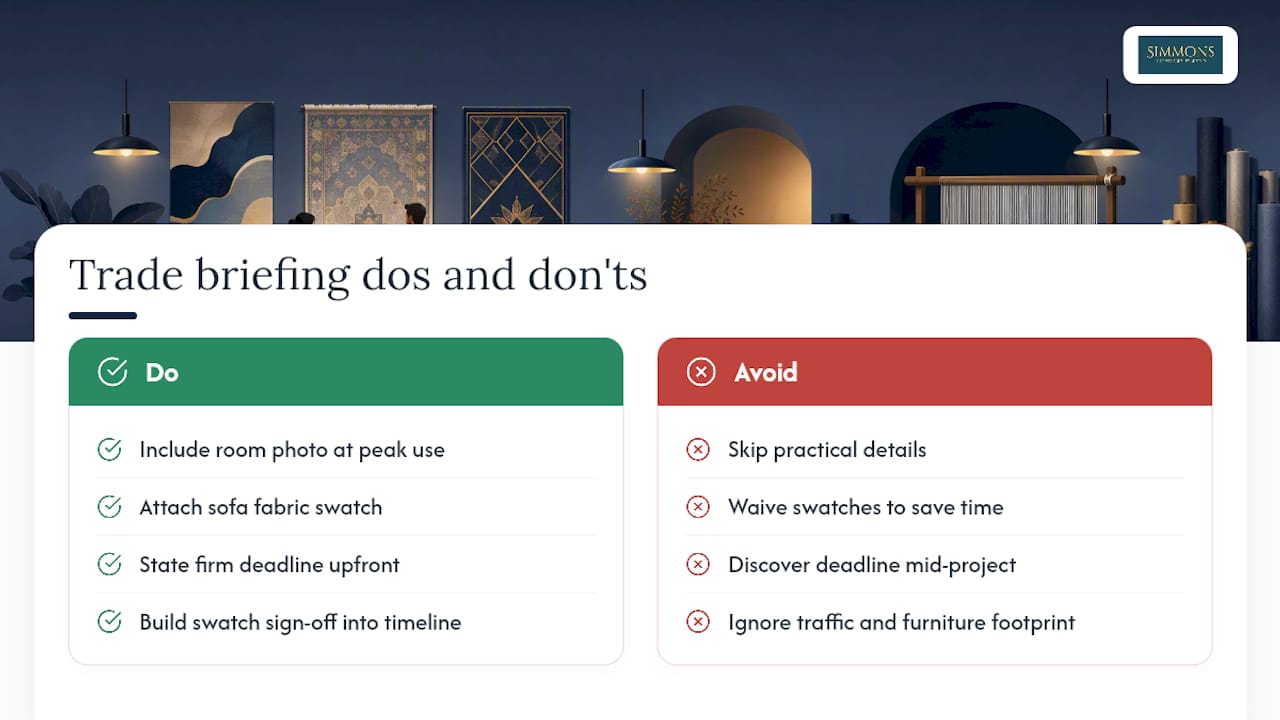
The pitfall I see most often isn't fibre choice or budget. It's a brief that skips the practical detail, traffic level, furniture footprint, washability needs, and asks for swatches to be waived to save a week. That week saved almost always costs more later, once a hand-knotted piece arrives in a colourway that reads differently under the client's actual lighting.
The briefs that produce genuinely successful results tend to be oddly specific: a photograph of the room at the time of day it's used most, a fabric swatch from the sofa it needs to sit beneath, a hard deadline stated upfront rather than discovered midway through weaving. If you're specifying for a trade client, build the swatch and sign-off stages into your own timeline rather than treating them as optional extras, and bring Simmons Interior Supply in early enough that we can flag lead time risks before they become deadline problems.
How Simmons Interior Supply supports bespoke rug commissions
Simmons Interior Supply works trade-only with interior designers, architects and hospitality procurement teams, pairing each brief with artisan partners who specialise in hand-knotted, hand-tufted, flatwoven and printed construction. That partnership model means your commission moves through the same staged approval, brief, technical drawing, swatches, sign-off, that keeps long-lead woven pieces on schedule rather than discovering a mismatch after weaving starts.
Before you get in touch, gather three things: room measurements or a floor plan, a written brief covering use-case and durability needs, and a rough budget band so we can recommend the right construction method from the outset. Browse finished commissions in our gallery for a sense of what's possible, and if you're sourcing more widely for a showroom-based project, Faura's trade showroom in Westminster is a useful complementary resource for designers building out a fuller specification. When you're ready to start, get in touch with our trade team to scope your rug alongside any bespoke furniture pieces from our collection you may also be specifying.