
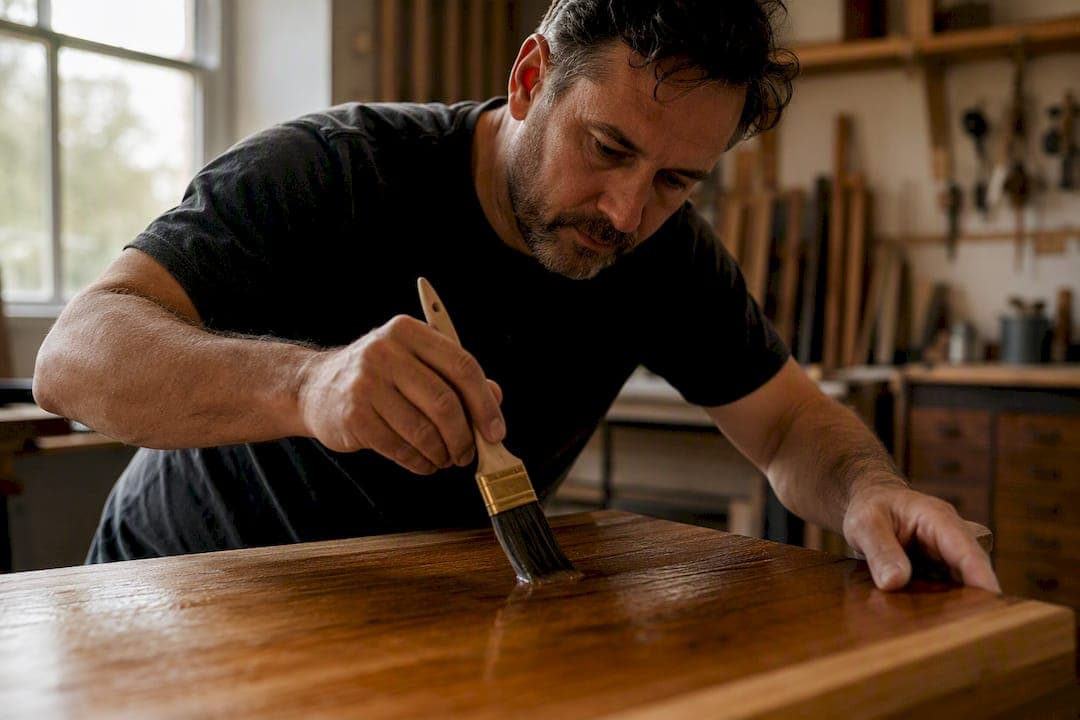
Hospitality grade finishes are surfaces specified to deliver sustained appearance, cleanability and regulatory compliance under heavy public use, from a hotel corridor to a restaurant service bar. The single rule that governs every specification decision is this: insist on durability, cleanability and verified test documentation before you commit to a finish, never on colour or texture alone. Two anchor standards should sit on every submittal you sign off:
- ASTM E84 measures flame spread and smoke development, the baseline test for wall and ceiling finishes in public spaces.
- NFPA 701 governs flame resistance for textiles and films, relevant to drapery, upholstery and fabric wallcoverings.
Everything else in this guide builds from that one instruction: specify for evidence, not appearance.
Key Takeaways
Hospitality grade finishes succeed when durability testing, cleanability and verified compliance documentation are specified before installation, not checked after the fact.
| Point | Details |
|---|---|
| Specify by evidence | Require Taber abrasion, hardness and CRF data rather than accepting vague durability claims. |
| Match finish to area | Use vinyl and resin in wet zones, reserve fabric and timber for guest-facing spaces with lower moisture exposure. |
| Calculate lifecycle cost | Compare cost-per-year, not sticker price, since wallcoverings can outlast paint by a decade or more. |
| Demand documentation | Insist on Certificates of Compliance and third-party lab reports before brand pre-opening inspection. |
| Choose a finish-first furniture partner | Simmonsinteriorsupply builds durability and topcoat chemistry into bespoke pieces from the manufacturing stage, not as an afterthought. |
Table of Contents
- What are the main types of hospitality-grade finishes?
- Which finishes suit which area of a hospitality venue?
- What durability and maintenance standards should submittals include?
- What fire and safety compliance do hospitality finishes need?
- How do you calculate lifecycle cost for hospitality finishes?
- What spec language should you write for finish submittals?
- Why Simmons Interior Supply's experience shapes this guidance
- What the industry gets wrong about finish specification
- Bespoke furniture built with finish durability in mind
- Frequently asked questions about hospitality grade finishes
- Sources
What are the main types of hospitality-grade finishes?
Finishes fall into four practical families, and each behaves differently under footfall, spillage and repeated cleaning.
- Flooring. Luxury vinyl tile (LVT) and sheet vinyl handle moisture and heavy rolling loads well, making them a workhorse for corridors and back of house. Engineered timber with a commercial-grade topcoat brings warmth to lobbies and dining rooms but needs a harder wear layer than residential-grade boards ever carry. Polished concrete suits industrial-look bars and service corridors, offering exceptional longevity at the cost of a colder, less forgiving underfoot feel.
- Wall finishes. Commercial paint systems formulated with washable, scrubbable resins are the entry point, but they demand refreshing in high-traffic hotels every few years, a cadence. hospitality wall finish guidance contrasts with wallcoverings that last significantly longer. Type II and Type III vinyl wallcoverings, rated for medium and heavy commercial duty respectively, dominate corridors and back-of-house circulation. Fabric wallcoverings add acoustic softness to dining rooms and lounges but require flame-retardant treatment and a realistic cleaning plan.
- Specialist coatings. Seamless resin flooring belongs in bars, kitchens and any wet zone where grout lines would trap grease and bacteria. Aliphatic urethanes protect floors and bar tops from UV yellowing and abrasion in ways aromatic systems cannot.
- Soft finishes. Flame- and stain-treated upholstery and drapery sit in guest rooms and public lounges, never in kitchens or plant rooms, where hard, wipeable surfaces are the only sensible choice.
Which finishes suit which area of a hospitality venue?
Matching finish family to location prevents the two most common specification failures: over-speccing budget away from areas guests actually touch, and under-speccing durability where staff traffic is constant.
- Front of house. Image matters as much as abrasion resistance here. Specify topcoats rated for high foot traffic and insist on sealed, welded seams on any resilient flooring so grit cannot work its way into joints.
- Guest rooms. This is where you can lean into fabric, timber and softer wallcoverings, provided flame ratings are met. Vinyl earns its place only in bathrooms and entry zones, where luxury and moisture resistance genuinely conflict.
- Wet areas. Bars, kitchens and spa zones need fully moisture-resistant systems with sealed seams throughout, not just at the perimeter. A single unsealed joint is where seamless resin flooring earns its premium, highlighting the importance of robust security systems for hotels integration with finish durability and safety considerations.
- Back of house. Corridors, loading bays and kitchens need industrial-resilient floors with proven chemical resistance and a documented slip rating, since these areas see the heaviest wheeled traffic and the harshest cleaning chemicals in the building.
What durability and maintenance standards should submittals include?
Ask suppliers for numbers, not adjectives. A submittal that says "highly durable" tells you nothing; one that cites Taber abrasion cycles, Shore hardness and a Class I Critical Radiant Flux (CRF) rating for corridor flooring tells you exactly what you are buying.
- Taber abrasion resistance for flooring and laminate surfaces, tested in cycles to wear-through.
- Surface hardness for timber and coated substrates, relevant to dents from luggage and trolleys.
- Chemical resistance against the specific cleaning agents housekeeping will actually use, not a generic solvent panel.
- CRF rating for corridor carpet and resilient flooring, tied directly to fire egress performance.
On topcoats, protective finishes such as polyurethane or conversion varnish are applied in multiple coats across most hospitality furniture precisely because a single coat rarely survives the intensified cleaning cycle a public venue demands. Aliphatic urethane systems, particularly those with encapsulated aluminium oxide, hold their abrasion resistance and colour stability far longer than standard varnish under UV exposure.
A realistic maintenance schedule looks like this: daily damp-wipe of high-touch surfaces, weekly visual inspection of seams and edges, and an annual reseal or recoat assessment on floors carrying the heaviest footfall.
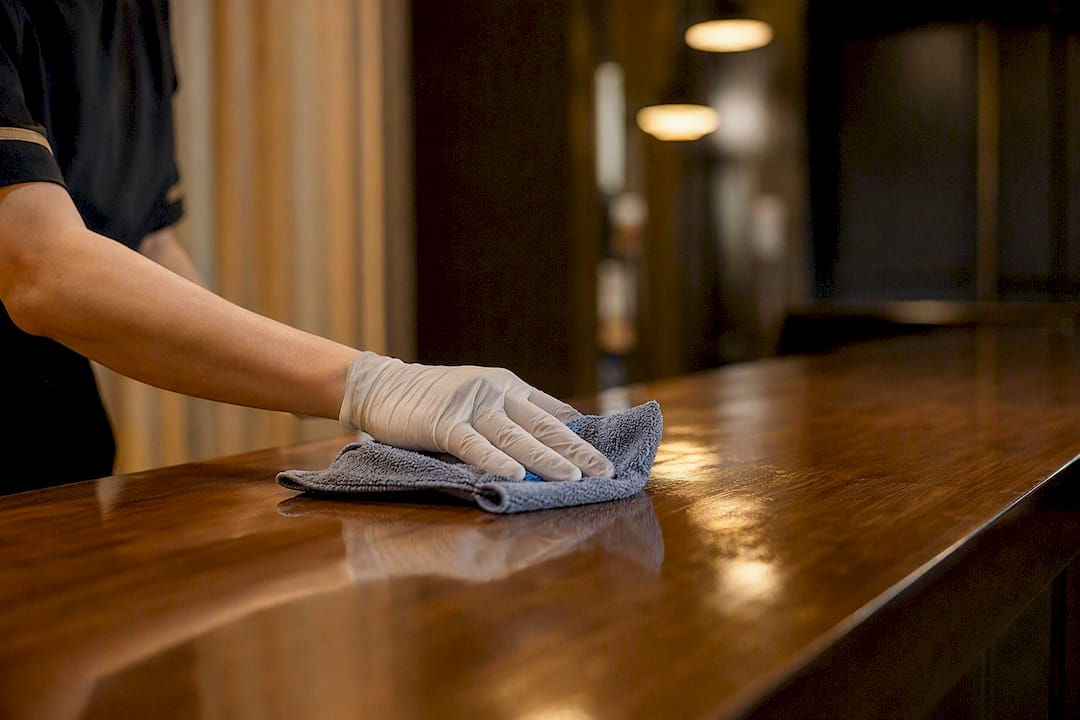
Pro Tip: Ask for the manufacturer's cleaning-agent compatibility list before you specify, not after installation. A finish that fails against a hotel's standard quaternary disinfectant is a problem you can avoid entirely at the submittal stage.
What fire and safety compliance do hospitality finishes need?
Test certificates are not paperwork for its own sake. They are the difference between a finish that passes a brand pre-opening inspection and one that gets ripped out weeks before launch.
- ASTM E84 covers flame spread and smoke development for wall and ceiling materials in corridors, lobbies and function spaces.
- NFPA 701 applies to draperies, fabric wallcoverings and other textiles, testing how readily they ignite and propagate flame.
- NFPA 253 / Critical Radiant Flux governs corridor flooring, a fire-egress consideration that many otherwise careful specifiers overlook.
Insist on third-party lab reports, Certificates of Compliance, and manufacturer test data for every finish going into a public space, never a verbal assurance from a sales rep. Brand pre-opening inspections are stricter than a standard construction punch list, and missing documentation at that stage typically means removal and reinstallation, not a quiet sign-off. For technical or food-contact components, request the specific material grade, since UHMW plastics such as Tivar 1000 are engineered for high abrasion in a way generic UHMW is not, and a certificate should confirm which grade you actually received.
How do you calculate lifecycle cost for hospitality finishes?
Initial price tells you almost nothing about value. A finish that costs twice as much but lasts three times as long wins on cost-per-year, and it also wins on something harder to price: the operational disruption of taking a space out of service for refurbishment.
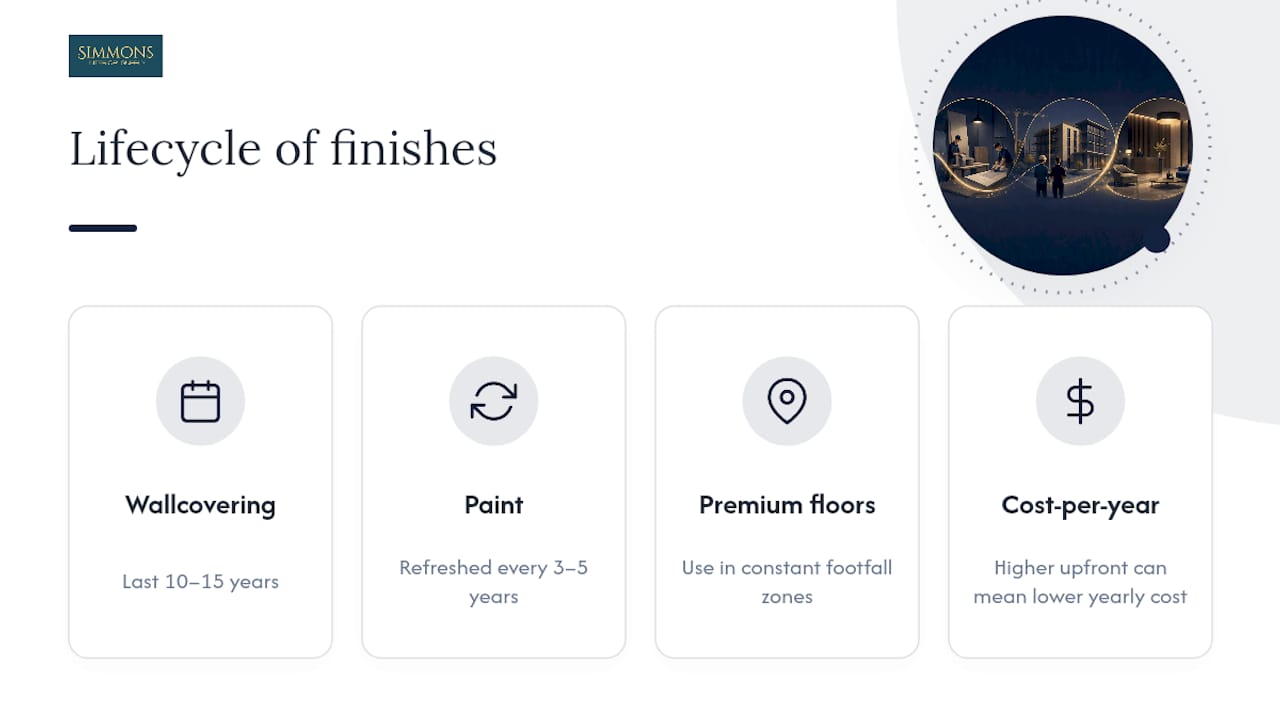
Wallcoverings typically outlast paint by a wide margin in hospitality settings, which is why heavy-traffic corridors and lift lobbies are where the wallcovering premium earns itself back fastest. Reserve premium floor systems for zones carrying constant footfall or brand-critical image, back of house rarely justifies the same spend as a five-star lobby.
What spec language should you write for finish submittals?
Precise phrasing in a specification prevents a contractor from substituting a lower grade and prevents a reviewer from having to guess what "commercial grade" means. Write clauses like these directly into your schedules:
- "Type III vinyl wallcovering, minimum 22 oz/linear yard, with sealed and welded seams throughout."
- "2K aliphatic polyurethane topcoat, minimum 90% solids, applied per manufacturer specification."
- "Furniture topcoat: water-based 2K polyurethane or conversion varnish, chemical and water resistant, matched to housekeeping cleaning agents."
On chemistry, water-based 2K systems now match solvent-based 2K on durability while cutting VOC emissions substantially, a genuine advantage for indoor air quality and any project chasing sustainability credits. Aliphatic urethanes resist UV yellowing where aromatic urethanes will amber over time, which matters wherever a floor or bar top sits near natural light. Whatever you specify, request the Certificate of Compliance and manufacturer test report before installation, not as an afterthought during snagging.
Pro Tip: Build a one-page material schedule that pairs each finish with its required test certificate. Contractors move faster when the documentation requirement is visible from day one, not discovered at pre-opening inspection.
Why Simmons Interior Supply's experience shapes this guidance
Simmonsinteriorsupply works directly with skilled artisans to produce bespoke, made-to-order furniture and finishes for interior designers, architects and hospitality procurement teams, which means finish decisions are never an afterthought bolted onto a standard product line.
- Every piece is handcrafted to size and finish, so topcoat chemistry and durability requirements are built in at the manufacturing stage, not applied as a retrofit.
- Quality control and white-glove delivery matter because a scratched edge on arrival undoes weeks of careful finish specification, a lesson reflected in our delivery guidance for designers.
- Sequencing matters too: finishes installed before FF&E arrives, and a pre-walk conducted ahead of the formal brand inspection, catches gaps in documentation while there is still time to fix them.
What the industry gets wrong about finish specification
Most guidance on hospitality finishes still leads with aesthetics, treating durability and compliance as secondary checks performed after a designer has already fallen in love with a fabric or a floor. That ordering is backwards. The research on brand pre-opening inspections makes clear that acceptance is governed by documentation and test standards, not by how a finish photographs in a mood board.
The bigger gap is in maintenance planning. Designers routinely specify a beautiful wallcovering without asking whether housekeeping's existing cleaning agents will degrade it within eighteen months. That single oversight causes more premature refurbishment than any weakness in the finish itself.
What should change first is the sequence of decisions: confirm the test documentation and cleaning compatibility before you commit to colour or texture, not after. Treat furniture and finishes together rather than as separate specification streams, since a stunning wall finish paired with furniture that scratches on day one still reads as a failed project to a hotel operator.
Bespoke furniture built with finish durability in mind
Sourcing off-the-shelf commercial furniture often means accepting whatever topcoat and finish grade the manufacturer already committed to, with little room to match your exact durability brief. Simmonsinteriorsupply works the other way round: every piece is handcrafted to your specified size and finish, so the topcoat chemistry, seam detail and wear resistance are built to your submittal from the outset, not bolted on afterwards.

That matters most for designers working towards a brand pre-opening inspection, where documentation and consistency across every piece in a space carry real weight. Our collaboration with skilled artisans means customisation extends beyond colour and fabric into the actual protective systems each piece carries, whether that's a conversion varnish topcoat for a restaurant table or a moisture-resistant finish for a spa lounge chair. Browse the bespoke coffee table collection for a sense of the finish quality on offer, or get in touch through our trade enquiry page to discuss a finish brief for your next project.
Frequently asked questions about hospitality grade finishes
What makes a finish "hospitality grade" rather than residential grade? Hospitality grade finishes are tested and documented for sustained performance under public traffic, verified abrasion resistance, chemical resistance and fire ratings, where residential finishes are rarely tested against any of these standards.
Do all hospitality finishes need NFPA 701 certification? No. NFPA 701 applies specifically to textiles, films and fabric wallcoverings. Hard surfaces such as flooring and paint fall under separate standards, including ASTM E84 for flame spread.
How often should hospitality wall finishes be replaced? Commercial paint typically needs refreshing every three to five years in high-traffic hotels, while heavy-duty wallcoverings commonly last ten to fifteen years before replacement.
What documentation should a contractor provide before installing a specified finish? Request the Certificate of Compliance, third-party lab test reports for the relevant fire and abrasion standards, and manufacturer data confirming the specific product grade supplied.
Can fabric upholstery be used in high-traffic public areas? Yes, provided it carries appropriate flame-retardant treatment and stain resistance; our Crib 5 upholstery guide covers the fire-safety specifications trade buyers should confirm before ordering.
Sources
- Hotel Wall Finishes: Creating Beautiful, Durable, and Functional Surfaces
- Hospitality Interior Finishes: Brand Standards, the FF&E Boundary, and Building to Pass Pre-Opening
- Aliphatic urethane topcoat (Durathane HW/HS)
- Enduro Professional water-based 2K finishes