
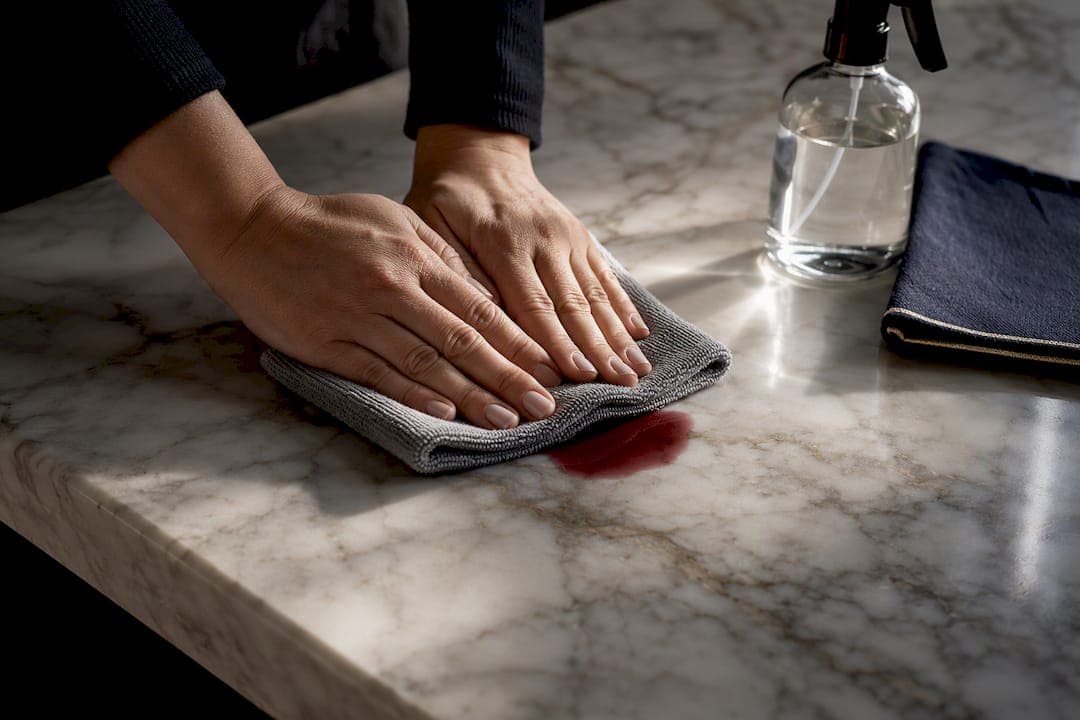
Marble table care comes down to four habits: wipe daily with a soft cloth and warm water, blot acidic spills the instant they happen rather than reaching for vinegar or lemon, reseal the surface once you've run the water-drop test, and keep coasters and trivets within arm's reach. None of this demands specialist products or hours of effort. It simply asks for consistency.
TL;DR:
- Sealing every one to two years is usually enough unless water absorption tests indicate the seal has worn off.
- Rubbing spills spread liquids into the pores, so blotting immediately is crucial to prevent stains and etching.
- Using vinegar, lemon juice, or abrasive cleaners can cause permanent damage to marble surfaces, so pH-neutral products are essential.
- Deep scratches and chips require professional restoration for a seamless repair, as DIY fixes often worsen the appearance.
- Consistent, swift spill response and avoiding harsh chemicals are the most effective ways to maintain marble's appearance over time.
Table of Contents
- The daily marble table cleaning routine that actually works
- What should you do the moment something spills?
- Do marble tables need to be sealed, and how often?
- Cleaners and habits that quietly ruin marble
- When does a marble tabletop need professional restoration?
- Why custom finishes change how you care for a table
- Handling deep scratches and chips without making things worse
- Does the type or colour of marble change how you clean it?
- Marble isn't fussy. It's just misunderstood
- Commission a bespoke marble table built for real life
- Sources
The daily marble table cleaning routine that actually works
Forget the idea that marble needs a ritual. It needs a rhythm, and a short one at that.
Start by clearing crumbs and grit with a dry microfiber cloth, because grinding debris under a damp cloth is what actually scratches the polish, not the wiping itself. Once the surface is clear, follow this sequence:
- Dampen a soft microfiber cloth with warm water, wringing out any excess.
- Wipe the entire surface in gentle, overlapping strokes, working from the centre outward.
- Apply a pH-neutral stone cleaner or a few drops of mild dish soap diluted in warm water for anything greasy or sticky, since dish soap's neutral pH and surfactant content cut through grease without harming the finish.
- Rinse with a second cloth dampened in clean water to lift any soap residue.
- Dry thoroughly with a fresh, dry cloth to prevent water spots and mineral haze.
Distilled water is worth keeping under the sink if your tap water runs hard, since it leaves fewer mineral deposits than standard tap water. A soft-bristle brush handles crevices around inlays or carved edges where a cloth cannot reach. Most tables need this treatment once a day if they see regular use, and a quick crumb sweep after every meal, which is an effective, low-cost approach that costs almost nothing beyond the cloth itself.
Pro Tip: Keep a dedicated "marble kit" in a kitchen drawer: two microfiber cloths, a small spray bottle of diluted dish soap, and a jar of baking soda. Having it within reach is the difference between wiping a spill in seconds and finding it there the next morning.
What should you do the moment something spills?
Speed matters more than technique here. Blot, don't wipe, and never rub.
Rubbing spreads the liquid outward and can push it into hairline pores in the stone, widening the area affected. Press a clean, dry cloth straight down onto the spill and lift it away, repeating with a fresh section of cloth until no more liquid transfers.
The real question after that is whether you're looking at a stain or an etch. A stain sits on the surface and darkens the stone; it will usually respond to cleaning. An etch is a chemical burn where an acidic liquid, wine, coffee with citrus, tomato sauce, has reacted with the calcium carbonate in the marble, leaving a dull or rough patch that no amount of cleaning will lift, because etching alters the stone's surface chemistry rather than sitting on top of it. Etches need polishing, not scrubbing.
For a genuine surface stain, a baking soda poultice remains one of the most reliable DIY fixes:
- Mix baking soda with water into a thick paste, roughly the texture of peanut butter.
- Spread it over the stain about a centimetre thick, extending slightly beyond the mark.
- Cover with plastic wrap, taping the edges down, and leave for 24 to 48 hours.
- Remove the plastic, let the paste dry fully, then scrape it away and rinse.
This poultice method is widely recommended for oil-based and organic stains, and it can be repeated once if the mark is stubborn. If two applications make no visible difference, or if you suspect the mark is actually an etch, stop. Continued scrubbing at that point only risks dulling the surrounding polish.
Do marble tables need to be sealed, and how often?
Sealing does one job well: it slows down how quickly liquids soak into the stone, buying you time to blot a spill before it becomes a stain. It does not stop etching. Acid will still burn a sealed surface exactly as it would an unsealed one, so a sealer is a stain defence, not an armour plate.
For a dining table in regular use, resealing every one to two years is a sensible baseline, though the truest test is not a calendar but the surface itself. The water-drop test settles the question in seconds: place a few drops of water on the stone and watch. If it beads and sits, the seal is holding. If it darkens the stone or soaks in within a few minutes, it is time to reapply.
- Apply a water-based impregnating sealer to a clean, completely dry surface.
- Work in thin, even coats, following the manufacturer's cure time before the table returns to daily use, often 24 hours or more.
- Test a small, inconspicuous area first if you're unsure how the sealer interacts with a particular finish.
- Use coasters under glasses, placemats under plates, and felt pads under decorative objects as a permanent habit, not an occasional one.
- Reach for trivets under anything straight off the hob or out of the oven; marble handles moderate warmth from serving dishes fine, but sudden extreme heat risks thermal shock and cracking.
Pro Tip: Run the water-drop test on a Sunday morning ritual, right after your usual wipe-down. It takes thirty seconds and tells you more than any reseal schedule pinned to a fridge.
Cleaners and habits that quietly ruin marble
Most marble damage isn't accidental. It's the result of reaching for the wrong bottle under the sink.
- Vinegar, lemon juice, and other acidic cleaners etch marble on contact, and the reaction is permanent, not a haze you can wipe away.
- Bleach and ammonia-based products break down sealants over time and can discolour certain finishes.
- Abrasive scouring pads and stiff brushes scratch the polished surface, leaving fine lines that catch light and dust.
- Cleaning over trapped grit with a damp cloth grinds debris into the stone rather than lifting it away.
- If disinfection is genuinely necessary, choose a pH-neutral cleaner formulated for natural stone rather than a generic kitchen spray.
When does a marble tabletop need professional restoration?
Some damage sits beyond what a cloth and a poultice can fix. Deep, widespread etching, a dull haze covering large sections of the surface rather than a single ring, dark oil stains that have soaked in over months, or actual chips and cracks all call for a restoration specialist.
Professionals typically offer repolishing, honing to a fresh matte or satin finish, chip filling, and colour matching for older or antique pieces, and light surface issues sometimes respond to specialist polishing powders before more invasive work is needed. When you do call one, ask what method they use, whether the work carries a warranty, and whether they can show before-and-after examples of similar marble tables.
Why custom finishes change how you care for a table
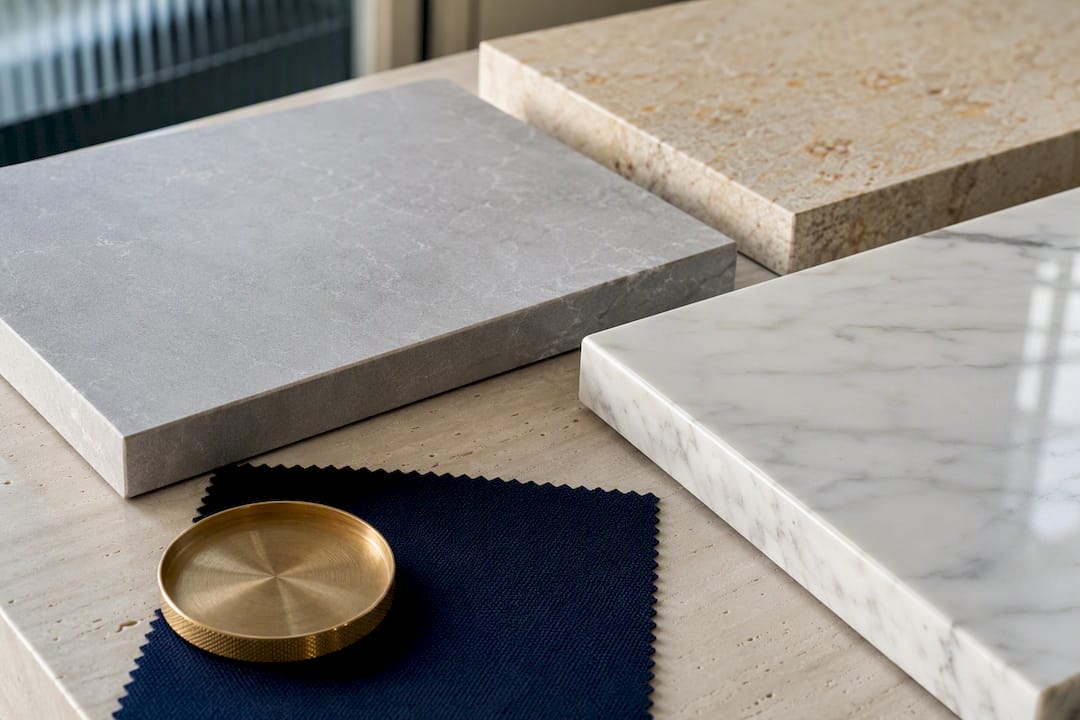
A hand-finished marble tabletop doesn't always behave like the slab you'd find in a generic showroom. Honed finishes, polished finishes, and any custom lacquer or treatment applied during manufacture each interact differently with sealers and cleaning products, and the right polish for a honed surface is often the wrong one for a polished surface.
This is precisely why bespoke makers matter beyond the initial commission. A workshop that built the piece knows exactly what finish sits on it and can recommend a sealer and cleaning schedule matched to that specific surface, rather than a generic set of rules. If you're weighing finish options before commissioning a piece, our gallery shows a range of stone finishes side by side, and our guide on matching furniture finishes to their use walks through how those choices affect long-term upkeep.
Handling deep scratches and chips without making things worse
A light surface scratch on polished marble often responds to a specialist polishing powder, buffed gently with a soft cloth in small circular motions until the sheen returns. This works for hairline marks that catch the light but don't feel rough to the touch.
Deep scratches and chips are a different problem entirely, and this is where DIY attempts most often backfire. Filling a chip with the wrong product, standard wood filler or a mismatched epoxy, tends to leave a visible patch that ages differently to the surrounding stone, drawing more attention to the damage than the chip itself ever did.
The safer path for anything beyond a superficial mark is to photograph the damage clearly, note its size and depth, and get a restoration specialist to assess it before attempting a fix. A professional filler matched to the stone's colour and veining, cured and polished flush with the surface, is close to invisible. A rushed home repair rarely is.
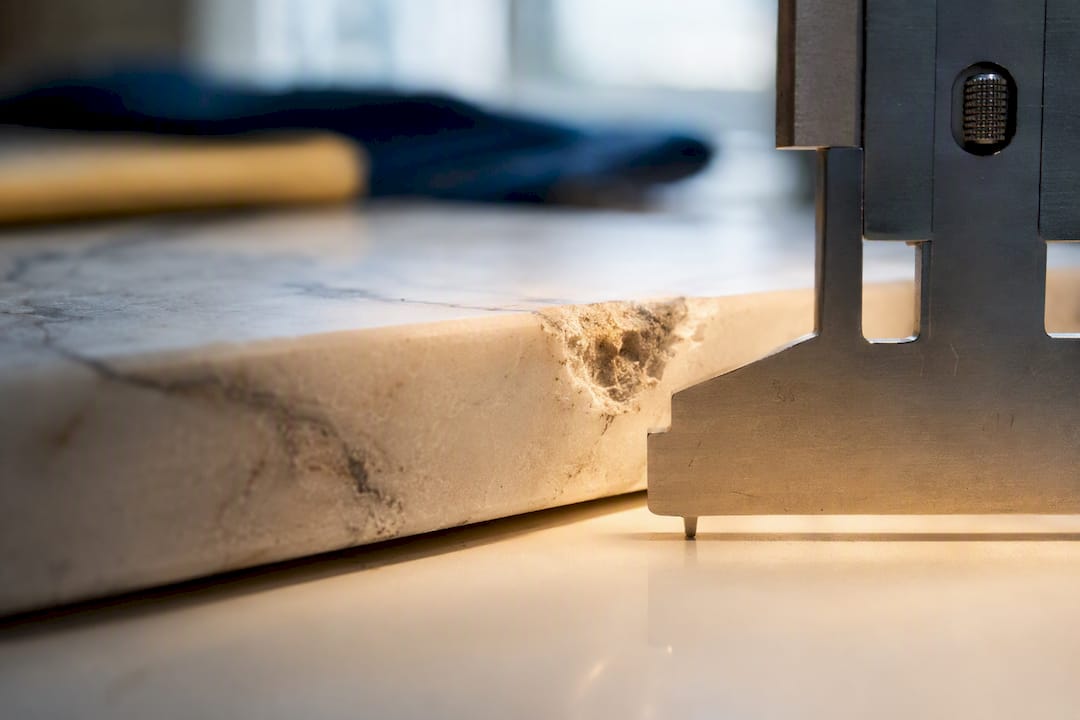
In the meantime, protect the damaged area from further stress. Avoid resting heavy objects directly over a chip, and keep liquids away from an exposed scratch, since the roughened surface absorbs staining liquids far more readily than the surrounding polished stone. A small felt pad placed over the area is a reasonable stopgap until proper repair work can be scheduled.
Does the type or colour of marble change how you clean it?
Not every slab behaves the same way, and colour is often a clue to composition. Carrara and Calacatta, the whites and soft greys most common in dining tables, tend to be relatively consistent in density and respond predictably to standard pH-neutral cleaning and sealing. Emperador and other darker browns often contain more mineral veining, which can be slightly more porous along those vein lines, making prompt spill response even more important than usual. Green marbles, such as Verde Guatemala, sometimes contain serpentine minerals that react differently to certain sealers, so testing a sealer on an offcut or hidden edge before full application is worth the extra step.
Polished finishes show etching and dulling more visibly than honed finishes, simply because polished surfaces rely on a high-gloss sheen that any texture change interrupts immediately. Honed marble, with its matte finish, tends to hide minor wear better but also absorbs liquids slightly faster, which makes sealing arguably more important, not less. Whatever the slab, the underlying rule doesn't change: acids etch, grit scratches, and warm water with a pH-neutral cleaner is safe across virtually every variety.
Marble isn't fussy. It's just misunderstood
The reputation marble has for being demanding doesn't hold up against what actually damages it. Most of the wear people blame on the stone itself traces back to the wrong bottle under the sink, a splash of vinegar cleaner, a scouring pad grabbed out of habit, rather than anything inherent to the material.
Where conventional advice falls short is its obsession with rigid schedules. A fixed "reseal every twelve months, no exceptions" rule ignores how differently a quiet side table and a family dining table actually age. The water-drop test tells you more in thirty seconds than a calendar reminder ever will.
If there's one thing worth prioritising above all else, it's speed on spills, not frequency of cleaning. A wine glass caught and blotted within a minute causes no lasting mark. The same spill left through a dinner party conversation often does. Bespoke pieces raise the stakes slightly, because a hand-selected slab with distinctive veining deserves the right sealer for its specific finish, not a generic one grabbed off a shelf. Get that match right at the start, and the daily habits above will carry the piece for decades.
— Luke
Commission a bespoke marble table built for real life
Choosing a bespoke maker is the alternative to buying a mass-produced marble piece and hoping the finish suits your household. Because every table is handcrafted to order, we can match the stone's finish, polished or honed, to the sealer and care routine that actually fits how you live, rather than leaving you to guess.

Browse the bespoke nest of coffee tables for an example of how customised stone and finish choices come together, or explore the full gallery to see the range of marble and stone finishes we work with. If you're commissioning a piece and want tailored advice on sealing intervals or finish-specific cleaning, get in touch directly through Simmonsinteriorsupply and we'll talk you through what suits your table before it's even built. For designers coordinating a full room scheme around a new stone piece, our partners at Futuregen Consulting can help with lighting design that shows off the finish properly.
Sources
- How to Clean Marble the Right Way
- Marble dining table care guide: Everyday cleaning, heat resistance & sealing
- How to Clean a Marble Table | 7 Easy Steps (2026)
- Cleaning marble, granite, and limestone