
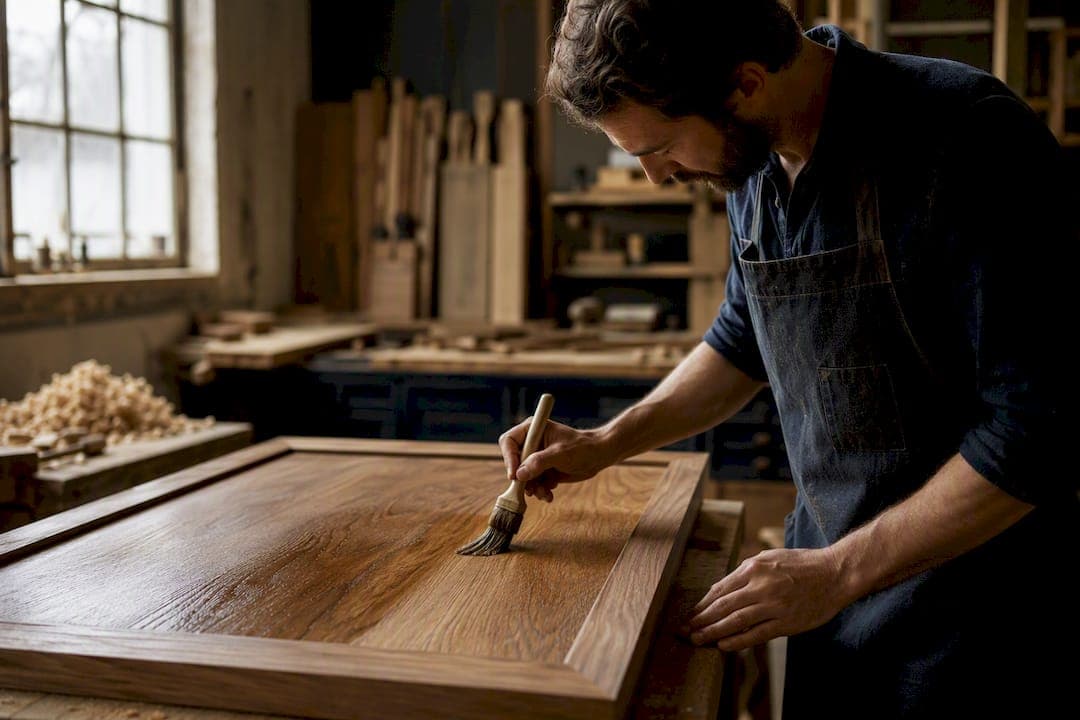
Six finish families cover almost every bespoke project: paint and lacquer, powder coat, PVD or plating, patina treatments, wood stains and oils, and microcement or polished plaster. The decisive rule sits above all of them: choose the finish to suit the material and its environment first, then judge it on looks, and never sign off a specification until you have approved a physical master sample under natural daylight.
- Paint/lacquer — flexible colour and sheen, ideal for furniture and joinery
- Powder coat — durable, weather-resistant, common on metal fittings and frames
- PVD/plating — exceptional scratch resistance and colour depth for hardware and fixtures
- Patina — deliberate ageing for character, best where change is welcomed
- Wood stains/oils — natural texture retained, easier spot repair
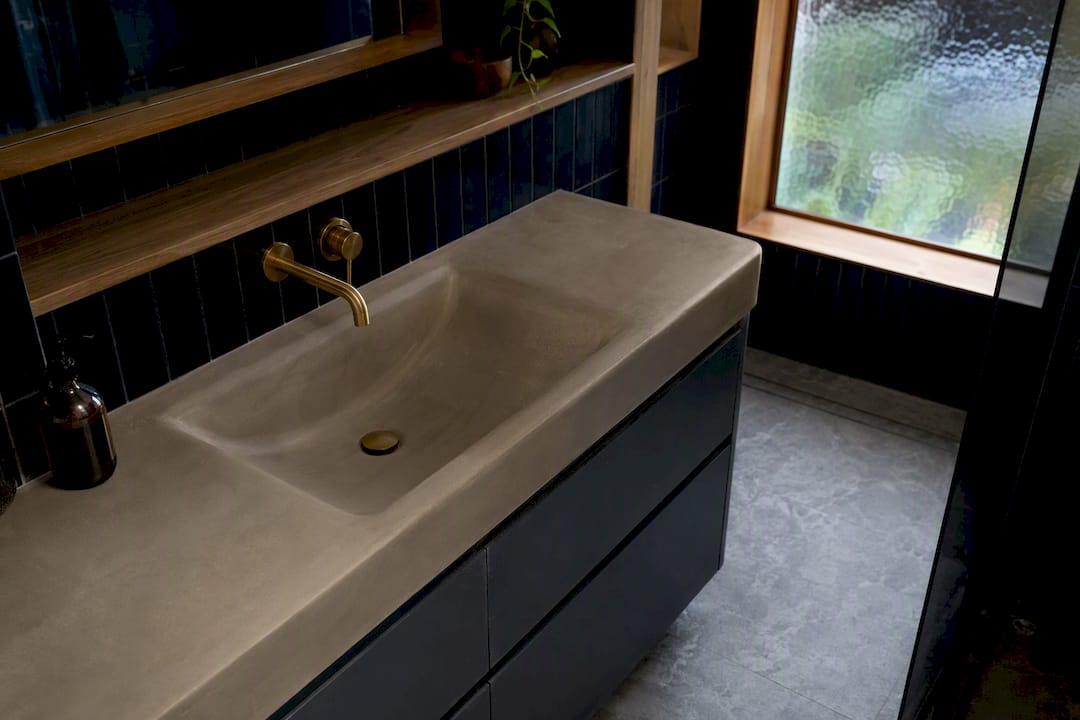
- Microcement/polished plaster — seamless surfaces for walls, floors and furniture bases
Pro Tip: A finish that looks flawless under a showroom spotlight can read completely differently under grey daylight through a north-facing window. Always ask to see the master sample where the piece will actually live.
Key Takeaways
Choosing well means matching finish to material and environment first, then confirming appearance and durability with an approved master sample before production begins.
| Point | Details |
|---|---|
| Match material to environment | Choose the finish family based on humidity, UV and traffic before considering colour or sheen. |
| Always approve a physical sample | View the master sample under natural daylight, since gloss and texture change perceived colour. |
| Decide on patina upfront | Agree with your supplier whether a metal finish should age naturally or stay stable, in writing. |
| Budget for resampling | Build contingency into cost and schedule for at least one round of sample revision. |
| Work with a bespoke maker | Simmons Interior Supply runs a brief-to-sample-to-production workflow with artisan-led finish control. |
Table of Contents
- What are the main custom finish options for furniture and interiors?
- How do you specify and approve a custom finish?
- Will your finish survive its environment?
- How do you look after a custom finish over time?
- What drives the price and lead time of a bespoke finish?
- Which finish suits furniture, metal fittings or a wet room?
- How does Simmons Interior Supply handle custom finishes?
- What safety and regulatory rules apply to custom finishes?
- What trends are shaping custom finish options right now?
- Does a finish suit every material equally?
- How much does a finish change the overall look of a piece?
- Which matters more: how a finish looks, or how it lasts?
- Simmons Interior Supply — bespoke finishes, built to specification
- Sources
What are the main custom finish options for furniture and interiors?
Every finish family carries its own personality, and understanding what each does best saves you from specifying something pretty that fails on day one.
Paint and lacquer remain the most versatile choice for furniture, casegoods and architectural joinery. Lacquer can be built up in coats to achieve a high-gloss, almost lacquered-glass depth, or knocked back to a satin or matt finish that hides fingerprints and daily wear. Sheen level matters more than most people expect: a high-gloss lacquer on a dining table looks sculptural in photographs but shows every scratch and heat mark within a year of family use.
Powder coating is the workhorse for metal furniture frames, shelving and architectural metalwork. It bonds electrostatically to the substrate and cures under heat, producing a tougher, more chip-resistant surface than wet paint. Standard programmes typically include around 50 no-cost colours, with 200 or more extended options available when a bespoke colour match is required.
PVD (physical vapour deposition) and plating sit at the premium end for hardware, taps, handles and decorative metal trim. PVD produces exceptionally durable, high-depth colour finishes that resist scratching far better than conventional lacquered brass, and manufacturers increasingly offer bi-colour or hand-finished small batches for genuinely bespoke statements.
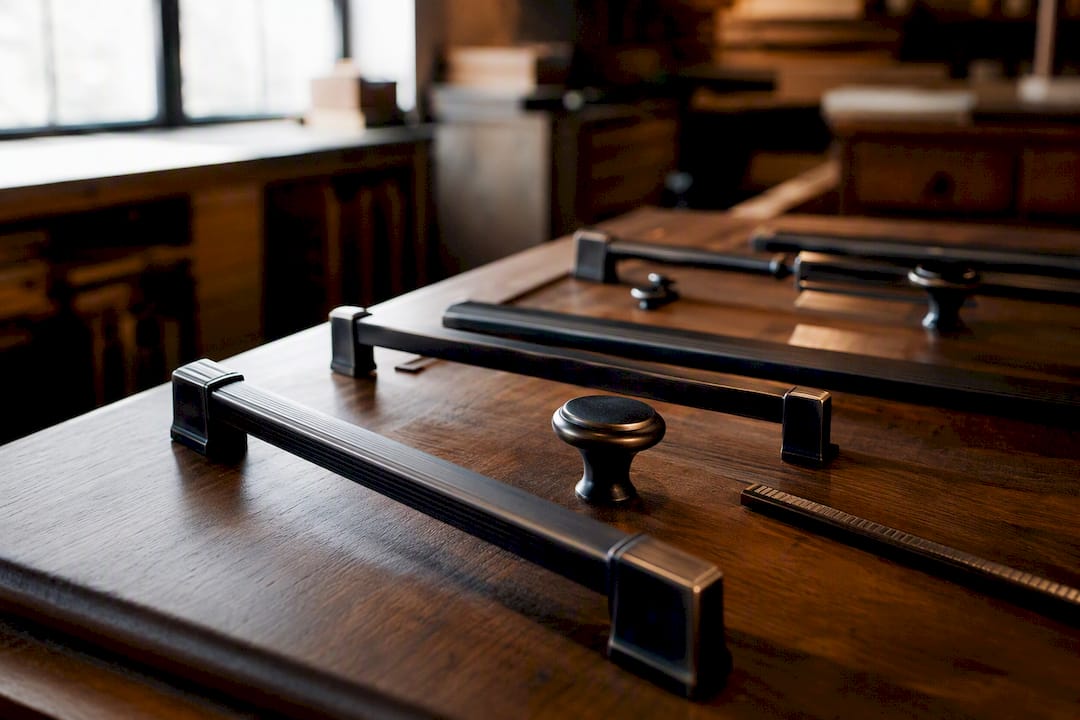
Patina techniques deliberately age metal, using chemical or heat treatments to introduce verdigris, oxidisation streaks or a weathered bronze character. Wood stains and oils let grain and figure show through, and repair locally far more easily than a sprayed lacquer. Microcement and polished plaster create seamless, jointless surfaces across walls, floors, and increasingly furniture bases and worktops, with colour achieved through pigment rather than applied paint.
Small-batch and hand-finished options exist across nearly every family now, letting you commission a genuinely one-off colour or texture rather than settling for a standard swatch.
How do you specify and approve a custom finish?
Getting from a mood board to a production-ready finish is a process, not a single decision, and skipping a step is where most disputes begin.
- Gather physical references — paint chips, RAL or British Standard swatches, fabric or material fragments, even a photograph of a finish you liked elsewhere.
- Request a master sample on the actual substrate you intend to use, not a generic test panel.
- View it under natural daylight, not just workshop lighting, and record gloss level, texture and acceptable variation in writing.
- Ask whether the supplier retains a duplicate master sample for quality control, and add any specific testing requirements to the order.
- Document care instructions and written acceptance criteria before production begins, so delivery day doesn't become a negotiation.
Bespoke finish workflows commonly rely on a retained master sample as the production reference, with the supplier keeping a duplicate specifically for quality control comparisons down the line.
Pro Tip: Photograph your approved master sample against a grey card in both daylight and the room's typical evening lighting. It gives you a defensible record if a delivered piece ever looks "off" compared with what you signed off.
Will your finish survive its environment?
Humidity, sunlight and daily traffic each punish finishes differently, and the mistake most people make is judging a sample in a showroom rather than in the room it will actually occupy.
- Untreated or poorly sealed wood swells and contracts with humidity; manufacturers increasingly favour water-based sealers and pre-treated, laminated constructions to manage this movement without compromising appearance.
- UV exposure fades lacquer and some paint pigments over a matter of years; PVD and certain powder-coat systems hold colour far longer in sun-facing rooms or conservatories.
- Abrasion resistance depends as much on sheen and topcoat as on the base finish. A matt lacquer with a hard catalysed topcoat often outperforms a glossy equivalent with no protective layer.
- Decide early whether ageing or patina is the goal. Confirming whether a metal finish should patinate naturally or stay stable determines whether a protective lacquer is needed and what your warranty realistically covers.
Design teams frequently underestimate these environmental variables at brief stage, and early consultation with the manufacturer on light, moisture and expected ageing heads off far more finish failures than any amount of after-the-fact remediation.
How do you look after a custom finish over time?
Care routines vary sharply by finish family, and mismatching cleaning products to the surface is the single most common cause of premature damage.
- Lacquer and paint tolerate a damp cloth and mild, non-abrasive cleaner; avoid solvents and anything containing ammonia.
- Powder-coated metal cleans easily with soapy water, but abrasive pads will dull the surface permanently.
- PVD and plated hardware need only a soft cloth; avoid limescale removers, which attack the coating.
- Patinated metal often benefits from an occasional wax reapplication to slow further oxidisation.
- High-traffic worktops or table tops justify a sacrificial topcoat or protective film, since it can be replaced without refinishing the whole piece.
Lacquer and stained wood usually allow local spot repair; deep PVD scratches and some polished plaster damage typically need factory or specialist rework, so ask your supplier upfront how warranty terms treat bespoke finishes.
What drives the price and lead time of a bespoke finish?
Surface area, complexity and any unusual material (gold leaf, leather inlay, hand-applied patina) all push cost upward, and small-batch runs carry a premium simply because there is no production line to spread the setup cost across.
- Suppliers commonly quote per piece for furniture and per square metre for architectural surfaces like microcement or polished plaster.
- Minimum order quantities or minimum charges are common on powder-coat and PVD runs, since colour-matching a spray booth or plating tank for a single item is rarely economical below a certain volume.
- Sample approval and testing add real time. Decorative custom paint effects in a bespoke RAL match, for example, involve mixing, testing and daylight approval before a single production piece is sprayed.
- Build contingency into both budget and schedule for at least one round of resampling. It happens more often than clients expect, and it is far cheaper than reworking finished pieces.
Which finish suits furniture, metal fittings or a wet room?
Application dictates the sensible shortlist far more reliably than trend boards do.
For furniture, table tops that see daily food and drink benefit from a durable catalysed lacquer or a well-maintained oil finish; casegoods and seating frames can afford a softer satin lacquer since they see less direct abrasion. For metal fittings such as hinges, handles and hardware, PVD or plating gives the longest-lasting colour match to accompanying taps or lighting, while powder coat suits larger structural metalwork like table bases and shelving brackets. Our antique brass versus brushed brass comparison covers this decision in more depth for hardware specifically.
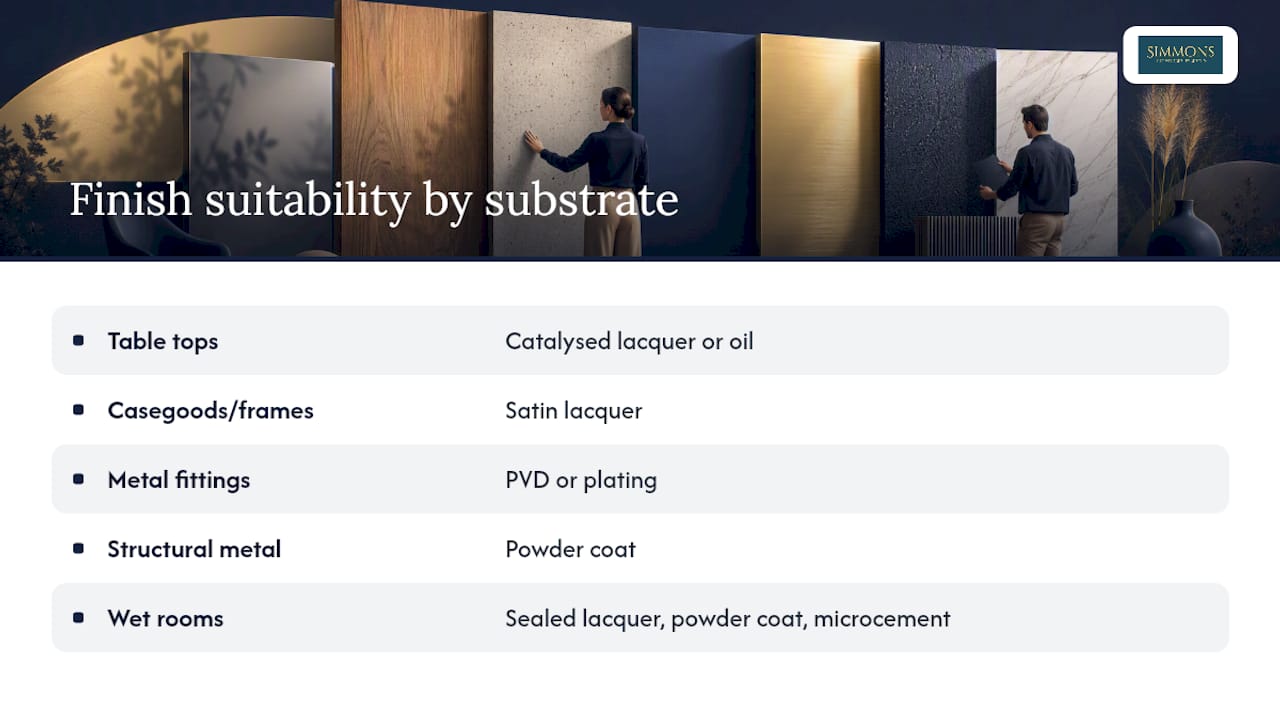
For bathrooms and wet rooms, humidity rules out untreated wood and favours sealed lacquer, powder-coated metal or microcement with a protective sealant. Where appearance and durability genuinely conflict, such as a glossy finish in a high-splash zone, it is usually worth compromising on sheen level rather than substrate, since a satin version of almost any finish holds up better against repeated cleaning.
How does Simmons Interior Supply handle custom finishes?
Every commission runs brief to sample to master approval to production, with artisan collaboration at each stage rather than a catalogue swap.
- We work from your reference materials and environment brief before proposing finish options.
- A master sample is produced and approved before full production begins.
- Browse our gallery for finished examples, or read our commissioning guide and wood species guide for further detail.
What safety and regulatory rules apply to custom finishes?
Regulatory scrutiny on finishes has increased steadily, and it now shapes what a supplier can legally offer as much as what looks good.
Volatile organic compound (VOC) content in paints, lacquers and stains is the area most designers and homeowners run into first. Solvent-based lacquers generally carry higher VOC emissions during application and curing than water-based alternatives, which matters both for workshop safety and for indoor air quality once a piece is delivered into an occupied space. If you are commissioning for a nursery, bedroom or any enclosed space with limited ventilation, ask specifically whether a low-VOC or water-based formulation is available.
Fire safety standards apply to upholstery foams and some coated fabrics used alongside finished frames, particularly for hospitality and hotel commissions, where compliance obligations are stricter than for private domestic use. Powder coating and PVD processes involve high-temperature curing or vacuum deposition in controlled industrial settings, which is one reason these finishes are rarely something to attempt as a DIY retrofit on existing furniture; they belong with specialist finishers who hold the right equipment and extraction systems.
Lead and heavy metal content in older reclaimed or antique pieces is another consideration if you are refinishing rather than commissioning new. A reputable finisher will test suspect surfaces before sanding or stripping, since disturbing old paint releases particles that pose a genuine health risk. For any commercial or hospitality project, ask your supplier to confirm which British or European standards their finishes are tested against rather than assuming compliance.
What trends are shaping custom finish options right now?
Personalisation has moved from a luxury add-on to something close to an expectation, and manufacturers are responding with genuinely wider small-batch capability.
Bi-colour and textured PVD finishes, once reserved for flagship showroom pieces, are increasingly available as standard options within bespoke hardware ranges, letting a single tap or handle combine two finish tones in one piece. Manufacturers offering high degrees of individualisation are combining hand finishing with small production runs specifically to make bi-colour and specially textured surfaces commercially viable outside pure custom commissions.
Sustainability is pushing wood finishing toward water-based sealers and pre-treatments that manage expansion and contraction without the solvent load of older systems, a shift that suits both environmental targets and indoor air quality goals simultaneously. Microcement continues to expand beyond floors and walls into furniture bases and even bath surrounds, prized for its seamless, jointless look and the fact that repairs can often be blended in almost invisibly.
Patina is also being treated more deliberately as a design choice rather than an accident of age. Clients are increasingly asking suppliers to accelerate or control natural ageing effects from the outset, essentially specifying "future wear" as part of the original brief rather than waiting years for a piece to develop character on its own.
Does a finish suit every material equally?
No finish is universally compatible, and the substrate underneath often narrows your choices before colour or sheen ever enter the conversation.
Lacquer bonds well to timber, MDF and some metals, but it needs a properly primed surface, and applying it directly over an unstable or moisture-affected substrate leads to cracking within a year or two. Powder coating requires a conductive substrate, almost always metal, since the electrostatic application process that gives it durability simply will not work on wood or stone. PVD and plating are metal-specific processes too, applied in a vacuum chamber, which is why you will never see a genuine PVD finish on a wooden or upholstered element.
Microcement and polished plaster adhere to a wide range of rigid substrates, including timber, provided the base is properly primed and stable enough not to flex, since movement in the substrate cracks the finish over time. Patina techniques work only on reactive metals such as brass, copper and bronze; a patina cannot be created on stainless steel or aluminium in the same way, because those metals are chosen specifically for their resistance to oxidisation. Wood stains and oils, sensibly, belong only on timber and veneer.
Matching finish to material is not a stylistic footnote. It is a structural decision that determines whether the piece still looks right in five years, which is exactly why the sample-approval workflow matters more than the colour chart.
How much does a finish change the overall look of a piece?
Finish frequently does more design work than the underlying form, and a shape that reads as contemporary in matt lacquer can look almost traditional in an aged brass patina.
Sheen level alone shifts perceived scale and formality. A high-gloss lacquer on a large table amplifies a room's sense of space by bouncing light, while the same table in a chalky matt finish feels grounded and quieter, better suited to a room already rich in pattern or texture. Metal finish does similar work at a smaller scale: brushed brass hardware reads as understated and contemporary, while a heavily patinated verdigris finish on the same handle pulls a piece toward a more historic, layered aesthetic.
Colour depth matters too, and this is where PVD earns its premium reputation. PVD's exceptional colour depth compared with conventional lacquer gives metal surfaces a richness that catches light differently at every angle, an effect flat paint simply cannot replicate regardless of pigment quality.
Texture is the most underused lever of the three. Microcement and polished plaster introduce a tactile, almost topographic quality that photographs poorly but transforms how a room feels in person, which is one reason it is worth requesting a physical sample rather than judging texture from images alone.
Which matters more: how a finish looks, or how it lasts?
Prioritise the finish for its final environment and realistic life cycle costs, not the showroom sample. If you take one thing from this, request a master sample before you commit to anything.
— Luke
Simmons Interior Supply — bespoke finishes, built to specification
Simmons Interior Supply is the direct route to a genuinely bespoke finish, not a limited colour chart bolted onto a standard shape. Where off-the-shelf furniture forces you to accept whatever palette a manufacturer happens to stock, our bespoke process starts with your brief, your environment and your material, then builds the finish around it, with artisan hands involved at every stage rather than a factory line.

Every commission includes a master sample stage before production, so you approve the exact gloss, texture and colour under real lighting rather than gambling on a swatch. Our bespoke nest of coffee tables shows the range achievable across lacquer, patina and stained finishes, and our gallery has further completed commissions for trade and private clients alike. If you have a project in mind, get in touch to request a sample and discuss finish options for your specification.
Sources
- Finish options | NanaWall
- Metal finish library — explain patinas to clients
- Custom paint finishes | Artistic Metals