
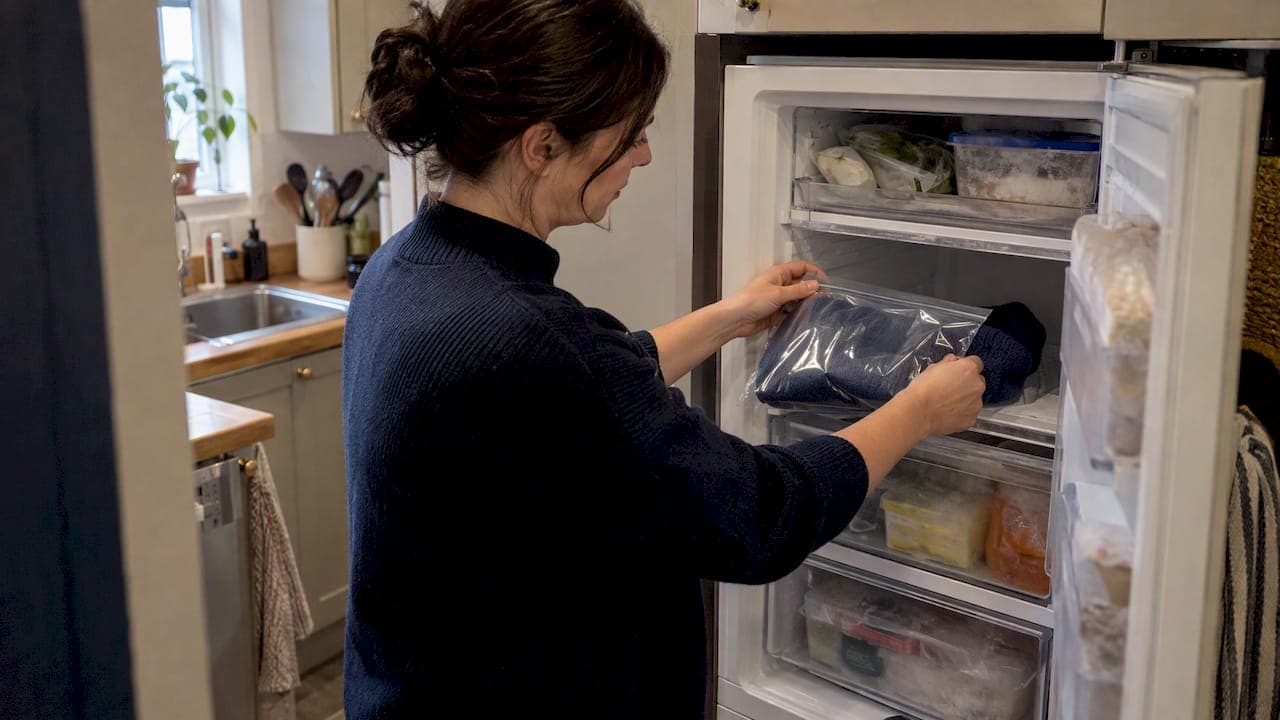
Regular vacuuming and disturbance, clean sealed storage and the right treatment are what keep moths from ruining a wool rug. If you find an infestation, freeze small removable items at -18°C for at least two weeks, as English Heritage advises. For large rugs or repeat outbreaks, call a BPCA-registered pest controller.
TL;DR:
- Moth larvae, not adults, clip wool at the pile base; irregular bald patches, silken webbing, cream larvae, or cocoons warrant checking beneath furniture.
- Seal small removable wool items before freezing them at 18°C below zero for at least two weeks; a full size rug needs professional treatment.
- Vacuum rugs and edges once or twice a week, move rugs and heavy furniture monthly, and store clean woolens in airtight boxes or vacuum bags.
- Hot washing and indiscriminate sprays can harm wool or miss larvae deep in the pile, so treat sprays only in inaccessible cracks.
- Call a pest controller who belongs to the BPCA when infestations recur, spread widely, or affect valuable rugs, and request a written treatment plan.
Table of Contents
- How can you spot moth damage on a wool rug?
- What should you do first when you find moths?
- How do you prevent moths with vacuuming, disturbance and storage?
- How do you treat an infested wool rug?
- When should you call a pest controller or rug conservator?
- What everyday care keeps a wool rug healthy?
- A trade view on protecting fine rugs
- How can we help with rugs and bespoke advice?
- FAQ
- Sources
How can you spot moth damage on a wool rug?
Moth damage rarely looks like ordinary wear. Foot traffic thins a rug evenly along walking routes, whereas moth larvae leave irregular threadbare patches where the fibres have been clipped off at the base of the pile. The BPCA lists the telltale signs as bald patches, small cream-coloured larvae, silken webbing, protective cases or cocoons, and adult moths flying low to the floor.
It helps to remember who does the damage. According to the Natural History Museum, adult moths do not eat wool; the larvae do. A single moth fluttering past the lamp is therefore a warning rather than the problem itself, and trapping adults alone seldom ends an infestation.
Moths favour dark, undisturbed corners, so your inspection should begin where light and footfall rarely reach: beneath sofas and heavy sideboards, along the rug edges, in the underlay and in the crevices of the skirting board.
A quick inspection routine:
- Lift the corners and edges of the rug and look at the underside and underlay for webbing or small silken tubes.
- Part the pile with your fingers and check the base of the fibres for clipped stubble or tiny cream larvae.
- Move furniture that has sat on the rug for months and examine the patches beneath it.
- Run a torch along the skirting boards and behind radiators, where fluff and dust gather.
- Look for adult moths resting on walls or flying close to the floor in the evening.
Do this in good light and without hurry. A rug that looks pristine from above can hide a thriving colony on its reverse, and catching it early is the difference between a small repair and a replacement.
What should you do first when you find moths?
Act calmly and in order. The aim is to stop the spread, remove what you can physically reach and protect the wool from further harm.
- Isolate the nearby textiles. Move throws, cushions, coats and anything woollen away from the affected area, and clear clutter around the rug. Lift items rather than dragging them across the floor, which can scatter eggs and larvae into new corners.
- Vacuum thoroughly. Work along the rug edges, beneath furniture and along the skirting boards with a crevice tool. Moths thrive in dark dead spaces, and The Field advises vacuuming behind radiators and along skirting.
- Seal the vacuum contents. Empty the bag or canister straight into a plastic bag, tie it and dispose of it outdoors, so that no eggs or larvae are reintroduced to the house.
- Bag and freeze small removable items. Cushions, small mats and woollen accessories can be sealed in bags and frozen at -18°C for at least two weeks. English Heritage reports that this kills every stage of the moth life cycle.
- Resist the hot wash and the aerosol. The BPCA cautions against relying on hot washing or dry cleaning, which can miss larvae while harming natural fibres. Indiscriminate sprays carry a similar risk.
- Use enclosed sachets sparingly. Insecticide sachets sealed inside cupboards act as a limited adult repellent, and they are no substitute for removing larvae.
Pro Tip: Vacuum before you do anything else and keep a note of where you found damage. Check those spots again later to see whether the treatment has worked.
A large rug cannot go in the freezer, which is why the later sections cover professional methods. Until then, thorough cleaning and isolation buy you valuable time.
How do you prevent moths with vacuuming, disturbance and storage?
Prevention is mostly habit, and it costs little. Moths need food, darkness and quiet. Take away any one of the three and a colony struggles to settle.
Vacuum with intent. English Heritage's conservators treat regular, thorough vacuuming with a crevice tool as the single most effective prevention strategy, because it physically removes eggs and larvae before they establish. The BPCA recommends cleaning crevices such as those behind radiators and in drawers, and the same attention suits the edges of a rug and the gap beneath the skirting.

Disturb what you can. Moths prefer undisturbed corners for egg-laying, so shaking hanging textiles at least once a month counts as protection. Every so often, move the rug and the heavy furniture on top of it to open up the gloomy spots that larvae favour.
Store with care. Textiles that are stained or soiled attract moths far more readily, and conservators note that stained items are significantly more likely to be attacked. Clean everything before it goes away, then keep it in airtight boxes or vacuum bags. Wardrobes benefit from ventilation, and a quick brush of woollen pieces helps too.
A sensible routine in practice:
- Vacuum rugs and their edges once or twice a week, using the crevice tool along skirting and behind radiators.
- Shake hanging woollens and move rugs and furniture at least once a month.
- Clean wool items before storing and seal them in airtight containers or vacuum bags.
- Ventilate wardrobes and clear fluff from drawers and shelving.
- Keep cedar or lavender for sealed storage, where it can add a little protection.
Be realistic about natural repellents. Cedar and lavender have limited effect, and they work best as a supporting measure inside a sealed box and never as your only defence. English Heritage also notes there is no truly permanent consumer mothproof spray for textiles that already exist, so cleanliness and storage carry the weight.
How do you treat an infested wool rug?
The most dependable treatments are non-chemical. For small, sealed items, freezing at -18°C for at least two weeks is the standard, and English Heritage reports that it kills all stages of the moth life cycle. Those two weeks are the minimum, so do not cut the time short on a hunch that the larvae must be dead.
A two-week freeze at -18°C kills every moth life stage in sealed small textiles, according to English Heritage.
A full-size rug will not fit a domestic freezer, so the practical options for larger pieces are:
- Commercial freezing: a specialist treats the rug in purpose-built equipment at a reliable temperature.
- Controlled heat treatment: carefully managed heat that reaches the whole rug without the damage to a domestic hot wash.
- Off-site rug treatment: many cleaners and conservators collect the rug, treat and clean it in a controlled setting, and return it.
Where a rug is valuable or historic, conservators generally prefer these non-chemical routes, and English Heritage's guidance stresses that professional freezing or controlled heat are recommended for effective elimination of every life stage.
DIY chemistry deserves caution. A surface spray may kill the insects it touches yet fail to reach larvae sheltering deep in the pile, and a rushed attempt can spread the problem or leave residue on the fibres. For that reason, treat any spray as a measure for gaps and crevices, never as a cure for the rug itself. Desiccant dusts and residual insecticides can have a place in inaccessible cracks, but their availability and permitted use vary, so check the product label and current rules, or leave the job to a professional who holds the right approvals.
After any treatment, keep vacuuming and inspecting. Larvae can survive in untreated corners, so continue checking to see whether the problem persists.
When should you call a pest controller or rug conservator?
Some situations call for expertise rather than another weekend of vacuuming. Consider professional help when:
- moths return after you have cleaned and treated the area;
- damage appears in several places or on more than one rug;
- the rug is antique, sentimental or of high value;
- your own treatment has failed or you cannot reach the source;
- you find larvae or webbing in the underlay or across the room.
The BPCA recommends professional pest control for severe or persistent infestations. When choosing a provider, look for BPCA membership: the British Pest Control Association audits and insures its members, who follow its codes of best practice. The BPCA also points to firms audited to BS EN 16636, the European standard for pest management services.
A good visit begins with an inspection of the rug, underlay, furniture and surrounding crevices to find the source, followed by a treatment plan. Prices depend on the size of the rug, how widespread the activity is, whether treatment happens on site or at a workshop, and the number of visits needed. Ask for a written quotation that names the method before you agree to anything.
What everyday care keeps a wool rug healthy?
A clean rug is a less attractive meal. Good routine care protects the pile and removes the conditions moths enjoy at the same stroke.
- Vacuum once or twice a week. Martha Stewart's expert guidance suggests this cadence, with a deep clean every six months to a year depending on traffic.
- Mind the hot water. Avoid it and excessive agitation, both of which can damage wool fibres.
- Treat stains promptly. Soiled textiles draw moths, so deal with spills at once and blot gently.
- Rotate the rug. Turning it regularly avoids long, undisturbed stretches of pile, and a good rug pad helps the pile breathe and recover.
- Expect a little shedding. New wool rugs shed naturally, so vacuum often during the break-in period, as The Spruce notes. Our guide to calming wool rug shedding covers the first few months in detail.
- Clear out the unwanted. Seal or dispose of woollen items you no longer use, since forgotten textiles in dark cupboards can become a breeding ground for the whole house.
The International Wool Textile Organisation makes a reassuring point: wool is not inherently difficult to maintain, and regular cleaning with the correct products prevents most problems before they begin.
Pro Tip: Set aside time regularly for a "rug day". Lift the corners, vacuum beneath the furniture, check the underlay and move the heavy pieces. A little attention can help prevent the need for a major repair.
A trade view on protecting fine rugs
We treat moth prevention as part of rug ownership rather than an emergency. A rug that is vacuumed, moved and checked rarely has a problem. The reverse also holds: rugs left undisturbed under furniture can be vulnerable to moth damage, and aggressive DIY treatments may stain the wool without reaching the larvae. Where a rug is valuable or historic, conservator-level care is worth the cost, and we would always choose it over a gamble. If you want guidance on materials, construction or care for a bespoke piece, our trade team is glad to talk it through.
— Luke
How can we help with rugs and bespoke advice?
If moth damage has left a rug beyond saving, or you simply want a piece built to last, we offer trade-quality, made-to-order rugs and can advise on materials and long-term care. Our collections include the Signature rug collection from Colbourns and the Ready to Hang collection from Simpsons London.

- Browse our rug collections and bespoke furniture at Simmons Interior Supply.
- Read how the custom rug design process works for designers and trade buyers.
- Explore rug border options to protect edges and fringes.
- Get in touch with our team about a bespoke commission, whether you are a designer or a homeowner.
FAQ
What does moth damage look like on wool?
Moth damage appears as irregular threadbare or bald patches where fibres have been clipped at the base of the pile. You may also see small cream larvae, silken webbing and protective cases, as the BPCA describes. Unlike normal wear, the damage is patchy rather than even.
How do you prevent carpet moths?
Vacuum regularly with a crevice tool, including edges, skirting and behind radiators, and disturb textiles often so moths find no quiet corner. Clean wool items before storing them in airtight containers. English Heritage rates thorough vacuuming as the most effective prevention.
Does airing out wool get rid of moths?
Airing and shaking help prevent moths because they dislike disturbance, but they will not reliably remove eggs and larvae already in the pile. Use airing as a preventive habit, and follow it with vacuuming and, for small items, freezing at -18°C for at least two weeks.
How do you get rid of a wool moth infestation?
Isolate affected textiles, vacuum thoroughly and seal the contents in a bag outdoors. Freeze small removable items, and arrange professional freezing or heat treatment for large rugs. The BPCA advises calling a professional for severe or persistent infestations.