
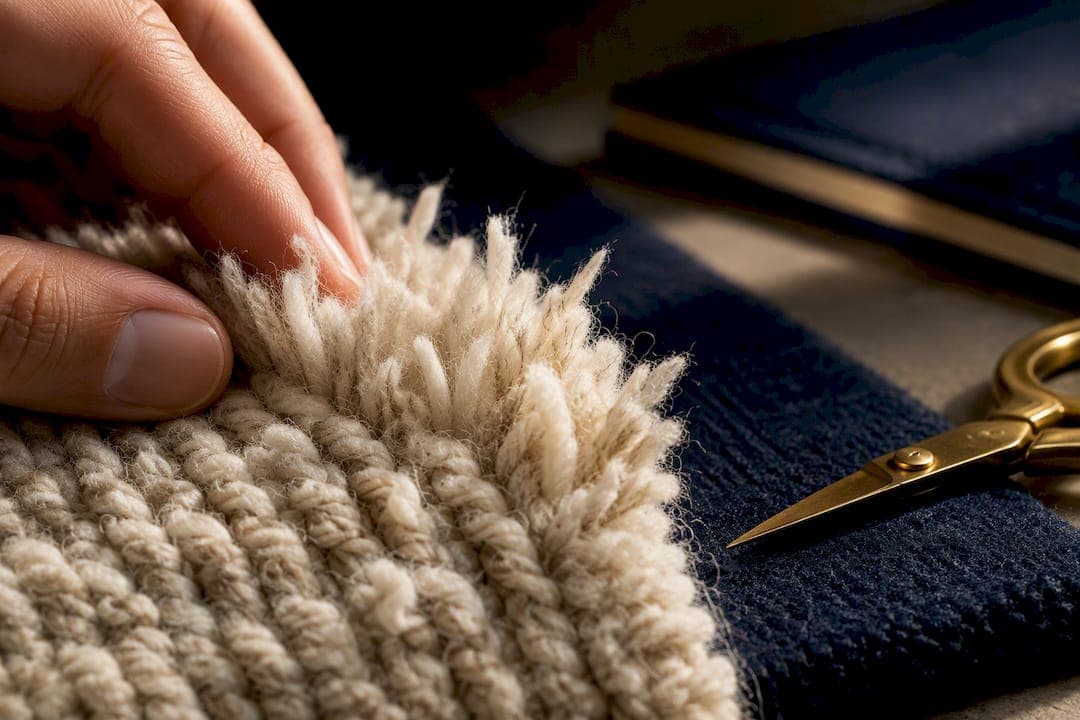
Yes, wool rugs shed, and it is a normal break-in behaviour rather than a fault. The fastest way to calm visible fluff is gentle, suction-only vacuuming, a good rug pad, and regular rotation. Trim any stray fibres with scissors rather than pulling them, and only contact the retailer if heavy loss continues well beyond the usual settling period or you spot bald patches.
TL;DR:
- Wool rug shedding mostly occurs within the first three months and can last up to a year, depending on the construction and pile height.
- Using a suction-only vacuum, fitting a rug pad, and rotating the rug regularly significantly reduces shedding and prolongs rug life.
- Shedding is caused by loose, trimmed wool ends from manufacturing and natural fibre release, not structural faults, if it diminishes over time.
- Heavier shedding past a year, bald patches, or visible backing issues indicate a possible fault and require professional inspection or warranty claim.
- Selecting lower pile, tightly woven, and high-yarn-twist rugs before purchase can minimize future shedding and improve durability.
Table of Contents
- What causes wool rug shedding?
- How long does wool rug shedding typically last?
- How do you stop wool rug shedding?
- When is wool rug shedding a sign of a fault?
- Which rug constructions shed the most?
- Trade-tested tips from Simmons Interior Supply
- Why patience with wool pays off
- Get bespoke rugs specified to shed less from day one
- Sources
- FAQ
What causes wool rug shedding?
Wool is a staple fibre, meaning each strand is short by nature rather than one continuous filament like nylon or polyester. Those short lengths are spun and twisted into yarn, but a proportion of fibre ends inevitably sit loose within the pile once the rug is finished. Wool carpet shedding happens because those trimmed ends work their way to the surface as the pile flexes underfoot, not because anything has gone wrong with the rug.
Manufacturing adds another layer to the story. Shearing, tufting, and the final trimming that gives a rug its crisp finish all leave microscopic loose ends buried in the weave. Every handmade wool rug carries some of this residue, which is why most genuinely handcrafted pieces shed during the first few months of ownership as those fibres from manufacturing release themselves.
It helps to separate two very different phenomena:
- Natural fibre release — loose, trimmed wool ends leaving the pile gradually; this is expected and self-limiting.
- Structural failure — backing degradation, latex breakdown, or a manufacturing fault causing tufts to pull free from the base.
The first calms down with time and care. The second gets worse, and it needs attention rather than a heavier vacuum session, which we cover further down.
How long does wool rug shedding typically last?
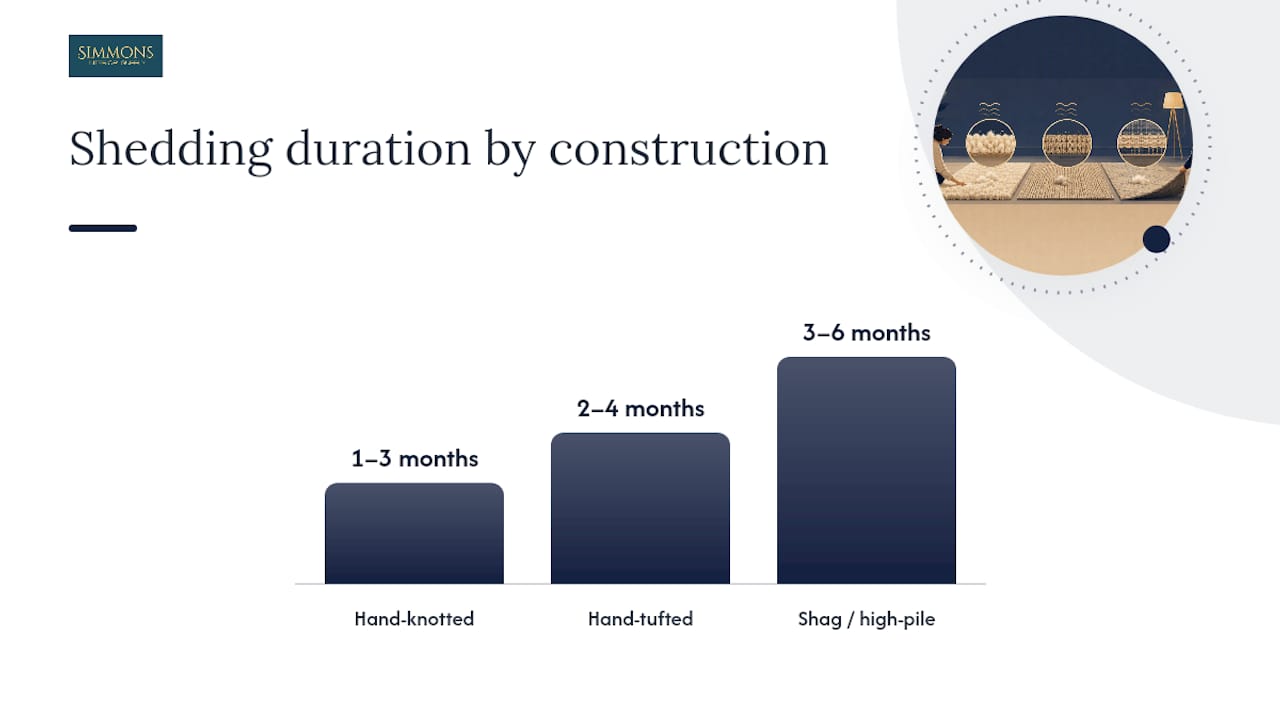
Shedding follows a fairly predictable arc, and construction type is the biggest variable. Most new wool rugs shed hardest in the first one to three months, tapering off as the loose fibres from production work their way out, with lighter shedding sometimes continuing for six to twelve months depending on pile height and how much traffic the rug takes.
Rough guidelines by construction:
- Hand-knotted rugs: 1 to 3 months, usually the quickest to settle because the yarn is tightly twisted.
- Hand-tufted rugs: 2 to 4 months, since the tufting process leaves more loose ends near the backing.
- Shag or high-pile rugs: 3 to 6 months, simply because there is more fibre length for loose ends to travel through.
- Flatweave rugs: minimal shedding, given the tight, low-profile weave leaves little room for fibres to migrate.
High foot traffic, thicker pile, and lower-grade wool all stretch the timeline out, while a light, consistent care routine shortens it. The clearest sign shedding is easing off is a shrinking amount of fluff in the vacuum canister each week, with no thinning or bald patches appearing in the pile. If the residue pattern stays heavy and constant rather than tapering, that is worth watching rather than ignoring.
How do you stop wool rug shedding?
Managing shedding is mostly about being gentle and consistent rather than aggressive. A few careful habits in the first months make a genuine difference to how quickly the rug settles.
- Vacuum with suction only. Turn off the beater bar or rotating brush entirely. That spinning bar is designed to pull fibres upward, which is exactly what you don't want on a rug still shedding loose ends. Set the vacuum height to skim the pile rather than dig into it, and work in the direction of the pile rather than against it. During the first couple of months, light vacuuming two to three times a week works better than one aggressive weekly pass.
- Fit a proper rug pad. A felt-topped pad with a non-slip bottom reduces friction between the rug and the floor, which lowers backing flex and, in turn, fibre breakage. Size the pad slightly smaller than the rug itself so it stays hidden, and check that it fits the room's dimensions rather than the rug's alone.
- Rotate the rug every three to six months. Even wear spreads the load across the whole pile instead of concentrating traffic on one section, which slows both shedding and premature thinning.
- Rake before you vacuum. A soft rug rake or brush lifts loose fibres to the surface first, so the vacuum picks them up in one pass rather than dragging at fibres still bedded in the pile.
- Trim, don't pull. If a stray fibre is poking up, snip it flush with scissors. Pulling it can drag out healthy fibres attached further down in the pile.
- Hold off on wet cleaning. Deep wet cleaning too early can trigger a temporary spike in fibre release, so it's worth waiting until heavy shedding has calmed before booking a professional clean. For spills, blot rather than rub, and avoid soaking the pile.
Pro Tip: Keep a lint roller by the sofa for the first few months. It takes seconds to catch loose fibres on nearby furniture and stops them migrating across the room every time someone sits down.
One habit undoes all the rest: running a robot vacuum with a rotating brush over a shedding wool rug. It is the fastest way to accelerate fibre loss precisely when the rug needs the gentlest treatment, and correcting that single behaviour often solves a shedding "problem" outright.
When is wool rug shedding a sign of a fault?
Ordinary shedding thins out. A fault does not. If loss stays heavy well past the typical window for the rug's construction, or you notice bald patches where the pile has visibly worn away rather than just lightened, that points to something beyond normal break-in behaviour.
Watch for these signals:
- Shedding that hasn't eased at all after 12 months.
- Bald or visibly thinner patches rather than an even, gradual reduction.
- A powdery white residue on the floor near the rug's edges, which often points to backing latex breaking down rather than wool fibres shedding.
- Backing visible through the pile in specific spots rather than general, even wear.
If any of those apply, a simple checklist helps before you escalate. Confirm the vacuum is genuinely on suction-only and check a pad is fitted. Note whether the rug has been recently wet-cleaned, since that can cause a short-term flare. Then photograph the affected area clearly and contact the retailer or maker with that evidence, asking about warranty cover or a professional inspection before attempting any further cleaning yourself.
Which rug constructions shed the most?
Construction dictates shedding far more than most buyers expect. Hand-tufted rugs and shag styles tend to shed more heavily and for longer, since the tufting method leaves more loose ends near the backing and the longer pile gives fibres further to travel before they escape. Flatweave rugs, by contrast, shed minimally, because their tight, low-profile weave gives loose fibres almost nowhere to go.
Yarn matters just as much as construction:
- Long-staple wool with a tighter twist sheds noticeably less, since fewer fibre ends sit loose within the yarn to begin with.
- Wool and synthetic blends behave differently again, often shedding less initially but losing some of the texture and resilience that make pure wool desirable.
- Lower pile height and higher density reduce visible shedding simply because there is less loose fibre volume sitting near the surface.
If shedding genuinely bothers you, placement is worth thinking about before purchase. A dining room rug under 12mm pile suits heavy daily use far better than a deep shag piece in a hallway, where traffic accelerates every stage of the settling process.
Trade-tested tips from Simmons Interior Supply
On the workshop floor, one sequence comes up again and again: rake the pile gently to lift loose fibres to the surface, vacuum suction-only in the direction of the pile, then trim any stubborn ends flush. Repeated lightly once a week, that routine clears loose fibre without pulling fresh strands free, and it's a habit worth building into the rug's first few months regardless of construction.

Specification decisions made before a rug is even woven matter just as much; this is similar to choosing high-quality interior doors where quality versus price determines long-term satisfaction. For a room with heavy footfall, or one fitted with underfloor heating, we routinely steer clients toward a lower pile, a tighter weave, and a backing suited to the room's conditions. Those choices don't eliminate shedding, but they shorten and soften it considerably.
Pro Tip: Ask about yarn twist when specifying a bespoke rug. A tighter twist locks fibre ends in more securely, which noticeably shortens the settling period compared with a looser, softer spin.
Why patience with wool pays off
Shedding is the price of the real thing. A rug that never sheds a single fibre is usually leaning on synthetic yarn or heavy chemical treatment, and neither gives you the depth, warmth, or longevity that genuine wool offers over a decade of daily use. Bespoke specification, chosen properly at the outset, softens that early inconvenience considerably. Ask for guidance on pile height, backing, and yarn twist before you commission a piece; a few decisions made early save months of unnecessary worry later.
— Luke
Get bespoke rugs specified to shed less from day one
Simmons Interior Supply is the option for readers who would rather specify their way around heavy shedding than manage it after delivery. Because rugs can be made to order, pile height, backing, and yarn twist can all be set before weaving begins, tailored to the room, the traffic, and how much settling period you're willing to tolerate.

Trade professionals and homeowners alike work with us through the custom rug design process, which walks through exactly these specification choices before a single knot is tied. Browse the full rug and furniture collection to see what's possible, or get in touch to request a specification consultation for your next project.
Sources
- Why is my wool rug shedding & how to manage it | JUBI
- How to stop wool rug shedding: A complete guide - Rugvista
- Why is my new wool carpet shedding? - Art of Clean
- How to stop a rug from shedding - Atlanta Designer Rugs
FAQ
How Do I Stop My Wool Rug From Shedding?
Vacuum with suction only, keeping the beater bar switched off, and fit a felt-topped rug pad underneath. Rotate the rug every few months and trim any stray fibres with scissors rather than pulling them free, and shedding should ease within the first few months.
How Long Does It Take For A Wool Rug To Stop Shedding?
Most wool rugs shed heaviest in the first one to three months, with lighter shedding sometimes continuing for up to six to twelve months depending on construction and traffic. Hand-knotted rugs typically settle fastest, while shag and high-pile styles take longer.
Why Is My New Wool Rug Shedding So Much?
Wool is a short staple fibre, and manufacturing stages like tufting and trimming leave loose ends within the pile that work their way out with normal use. This is a well-documented characteristic of genuine wool construction rather than a sign of poor quality, and it often means the wool has been minimally processed.
What Are The Downsides Of A Wool Rug?
The main trade-off is an initial shedding period, which can last several months depending on how the rug is made. Wool also needs gentler cleaning than synthetic fibres, avoiding heavy wet cleaning and beater-bar vacuums, though it rewards that care with far better durability and texture over time.
Can Simmons Interior Supply Help Reduce Shedding On A New Rug?
Yes. Because rugs can be made to order, pile height, yarn twist, and backing can be specified upfront to shorten and soften the settling period. Details on the custom rug design process explain how those choices are made before weaving starts.