
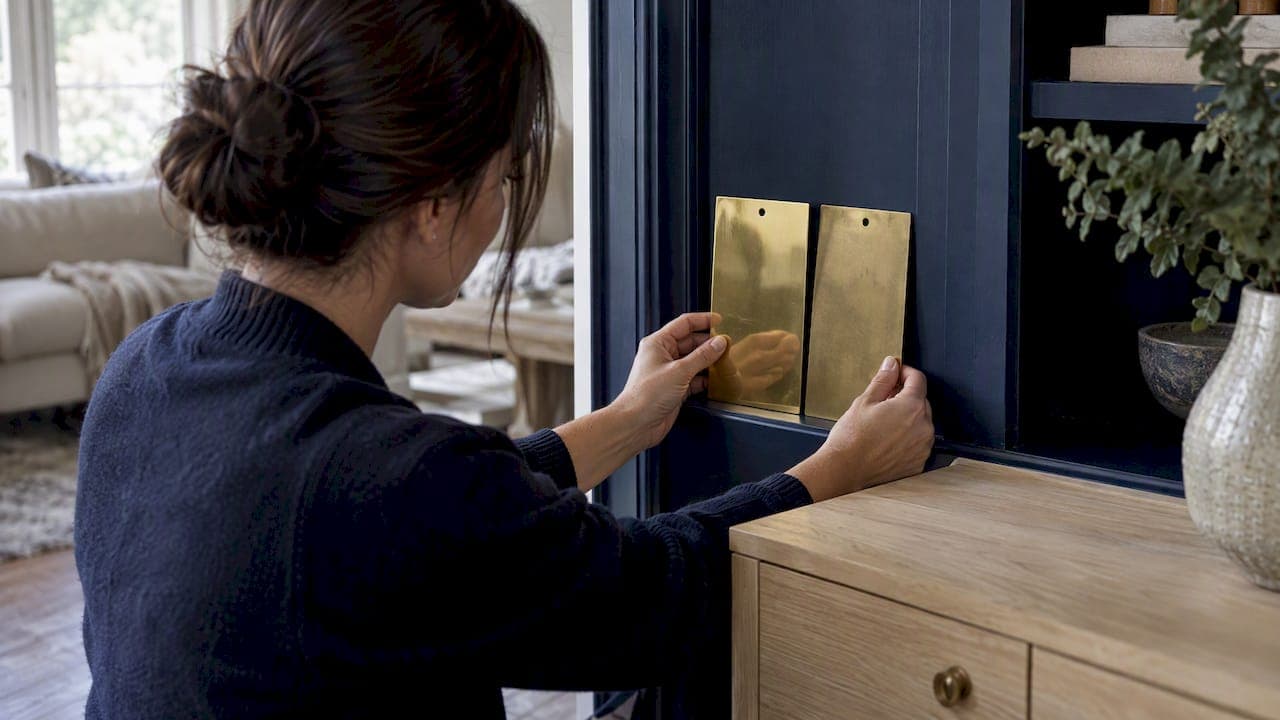
Lacquered brass is sealed to hold a fixed, polished look, while unlacquered brass is left bare and develops a living patina. The trade-off is permanence against character. Choose lacquer if your scheme calls for a finish that stays as it was installed, and unlacquered if you want hardware that deepens and mellows with the years.
TL;DR:
- Unlacquered brass can begin mellowing within weeks or months, and handling, humidity, ventilation, and cleaning habits affect how quickly its patina develops.
- In bathrooms and kitchens, lacquer offers initial protection but can fail sooner, while bare brass patinates faster in damp conditions.
- Clean either finish with a soft cloth, mild detergent, and warm water, then dry it; avoid acidic or abrasive products, and never polish intact lacquer.
- For bespoke work, specify lacquer type and gloss level or, for bare brass, alloy and surface preparation; approve physical samples and an aged reference photograph.
- If lacquer peels, consult a specialist about repair; spot repairs on bare brass may stand out as surrounding metal continues to change.
Table of Contents
- What lacquered and unlacquered brass actually are
- How each finish looks and ages over time
- Caring for brass: cleaning, repair and re-coating
- Which brass finish is right for each room?
- Specifying brass finishes for bespoke furniture and fittings
- Luke's view on finishing conversations
- How we can help with bespoke brass finishes
- FAQ
- Sources
What lacquered and unlacquered brass actually are
The difference begins after the brass has been polished. On lacquered brass, a clear protective coating is applied over the polished metal. It helps protect the polished appearance of the brass. Unlacquered brass receives no such coating. The bare metal develops a patina over time. This is why trade guidance describes it as a "living" finish, one that changes character over the years, whereas lacquered brass is coated in clear lacquer to keep its polished appearance.
You will meet both finishes across the same product types, so the terms are worth mapping to what you are actually buying:
- Cabinet and door hardware: handles, knobs, pulls and escutcheons
- Tapware and bathroom fittings: spouts, levers and shower heads
- Decorative fittings: hinges, light switches, picture rails and furniture accents
- Bespoke furniture details: inlays, legs, mounts and trim
How each finish looks and ages over time
Unlacquered brass moves through recognisable stages. It begins as a bright, golden tone, then mellows within weeks or months as the surface oxidises. Its appearance can change over time, giving it a more varied look. No two pieces age identically, which is much of the appeal.

Lacquered brass keeps its original polish for as long as the coating stays intact. If the lacquer degrades, the finish may become uneven.
Several things shape the result:
- Fingerprints and handling: handling can affect the appearance of bare brass.
- Cleaning habits: follow the care instructions for the finish.
- Humidity and ventilation: room conditions can affect how the finish changes.
- Cleaning products: check that a product is suitable for the brass finish before using it.
Where the trade stands: Unlacquered brass is described as a "living" finish that develops a natural patina over the years, while lacquered brass is sealed to hold its polish. That contrast is the starting point for every finish decision.
If you are weighing other brass finishes too, our guide to antique brass vs brushed brass explains how those finishes differ in appearance.
Caring for brass: cleaning, repair and re-coating
Both finishes are easy to look after once you know what each one tolerates. The routine below works for either, with the notes beneath it marking where they diverge.
- Wipe regularly with a soft microfibre cloth. A quick pass removes fingerprints before they set into spots.
- Avoid acidic or abrasive cleaners. Avoid cleaners or tools that may damage the finish.
- Clean periodically with warm water and a few drops of mild detergent, then dry immediately. On lacquered brass, stop there: brass polish may affect the coating.
- On unlacquered brass, decide what you want. If you love the patina, leave it alone. If you want to restore the bright tone, a suitable brass cleaner may brighten the surface, though the brass can change again over time.
- Treat lacquer failure promptly. If lacquer peels, consult a specialist about the appropriate repair. A specialist can advise on restoring a spot on unlacquered brass, bearing in mind that the surrounding metal may continue to change.
Pro Tip: Test any cleaner on an unseen edge first, and never use polish on lacquered brass that is still intact.
For a concise checklist you can keep to hand, see our brass patina care routine.
Which brass finish is right for each room?
Lacquered brass may suit rooms where a consistent, polished look matters and you would rather the metal's appearance change less. Unlacquered brass belongs in period renovations, decorative elements and any home where an ageing patina is part of the design intent.
Use these pointers to turn that into decisions:
- Formal living and dining rooms: lacquered, for an even finish that matches fixed colour schemes.
- Period or characterful renovations: unlacquered, where a lived-in look feels authentic.
- Bathrooms and kitchens: lacquer offers early protection in humid spaces, but it is also more likely to fail there, and unlacquered brass will patinate faster in damp conditions. Choose according to how much change you welcome.
- Busy family homes: consider how often surfaces will be touched and how tolerant you are of marks. Unlacquered brass rewards a relaxed attitude to wear, while lacquer suits households that prefer minimal upkeep of the surface.
Specifying brass finishes for bespoke furniture and fittings
When you commission bespoke pieces, clear language in the specification prevents disappointment. Our guide to choosing and specifying custom finish options covers the wider process; the points below are specific to brass.
- Lacquered brass: state the lacquer type (a clear lacquer or a harder-wearing polyurethane), the gloss level (matte, satin or gloss), and ask for the expected service life and re-coating guidance.
- Unlacquered brass: note the alloy composition and tolerance, the surface preparation (for example brushed or polished before delivery), and your acceptance criteria for natural patina progression, so that early variation is understood as expected rather than as a defect.
- Samples: order physical samples rather than relying on screens, and agree an "approved aged" reference photograph that shows the patina you are happy to receive.
Pro Tip: On large projects, record the sample batch number against the approval, so later orders can be matched to the same stock.
Luke's view on finishing conversations
In our trade work, the finish is rarely a throwaway decision. Clients who ask the right questions early, about change over time and about who will clean the piece, are more likely to be happy with the result over time. We find that signed-off samples and plain maintenance advice can help prevent disagreements. We work closely with our artisans to discuss the finish you expect.
— Luke
How we can help with bespoke brass finishes
If you are planning a commission, we can help you specify and approve the finish before a single piece is made. Our bespoke furniture collection is made to order, with custom sizes and finishes, and we work with you to tailor the piece to your needs.
Here is what you can expect from us:
- We can discuss finish considerations for your project
- We can discuss how finishes behave and how to care for them
- Our gallery offers inspiration
- A short consultation to match the finish to your room and routine
To take the next step, browse our gallery for inspiration, then ask us for samples or a consultation.
FAQ
What is the difference between antique brass and aged brass?
Antique brass is a finish applied deliberately to give a darkened, aged look from day one. Aged brass is bare brass that has developed its patina naturally over time. Our guide to antique brass vs brushed brass explains the finishes in more detail.
Does satin brass tarnish?
It depends on whether it is sealed. Satin describes the sheen, not whether the brass is sealed. Check whether the finish is lacquered if resistance to tarnish matters to you. Satin describes the sheen, not the protection.
How does unlacquered brass patinate?
Unlacquered brass reacts with air, moisture and the oils on your hands, so it darkens gradually from a bright gold toward warmer, deeper tones. The pace depends on handling, humidity and cleaning habits, which is why trade guidance calls it a "living" finish.
What are the disadvantages of unlacquered brass?
Its appearance changes unevenly, and it needs occasional cleaning if you prefer a brighter tone. If you want a finish that never changes, lacquered brass is the better match. For a full routine, see our brass patina care checklist.