
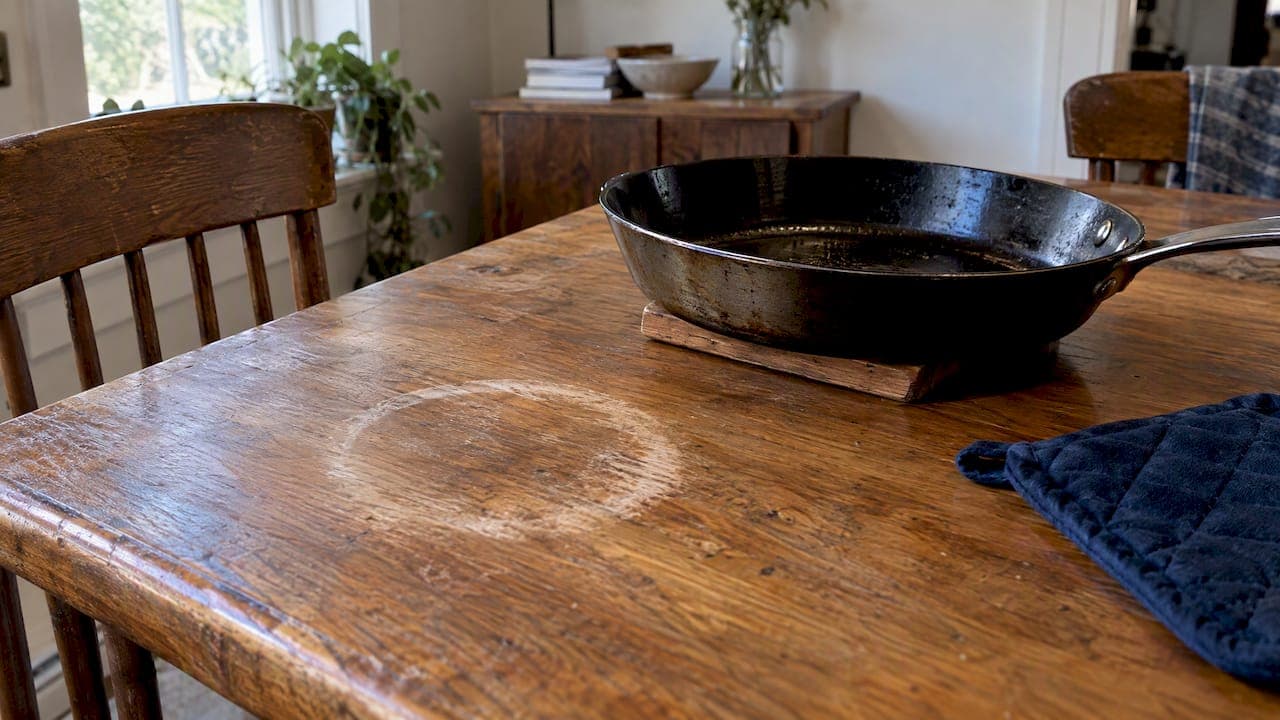
Cross linking two pack varnishes and high performance polyurethanes, including the newer waterborne cross linking types, stand up to everyday heat better than any other film finish. Pre and post catalysed lacquers follow close behind, while penetrating oils such as boiled linseed or tung offer the least protection. None of them, however, are built to shrug off a pan straight from the hob: that kind of contact can still scorch, discolour or blister even the best cured surface.
TL;DR:
- Polyvine’s Heavy Duty Varnish reaches full cure after about 16 hours at 20°C; wait before heavy use because dry to the touch does not mean hardened.
- Cooler rooms and damp air slow curing, while thick coats can harden unevenly; follow the product’s temperature and recoating instructions, and avoid humid conditions.
- Kitchen worktops need a two part conversion varnish or heavy duty waterborne polyurethane, but trivets remain necessary; choose food safe finishes for food preparation surfaces.
- Natural oils are easier to spot treat after scorching, while damaged synthetic varnish usually requires sanding and recoating; choose oils when tactile appearance outweighs heat protection.
Table of Contents
- 1. The finish types worth knowing and how they handle heat
- 2. How manufacturers actually test and rate heat resistance
- 3. Getting the application right so the finish performs as rated
- 4. When a finish isn't enough: design and barrier strategies
- 5. Matching the finish to the surface and how it gets used
- 6. Simmons Interior Supply: expert tips for specifying heat resistant finishes on bespoke pieces
- 7. Comparisons of heat resistance in natural vs synthetic wood finishes
- 8. Setting realistic expectations about what a finish can do
- Commission a finished piece and leave the guesswork behind
- FAQ
- Sources
1. The finish types worth knowing and how they handle heat
Every wood finish falls broadly into two camps, and the difference matters enormously once heat enters the picture.
Film finishes sit on top of the timber and form a protective skin. Solvent based polyurethane has long been the benchmark for wear and heat tolerance, and the Dulux Trade polyurethane varnish technical data sheet confirms it is tested against boiling water, alcohol and hot plates, though it asks for longer drying and recoating windows than waterborne alternatives. Waterborne cross linking polyurethanes have closed much of that gap while curing faster and smelling far less aggressive in a workshop. Two pack, or conversion, varnishes add a catalyst that chemically hardens the film, giving the toughest everyday heat resistance of the lot. Lacquer, whether pre catalysed or post catalysed, sprays beautifully and resists knocks well, but it generally sits a notch below 2K polyurethane for heat.
Penetrating oils work differently: they soak into the grain rather than sitting on the surface, which gives a lovely tactile finish but almost no barrier against heat or hot liquids.
A few names worth researching further if you want to compare technical data sheets directly:
- Polyvine's heavy duty and extreme varnish ranges, aimed at surfaces that see daily wear.
- Dulux Trade's polyurethane varnish, a long standing solvent based option for joinery and furniture.
2. How manufacturers actually test and rate heat resistance
Technical data sheets rarely use plain language, so it helps to know what the numbers mean before trusting a tin's claims.
Many sheets reference a hot wet pan test, alongside resistance scores for coffee, tea and ethanol, as a proxy for everyday kitchen hazards. The Polyvine technical data sheet for Heavy Duty Varnish lists this kind of resistance once the coating has fully cured, alongside a cure time of around 16 hours at 20°C for full cure before heavy use begins. That cure window matters because a varnish tested under lab conditions only performs to spec once it has properly hardened, not the moment it feels dry to the touch.
Application temperature and humidity shift those results too. Guidance in line with BS 6150 on wood finishing flags how cooler rooms or damp air slow curing and can leave a softer, less heat tolerant film even when the right product was used. A hot wet pan rating on paper, in other words, assumes the coating was applied and cured the way the sheet describes, not rushed through on a cold afternoon.

3. Getting the application right so the finish performs as rated
A heat resistant varnish only earns that description if it goes on correctly. Most failures trace back to rushed prep or poor conditions rather than a weak product.
- Clean the surface thoroughly, sand to an even key, and remove wax, grease or silicone residues that stop adhesion, following guidance on proper sanding between coats with recommended grits.
- Apply thin, even coats rather than one heavy layer, since thick films trap solvent or water and cure unevenly.
- Work within the product's stated application window, typically within a recommended temperature range, and respect the recoating times on the tin.
- Avoid applying in high humidity, which slows curing and can leave the surface softer than its rated hardness.
Pro Tip: Cure a sample panel under the same conditions as the real piece and test it with a warm mug or pan before committing the whole surface.
4. When a finish isn't enough: design and barrier strategies
Even a well applied, fully cured heavy duty varnish has limits, and it pays to design around them rather than hope the chemistry copes. Editorial guidance from WOOD Magazine is blunt on this point: most film finishes will discolour under direct contact with genuinely hot cookware, and physical barriers do a better job than any coating.
Sensible additions for anywhere heat regularly meets timber include:
- Trivets or cork pads for pans, kettles and serving dishes.
- Inset tiles or stone panels set into tabletops or worktops where hot items routinely land.
- Toughened glass tops over dining and occasional tables.
- Metal or ceramic feet pads under appliances left standing on a surface.
Treat anything fresh from an oven, grill or hob as off limits for direct contact with wood, whatever varnish sits underneath.
5. Matching the finish to the surface and how it gets used
Different rooms place very different demands on a finish, and the right choice depends on how hot things actually get in practice.
- Kitchen worktops benefit most from a 2K conversion varnish or a heavy duty waterborne polyurethane, paired with trivets for anything straight off the hob.
- Dining tables suit either a tough polyurethane for daily family use or a hand rubbed oil where the look matters more than resisting the odd hot dish, provided mats are used.
- Mantels see occasional radiant warmth rather than direct contact, so a mid sheen varnish usually copes well, with a few millimetres of clearance from any fire opening.
- Surfaces with occasional hot contact, such as a console table holding a teapot now and then, can lean towards appearance over maximum resistance, since the exposure is rare.
Sheen level affects more than looks: gloss and satin film finishes generally resist heat better than low sheen or oiled surfaces, though they show scratches more readily and may need re-coating sooner in heavy use areas. For worktops used in food preparation, choose a finish explicitly labelled safe for incidental food contact rather than assuming any varnish will do.
6. Simmons Interior Supply: expert tips for specifying heat resistant finishes on bespoke pieces
When we work with a client on a bespoke piece, the briefing conversation shapes everything that follows. We ask how the piece will actually be used: a dining table that hosts family roasts every Sunday needs a different specification to a console table that holds decorative objects. Tell your maker the intended heat exposure, the aesthetic you want and how much maintenance you are realistically prepared to do.
It is worth requesting a cured sample panel, finished under the same shop conditions as the real piece, so you can test it with a warm mug before signing off the full commission. Ask for the coat schedule and cure times in writing. Where heat exposure is likely, raise protective design features early, such as an inset tile panel, a glass top or discreet metal feet, so they can be worked into the design rather than bolted on afterwards. For a deeper look at briefing a maker on finish choices, our guide to custom finish options covers the questions worth putting on paper before work begins.
7. Comparisons of heat resistance in natural vs synthetic wood finishes
Natural finishes, chiefly boiled linseed oil, tung oil and various wax blends, sink into the timber rather than forming a surface film. They feel warm and tactile underhand and are simple to refresh with a fresh coat, but they offer very little resistance to heat because there is no hardened barrier between a hot object and the wood fibres beneath. A hot mug left directly on an oiled surface will typically leave a ring or a dull patch far more readily than on a varnished one.

Synthetic film finishes, by contrast, cure into a continuous hard layer that genuinely separates the timber from whatever sits on it. Two pack polyurethanes and modern waterborne cross linking systems achieve the highest resistance scores on manufacturer data sheets precisely because that cured film, not the wood underneath, takes the heat. The trade off is repair: a scorched patch of synthetic varnish usually needs sanding back and recoating an area, whereas an oiled surface can often be spot treated with another application of oil.
Neither family is immune to very high heat. The distinction that matters practically is that synthetic finishes buy you meaningfully more margin against day to day warmth, spills and warm crockery, while natural oils suit pieces valued for a soft, hand finished look where heavy heat exposure is unlikely in the first place. Choosing between them is really a choice between maximum protection and maximum tactile warmth, and few finishes manage both at once.
8. Setting realistic expectations about what a finish can do
The marketing on a tin can make heat resistance sound like a solved problem. It is not, and treating it as one is the mistake I see most often. A properly cured 2K varnish or waterborne polyurethane genuinely raises your margin for everyday warmth, spilled tea and warm serving dishes, but it was never engineered to replace a trivet under a cast iron pan.
Specify the right finish, apply it properly, and then behave sensibly around it. The combination, not any single tin, is what keeps a tabletop looking right for years.
— Luke
Commission a finished piece and leave the guesswork behind
If reading through cure times, hot wet pan ratings and application windows has you wondering whether to hand the whole problem to someone else, that instinct has merit. Commissioning a bespoke piece through Simmons Interior Supply means you specify the finish type at the briefing stage, request a cured test sample before the main piece is made, and build in protective design details, an inset tile, a glass top, raised metal feet, as part of the design rather than an afterthought bolted on later.

Our bespoke furniture collection is handcrafted to order, with size and finish tailored to the room it will live in and the use it will actually see. Browse our gallery of finished commissions to see protective design features at work, or look at a piece such as the bespoke nest of coffee tables to get a sense of how finish and design come together. Get in touch to discuss a quote for your own piece.
FAQ
What is the best type of finish for heat resistant wood?
Two pack conversion varnishes and high performance polyurethanes, including modern waterborne cross linking types, give the strongest everyday heat resistance among common wood finishes. Lacquer is durable but generally sits below these for heat tolerance, and penetrating oils offer the least protection of the three.
Is there a heat resistant varnish available for wood?
Several varnishes are formulated and tested for resistance to hot items once fully cured, including heavy duty waterborne polyurethanes referenced in the Polyvine technical data sheet. They resist hot mugs, warm plates and similar everyday contact rather than direct contact with a red hot pan.
Does polyurethane resist heat?
Polyurethane varnish resists moderate everyday heat well once fully cured, and the Dulux Trade polyurethane varnish data sheet confirms testing against boiling water and hot plates. It still is not designed to withstand sustained direct contact with very hot cookware.
What are some fire resistant wood finishes available?
Fire retardant, or intumescent, coatings are a separate product family from everyday heat resistant varnishes. Teknos documentation shows these are tested under EN 13501-1 to slow flame spread for life safety purposes, not to protect a tabletop from a hot pan.
How can I protect a wood finish from everyday heat damage?
Use trivets, inset tiles or glass tops for anything genuinely hot, since even heavy duty finishes have limits, as WOOD Magazine notes in its guidance. Applying the finish correctly, with full cure time respected, also helps it perform to its rated resistance.
Sources
- Polyvine technical data sheet — Heavy Duty Varnish
- Dulux Trade polyurethane varnish technical data sheet
- Teknos: fire retardant wood coatings
- Wood Magazine — Is wood finish heat‑resistant?