
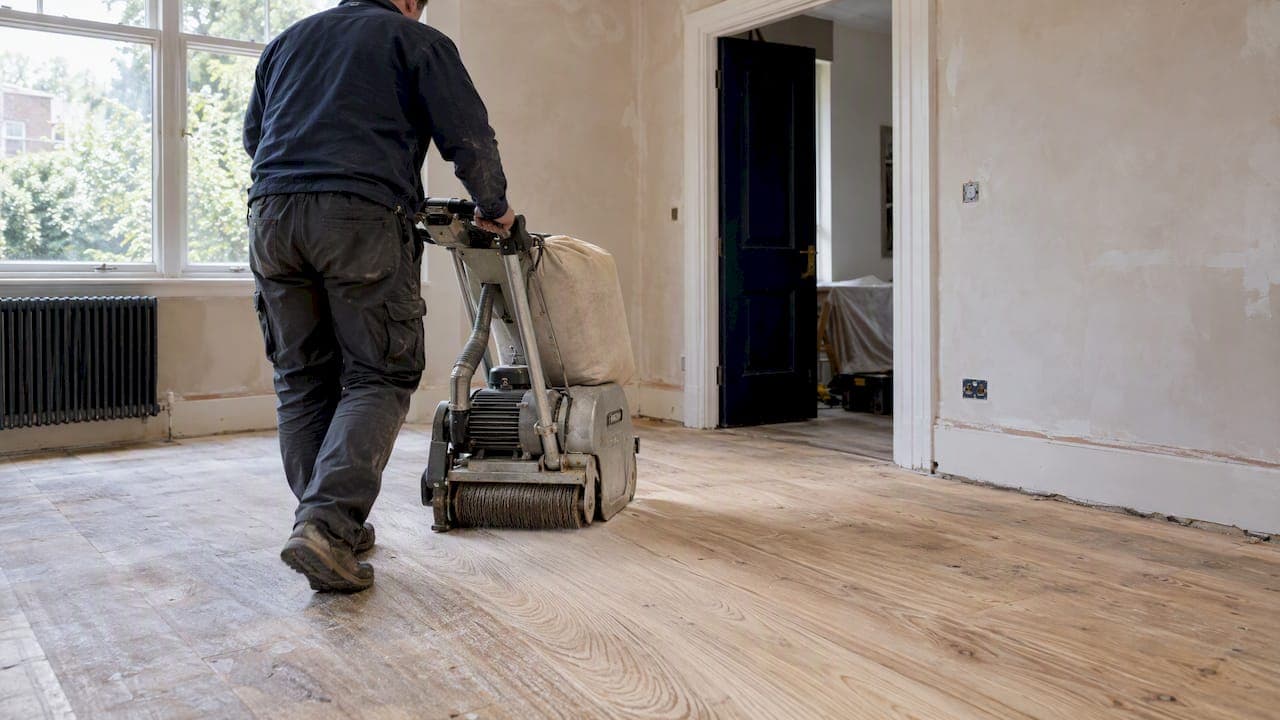
A wire brushed finish is created by mechanically scraping away the softer grain of wood, leaving the harder grain standing in relief as a textured, tactile surface. It suits busy, character-led homes where hiding everyday wear matters more than a flawless sheen, although the texture asks a little more of you at cleaning time. The sections below walk through how it is done, where it shines, where it struggles, and how to keep it looking its best.
TL;DR:
- Wire brushing emphasizes the wood's natural grain by scraping away soft fibers, creating a textured and tactile matte surface that hides minor wear.
- Oak and maple respond differently to brushing, with oak offering a sharper contrast, while maple delivers a subtler effect due to its finer grain.
- Proper installation requires even brushing along the grain, thorough vacuuming, and careful matching of brushing depth to prevent uneven appearance after finishing.
- The textured surface is ideal for high-traffic or character-focused interiors, but requires regular sweeping to remove dust and debris from grooves.
- Water-based finishes preserve the texture's look, but oils deepen the grain and enhance dimension, making testing on sample areas essential before full application.
Table of Contents
- What makes a wire brushed finish different from a smooth or hand-scraped surface
- How wire brushing is performed on site
- Benefits of a wire brushed finish for homeowners
- Drawbacks and limitations to consider
- Appearance, style pairings and where wire-brushed finishes work best
- Finishing and maintenance: which coatings work and how to care for the surface
- Specifying brushing depth and finish for bespoke furniture and millwork
- When character should win over convenience
- How this finish can be brought to bespoke furniture
- FAQ
- Sources
What makes a wire brushed finish different from a smooth or hand-scraped surface
Wood is made of alternating bands of soft and hard grain, and a wire brush works by stripping away the softer fibres while leaving the denser grain standing proud. The result is a surface you can feel as well as see, with visible ridges that follow the timber's natural pattern rather than a flat, sanded plane.
Compared with a conventional smooth-sanded floor, the texture is immediately apparent underfoot and under light. Hand-scraped finishes chase a similar rustic effect but rely on an artisan's blade rather than mechanical bristles, giving a more irregular, handmade look. Wire brushing tends to produce a more consistent, repeatable pattern.
- Oak is the classic candidate, its strong grain contrast giving the brushed texture real definition.
- Maple, by contrast, has a tighter, softer grain structure, so brushing reads more subtly.
- Grain direction matters too: brushing with the grain emphasises the natural lines, while cross-brushing can flatten the effect.
How wire brushing is performed on site
Professional installers typically use a drum sander fitted with rotating wire or Tynex brushes, running it along the boards in the direction of the grain to lift the soft fibres evenly. Edging machines handle the perimeter, since the main drum cannot reach right up to skirting boards and door frames without a smaller tool to finish the job.
The Bona Wire Brush System technical data sheet describes a system built for exactly this kind of on-site work, pairing durable brushes with Bona's own sanding and finishing products so the whole process stays compatible from start to finish. Its guidance distinguishes between metal wire brushes, which cut a sharper, more pronounced texture, and softer Tynex brushes, which produce a gentler, rounder effect more forgiving on bare feet.
A typical sequence runs like this:
- Sand the floor to the manufacturer's recommended profile before brushing begins.
- Run the main brush along the grain in even, overlapping passes.
- Use an edging tool to blend the perimeter so it matches the central area.
- Vacuum thoroughly and inspect under raking light before applying any finish.
Evenness is everything here: any patch brushed more heavily than its neighbour will stand out starkly once a coloured finish goes on, so working steadily matters more than working quickly.
Pro Tip: Brush a spare board or an inconspicuous corner first so you can check the depth and direction before committing to the whole floor.
Benefits of a wire brushed finish for homeowners
The appeal of this finish is practical as much as aesthetic. For households with children, pets, or simply a lot of foot traffic, the texture does genuine work in disguising the small knocks that would show plainly on a smooth surface.
- Minor scuffs, dents, and scratches sit within the existing grain pattern rather than standing out against a flat sheen.
- The matte, textured look suits contemporary and rustic interiors alike, giving a floor or piece of furniture real presence.
- The surface adds a subtle grip underfoot, which some households prefer to a glass-smooth finish.
- Oil and water-based finishes both tend to pool slightly in the brushed grooves, deepening the colour and adding a sense of dimension that a flat sanded surface cannot match.
Drawbacks and limitations to consider
The same texture that hides wear also creates places for dust, crumbs, and spilt liquid to settle, so a wire brushed floor generally asks for more frequent attention with a vacuum or soft broom than a smooth one does.
- Dust and fine debris collect in the grooves and need regular, gentle sweeping to shift.
- A heavily brushed surface can feel sharper underfoot than many people expect, particularly with aggressive metal-bristle brushing.
- Spot repairs are harder to blend invisibly, since matching both the stain and the exact brushing depth of the surrounding area takes real skill.
- The lower sheen will not suit a room where you are relying on a reflective floor to bounce light around.
Appearance, style pairings and where wire-brushed finishes work best
This finish reads differently depending on the room and the scheme around it. In a modern rustic, farmhouse, or industrial interior, the visible grain and matte surface reinforce the sense of natural materials left honest rather than polished away. In a Scandinavian scheme, a lightly brushed, pale oak floor adds texture without tipping into heaviness.
Brushing depth and species both shape the final colour contrast: a deeper brush on oak throws the grain into sharp relief, while a lighter touch on maple gives a quieter, more understated texture. If you are weighing this against a different textured technique, our guide to cerused oak finishes covers a related approach that whitens the grooves for an even more pronounced effect.
- Hallways and living spaces suit the finish well, since both see regular traffic and benefit from the wear-hiding texture.
- Wet rooms and bathrooms are worth treating with caution, as standing moisture sits more readily in textured grain than on a sealed, smooth surface.
Finishing and maintenance: which coatings work and how to care for the surface
The finish you apply after brushing has a direct effect on how the texture reads; for practical sealing and protection guidance, see how to properly seal hardwood floors for lasting protection. Water-based finishes tend to sit cleanly in the grooves without altering the colour much, while oils such as Bona Craft Oil 2K soak into the exposed grain and deepen it, giving the floor more visual depth. A DriFast stain can be used beforehand to adjust the base colour, but the Bona Wire Brush System data sheet notes that sanding too finely before applying these products can stop them penetrating the grain as intended, so the sanding step genuinely matters.
- Decide on brush aggressiveness and sand to the matching profile before any stain or oil goes down.
- Test your chosen stain and finish combination on an offcut or hidden area, since brushing depth changes how much colour the wood absorbs.
- Sweep or vacuum regularly to stop grit working into the grooves and dulling the surface.
- Blot spills promptly rather than wiping, which can push liquid further into the texture.
- Re-oil or refinish on the schedule your product recommends, since textured grain tends to show wear in the finish before a smooth surface would.
For general finish pairing beyond brushed wood, our piece on matching furniture finish types to use and wood is a useful companion, and if moisture exposure is a concern, our guide to water-resistant wood finishes covers the options in more detail.
Specifying brushing depth and finish for bespoke furniture and millwork
When you are commissioning a piece rather than buying off the shelf, the brushing depth becomes a specification you can actually control. Ask to see a physical sample brushed to the depth you want rather than relying on a photograph, since lighting changes how pronounced the texture looks. It is also worth asking directly whether the contractor plans to use metal or Tynex brushes, since the choice shapes both the final appearance and how the piece feels to touch.

Furniture generally benefits from a softer touch than flooring. A dining table or sideboard gets handled far more than a floor gets walked on barefoot, so a gentler Tynex pass preserves the grain's visual interest without leaving an edge that catches on sleeves or palms.
Pro Tip: Ask your supplier how they blend brushed edges on joinery details, such as table legs or drawer fronts, since this is where inconsistent brushing shows up fastest.
When character should win over convenience

Choose a wire brushed finish when your household lives hard on its floors and furniture and you would rather the surface absorb that life than show every mark against a mirror-flat sheen. It also earns its place when the room's whole design leans on natural, tactile materials rather than polish.
A smooth finish remains the better practical choice in a formal dining room, a space with underfloor allergy concerns, or anywhere barefoot comfort and effortless wiping matter more than texture.
— Luke
How this finish can be brought to bespoke furniture
Choosing a brushing depth from a sample board is one thing: trusting it will look the same on a full dining table or a run of panelling is another. Every piece is handcrafted to order, working directly with artisans to match the exact brushing depth, grain direction, and coating approved, rather than relying on a factory run.

- We collaborate with you on sample approval before any full piece is brushed or finished.
- Sizes and finishes are built to fit your space, not adapted from a standard catalogue.
- You can see applied examples of texture and finish work in our gallery, including pieces like the Hammered Coffee Table.
If you are picturing a textured, tactile piece for your own home, explore our bespoke furniture collection and get in touch to talk through brushing depth, species, and finish before we begin.
FAQ
What is a wire brushed finish?
A wire brushed finish is a textured wood surface created by mechanically scraping away the softer grain fibres, leaving the harder grain raised and visible. It gives wood a matte, tactile surface rather than a flat, sanded one.
What is a wire brushed wood finish used for?
It is most often used on hardwood flooring and furniture where a natural, rustic texture is wanted alongside practical wear-hiding benefits. The technique works on species like oak and maple, with the final look depending on brushing depth and the finish applied afterwards.
Is wire brushed flooring good for a family home?
It works well in households with children or pets, since the texture disguises minor scuffs and scratches better than a smooth surface. The trade-off is that the grooves collect dust and debris more readily, so it asks for more frequent sweeping.
What is the best type of finish for hardwood floors with a brushed texture?
There is no single best option: water-based finishes sit cleanly in the grooves, while oils such as Bona Craft Oil 2K soak into the exposed grain and deepen the colour. The right choice depends on the look you want and how the floor was sanded before brushing, so testing a sample first is worth the time.