
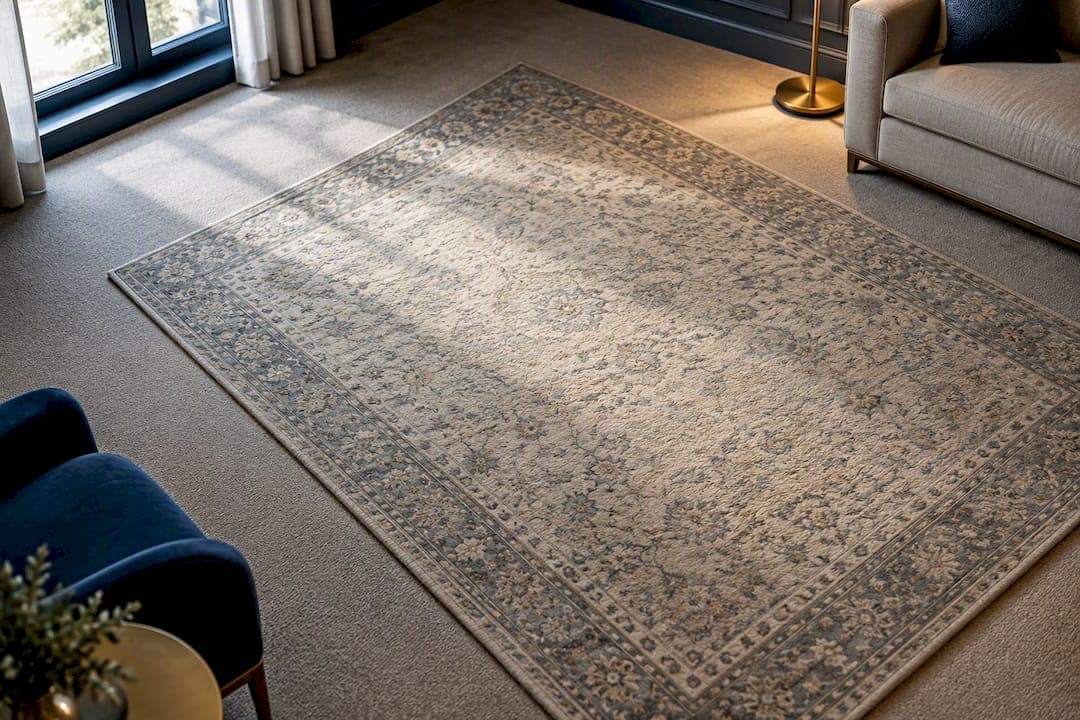
Yes, you can layer an area rug on carpet, and the effect can be genuinely elegant when the foundations are right. It works best over low-pile or firm loop carpet, where the top rug sits flat and stays put, adding texture, warmth and a sense of intention to a seating area or hallway. The caveat worth knowing before you buy: plush or shag carpet invites slippage and wrinkling, so the pairing needs a proper pad and a little forethought.
TL;DR:
- Layering a rug on low-pile or firm loop carpet offers a stable base, while plush or shag carpets require extra padding and careful placement to prevent slipping.
- The top rug should be 1 to 3 feet smaller than the carpeted area to create an intentional border, with furniture legs ideally resting on the rug.
- Using a rug pad designed for carpet enhances stability; avoid adhesive tape or pins that can damage the carpet over time.
- Pair natural materials like jute, sisal, or wool for forgiving, textured bases and top rugs, while synthetic fibers suit high-traffic households for easier maintenance.
- Custom-sized rugs eliminate sizing guesswork, especially over irregular or large areas, ensuring proper proportion and edge finishing for layered designs.
Table of Contents
- Dos and don'ts for using a rug on top of carpet
- Which carpet and rug pile pair well, and which to avoid
- Sizing and placement rules for layered rugs
- How to keep a rug secure: pads, tape and installation tips
- Styling and layering techniques to create an intentional look
- Care, cleaning and rotation for layered floors
- Simmons Interior Supply: when bespoke sizing solves layering problems
- Choosing between layering and replacing the carpet
- How Simmons Interior Supply can help with custom rugs and commissions
- Sources
- FAQ
Dos and don'ts for using a rug on top of carpet
Layering rewards a light touch and a clear plan. Get the scale and texture right and the room feels curated rather than accidental.
- Do choose a low-pile or looped base carpet, which gives the top rug a stable, flat surface to sit on.
- Don't stack two bold patterns together; let one surface be quiet so the other can lead.
- Do size the top rug to anchor the furniture group, with at least the front legs resting on it.
- Don't float a small rug in the middle of a seating area, where it reads as an afterthought rather than a design choice.
- Do fit a rug pad made for carpeted floors, particularly over anything with depth or bounce.
- Don't assume friction alone will hold a rug still on dense or plush pile.
Each rule solves a specific failure you'll spot the moment it happens, whether that's a rug creeping across the room or a colour scheme fighting itself for attention.
Which carpet and rug pile pair well, and which to avoid
Short and low-pile carpets, including tight loop weaves, give a top rug a firm, even foundation, which is why HGTV's layering examples repeatedly show wall-to-wall carpet used this way. The rug lies flat, the edges stay crisp and there's little risk of the two surfaces fighting for grip.
Plush or shag carpet is the trickier partner. A thick top rug laid over deep pile tends to wrinkle underfoot and can create a raised edge that catches toes, particularly in a busy hallway or at the foot of a sofa.

Material choice does the rest of the work. Jute and sisal bring a grounding, textural base that pairs naturally with a softer wool rug on top, while wool itself offers a forgiving mix of comfort and resilience for a top layer. Synthetic fibres, meanwhile, are the easiest to keep clean, which matters in a household with children, pets or a lot of foot traffic.
Sizing and placement rules for layered rugs
Proportion is where most layered looks succeed or fail. Architectural Digest's designer guidance suggests the top rug should typically sit 1 to 3 feet smaller than the base carpeted area, leaving a deliberate border rather than an accidental gap. That border reads as intentional, framing the top rug like a picture rather than leaving it stranded.

Furniture placement follows a similar logic: at minimum, the front legs of a sofa and chairs should rest on the top rug, which visually ties the seating group to the layered surface. A fully floating rug, with no furniture touching it, tends to look like an accessory rather than part of the room's structure.
Before buying, run a simple tape-out test:
- Mark the proposed rug's exact dimensions on the carpet with painter's tape.
- Position your key furniture pieces, or their outlines, around the taped area.
- Check that the front furniture legs land on or just inside the tape.
- Step back and view the layout from the doorway, where most people first see the room.
- Adjust the tape in 15 to 20 centimetre increments until the proportions feel settled.
Our rug size guide walks through this measuring process in more depth if you want a fuller reference before committing to a purchase.
How to keep a rug secure: pads, tape and installation tips
A rug that shifts underfoot undoes all the careful sizing work, so the right pad matters as much as the rug itself. The Spruce recommends pads designed specifically for carpeted floors, since standard hard-floor grippers won't hold on pile.
- Choose a thin felt pad with a grip backing designed for carpet-on-carpet use, which stops sliding without adding noticeable bulk.
- Avoid adhesive tape or carpet pins directly on the pile, since both can damage the carpet backing over time.
- Test any anti-slip product on a small, hidden section first to confirm it won't mark or discolour the fibres.
Once the pad is down, smooth out any wrinkles by hand, walk the main traffic routes to check the rug stays flat, and adjust the positioning before you commit to furniture on top.
Pro Tip: Lay the rug and pad, then leave heavy furniture off it for a day. Wrinkles that settle on their own save you from repositioning later.
Styling and layering techniques to create an intentional look
The most successful layered rooms rely on contrast rather than matching. A neutral, textured base carpet gives a patterned rug room to be the focal point, or the reverse works just as well: a patterned carpet calmed by a simple, textured top layer. HGTV's design examples show both approaches working, provided one surface stays quiet.
Keep the palette disciplined. Pulling a colour from cushions or curtains into the top rug unifies the scheme without adding a third competing pattern to the mix.
Layout offers more freedom than people expect. An asymmetrical offset, where the top rug sits slightly off-centre against the base, feels deliberate rather than careless. Diagonal placement works well in an otherwise square room, and in hallways a narrow runner laid straight down the centre of the carpet adds definition without overwhelming the space.
Care, cleaning and rotation for layered floors
Vacuum the top rug on its own setting regularly, and treat spills the moment they happen rather than letting them soak through to the carpet beneath. The Spruce advises rotating rugs periodically, which spreads wear evenly and stops permanent shadowing forming in one spot.
Professional cleaning frequency depends on the fibre, with natural materials generally needing more careful attention than synthetics. Lift the rug occasionally to check the carpet underneath for trapped moisture, odour or staining, since a layered setup can hide problems that would otherwise be obvious.

Simmons Interior Supply: when bespoke sizing solves layering problems
An off-the-shelf rug rarely matches an awkward or irregular carpeted area exactly, which is where the designer sizing rule (that 1 to 3 foot border) becomes hard to achieve without a custom dimension. Commissioning a bespoke rug removes the guesswork, letting you specify exact pile height alongside edge finishes suited to layering over low-profile carpet, including rooms with underfloor heating where tog rating matters. Our dining room material notes cover pile choices under 12mm that specifiers favour for this exact scenario. Lead times vary by finish, so it's worth discussing colour matching early in the process.
Choosing between layering and replacing the carpet
Layering makes sense as a refresh, a budget-friendly texture fixes, or a way to define a zone temporarily. Replacement earns its cost when the base carpet is badly worn or the pile is fundamentally incompatible with a top rug, no pad included. For an exact-fit answer, our custom rug design page outlines the commissioning process.
— Luke
How Simmons Interior Supply can help with custom rugs and commissions
When an off-the-shelf rug simply won't sit right on your carpet, whether the proportions are wrong or the pile clashes with underfloor heating, a made-to-order piece solves the fit problem at the source. Expertise covers exact sizing, artisan finishes and pile specifications built around your room, not a standard template.
- Bespoke sizing removes the guesswork from the designer border rule.
- Artisan finishing options suit layered schemes over low-profile carpet.
- Trade collaboration covers colour matching and pile height from the outset.
Browse the Simmons Interior Supply collection to start a commission, or view a finished example on our bespoke nest of coffee tables page to see the craftsmanship in scale.
Sources
- Heidi Caillier for Joon Loloi Collection (2026): Exclusive Interview | Architectural Digest
- How to layer rugs | HGTV
- Tips for using area rugs over carpet | The Spruce
FAQ
Is putting a rug over carpet tacky?
It isn't, provided the pairing follows a few basic rules on texture and scale. Designer examples show layering used deliberately as a professional styling technique, not a compromise.
Should a rug be darker or lighter than the carpet?
Neither shade is a strict rule, since contrast matters more than which is darker. A neutral, textured base carpet often works best with a patterned or coloured top rug, or the reverse, so long as one surface stays visually quiet.
Is layering rugs still in style in 2026?
Yes, layering remains a widely used styling technique among designers, valued for adding texture and defining zones within a room. The core principles, low-pile bases, correct sizing and a secure pad, haven't changed.
Do rugs look silly on carpet?
They don't when sized and placed correctly, with furniture legs anchoring the top rug rather than leaving it floating. Undersized or randomly placed rugs are the usual cause of an awkward look, according to Architectural Digest's design notes, rather than the concept of layering itself.