
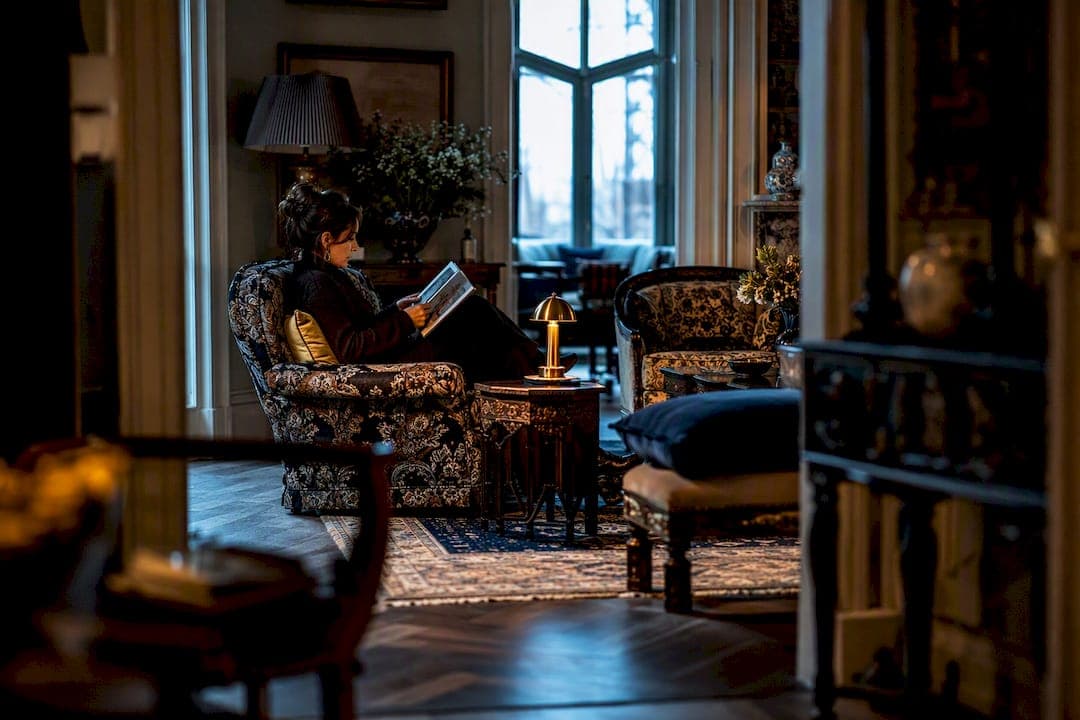
Maximalist interiors succeed when you anchor the scheme with one or two statement furniture pieces, tie elements together with a small cohesive palette or repeated finish, and edit as you layer. Two techniques do most of the heavy lifting: matching your palette across upholstery and walls, and repeating a single material or finish through the room. Where off-the-shelf pieces won't fit the scale or match that repeat, bespoke makers like Simmonsinteriorsupply become the practical route.
TL;DR:
- Choosing bespoke furniture is essential when off-the-shelf pieces cannot achieve the necessary scale, finish match, or durability for a layered maximalist scheme.
- Using a small, cohesive color palette of three to four core colors helps unify the room's various patterns, textures, and furniture pieces for a deliberate look.
- Pattern layering should prioritize one large motif as a lead, with smaller companion patterns sharing tonal and temperature consistency for a cohesive visual hierarchy.
- Regular maintenance of textured and metallic materials, such as vacuuming velvet upholstery and polishing wood, is key to preserving the room's tactile richness.
- Implementing supportive layout principles, such as anchoring with eye-catching furniture and maintaining clear traffic routes, enhances the overall flow and visual interest of maximalist interiors.
Table of Contents
- Pick a rich but cohesive colour palette
- Use statement furniture pieces as anchors
- Mix patterns deliberately with pattern drenching
- Layer textures and finishes for tactile depth
- Use lighting to create drama and hierarchy
- Mix furniture styles and eras with a binding element
- Apply wallpaper and dramatic wall treatments
- Ground the room with rugs, upholstery and layered textiles
- Curate collections and edit ruthlessly
- Trade perspective: when to choose bespoke furniture and how to brief it
- Ideas for maximalist furniture placement and room layout
- Advice on integrating maximalist furniture with existing decor
- Guidance on maintenance and care of maximalist furniture materials
- Assembling a maximalist room over time
- Commission a bespoke anchor that fits your scheme exactly
- Sources
Pick a rich but cohesive colour palette
Every successful maximalist room runs on a small colour system, usually three to four core colours working together rather than a dozen fighting for attention. One colour leads (often on the biggest upholstered piece), one sets the rhythm across smaller furniture and trim, and one or two appear only as accents.
- Lead colour: the sofa, an armchair, or a painted cabinet.
- Rhythm colour: cushions, a painted door frame, a lampshade.
- Accent colour: piping, a vase, a single bold chair.
Before buying anything, sketch your palette on paper. If a piece doesn't fit one of those three roles, leave it out.
Use statement furniture pieces as anchors
A maximalist room needs a hero, not a crowd of equals. Choose your anchor by scale, texture, and finish before you touch pattern or colour.
- Establish scale first. One generously proportioned sofa or a sculptural dining table sets the ceiling for everything else in the room; smaller pieces should feel like satellites, not competitors.
- Choose texture with intention. A boucle armchair or a carved timber sideboard reads as an anchor precisely because its surface differs from everything around it.
- Balance two anchors carefully. In a larger room, a second hero (a cocktail chair, a console) works only if it sits on the opposite side of the room and shares a finish or tone with the first.
Measure twice: an anchor that's even 15cm too large for its alcove undermines the whole layout, however striking the piece.
Mix patterns deliberately with pattern drenching
Pattern drenching only works with a hierarchy. Choose one lead motif and layer smaller-scale companions around it, rather than throwing several equally bold prints into the same sightline.
- Pick a large-scale floral, geometric, or botanical as your lead and let it dominate one piece: a sofa, a rug, or a feature wall.
- Add companion patterns in smaller scales that share tonal depth, so warm florals sit with warm stripes, not cool ones.
- Match temperature before motif. Two patterns in the same warm or cool register will always look more deliberate than two patterns that merely share a colour name.
- Keep one surface pattern-free (a plain wall, a solid rug) so the eye has somewhere to rest.
Layer textures and finishes for tactile depth
Colour and pattern get the attention, but texture is what actually gives a maximalist room its depth. Contrast matte surfaces (boucle, aged wood, plaster) against something shiny (brass, lacquer, glass) in every grouping of furniture.
- Put velvet or boucle where people sit and touch, not on hard-wearing traffic routes.
- Repeat one material, such as a specific wood finish or a brass detail, across at least three pieces to bind the room visually.
- Leave one wall or corner deliberately plain; a fully textured room reads as busy rather than rich.
Pro Tip: Photograph the room in black and white before you finish it. If the composition still reads clearly without colour, your texture and tonal contrast are doing their job.
Use lighting to create drama and hierarchy
Saturated colour and heavy pattern need light that can flatter them rather than flatten them. A three-layer lighting plan of ambient, task, and accent lighting gives a maximalist room its atmosphere after dark.
- Ambient lighting sets a warm base level, ideally on a dimmer, since deep colours darken fast under harsh light.
- Task lighting (a reading lamp, an under-cabinet strip) covers function without flooding the whole room.
- Accent lighting, aimed at a gallery wall or a textured cabinet front, does the storytelling: it's what makes a collection feel curated after sunset.
Warm bulbs, roughly 2,700 Kelvin, sit far better with burgundy, emerald, or ochre palettes than cool white ever will.
Mix furniture styles and eras with a binding element
Mixing a Georgian chest with a mid-century chair only works with a repeated binding element running through the room, whether that's a colour, a metal finish, or a consistent wood tone.
- Choose one binding element before you start sourcing, such as brass hardware or a walnut tone, and check every new piece against it.
- Keep scale consistent within each grouping; an oversized antique mirror above a delicate side table will always look accidental rather than curated.
- Start with a quiet anchor (a neutral sofa) or a single confident statement piece, then add contrasting eras gradually rather than all at once.
- A repeated finish, brass on a lamp base, a mirror frame, and door handles, gives the eye a path to follow across mismatched furniture.
Apply wallpaper and dramatic wall treatments
Walls carry as much weight as furniture in a maximalist scheme, but they need to frame your anchor pieces rather than compete with them.
- Reserve the boldest paper for the wall behind your hero piece: the headboard wall, the sofa wall, the dining table wall.
- In smaller rooms such as a cloakroom or hallway, a fully wrapped space in one dramatic pattern reads as intentional, while a single feature wall risks looking indecisive.
- Keep furniture nearby relatively quiet in pattern if the wall is doing loud work; two competing patterns at eye level rarely land well.
- Peel-and-stick wallpaper is a genuinely useful way to trial a bold print before committing to something permanent.
Ground the room with rugs, upholstery and layered textiles
Rugs and upholstery do the quiet work of tying a maximalist palette to the floor. Size the rug to the seating group rather than the room; front furniture legs should sit on the rug, not hover at its edge.
- Layer a smaller patterned rug over a larger plain one in a reading corner or beside a bed for depth without overwhelming the whole floor.
- Choose upholstery fabrics that repeat at least one colour from your core palette, even on pieces that otherwise contrast in style.
- Rotate cushions and throws seasonally to refresh the palette without buying new furniture.
- Vacuum pile rugs weekly and rotate them every few months so wear and colour fading stay even.
Curate collections and edit ruthlessly
The gap between curated maximalism and clutter is almost entirely down to editing. Grouping objects in odd numbers, repeating a finish, and leaving breathing space are what separate a considered vignette from an accumulation.
- Group in threes or fives on shelves and console tops; even numbers tend to look static.
- Build height into every vignette: a tray at the base, books in the middle, an object or small lamp on top.
- Remove one item from every finished grouping. If nothing changes visually, it wasn't earning its place.
Without an editing process, every layer in a maximalist room starts competing for attention rather than supporting a single protagonist piece.
Pro Tip: Pick one "protagonist" object per surface, whether a sculpture, a vase, or a stack of art books, and style everything else around supporting it rather than matching its intensity.
Trade perspective: when to choose bespoke furniture and how to brief it
Bespoke furniture earns its place in a maximalist scheme when off-the-shelf options can't solve three problems at once: unusual scale, repeat finishes, and long-term durability under a bold, high-contrast palette. A sofa that needs to be 20cm narrower to clear a bay window, or a side table that must match the exact brass tone running through a room, are classic cases where a made-to-order piece from a workshop solves what catalogue furniture cannot.
A useful brief for a maker covers:
- Precise dimensions and clearances, including doorways and staircases the piece needs to pass through.
- The primary finish plus a named repeat finish for two or three ancillary pieces, so patina and tone match across the room.
- Upholstery fabric and durability requirements, particularly in rooms that see heavy daily use.
- A single dimensioned sketch and preferred sight-lines, which lets a workshop propose variants while holding the intended scale.
Anchors made this way stay coherent for years, because the repeat finish was planned in from the start rather than approximated after the fact. For sourcing support beyond furniture itself, a trade showroom such as Faura in Westminster can help fill in rugs, lighting, and accessories around a bespoke anchor.
Ideas for maximalist furniture placement and room layout
Placement in a maximalist room works best when it follows sightlines, not just floor space. Walk into the room from its main entrance and note the first thing your eye lands on; that spot deserves your anchor piece, not a side table or a plant.
In a living room, position the sofa to face the room's strongest feature, whether that's a fireplace, a bay window, or a gallery wall, then build supporting furniture around that axis rather than pushing everything against the walls. Leaving furniture "floating" in the centre of a larger room, with a rug beneath it, reads as far more considered than a perimeter arrangement, and it gives you natural pockets for smaller statement pieces at the edges.
Traffic flow still governs everything. A maximalist room can carry heavy pattern and colour, but if guests have to squeeze between an armchair and a console table, the layout will feel chaotic regardless of how well the palette works. Keep at least 90cm clear on main walking routes and closer to 45cm around secondary furniture groupings.
Corners are underused in most homes and ideal for a second, quieter anchor: a reading chair with its own lamp, or a curio cabinet housing a curated collection. Diagonal placement of a large piece, angled into a corner rather than flush against two walls, can also soften an otherwise boxy room and give a maximalist scheme more visual movement.
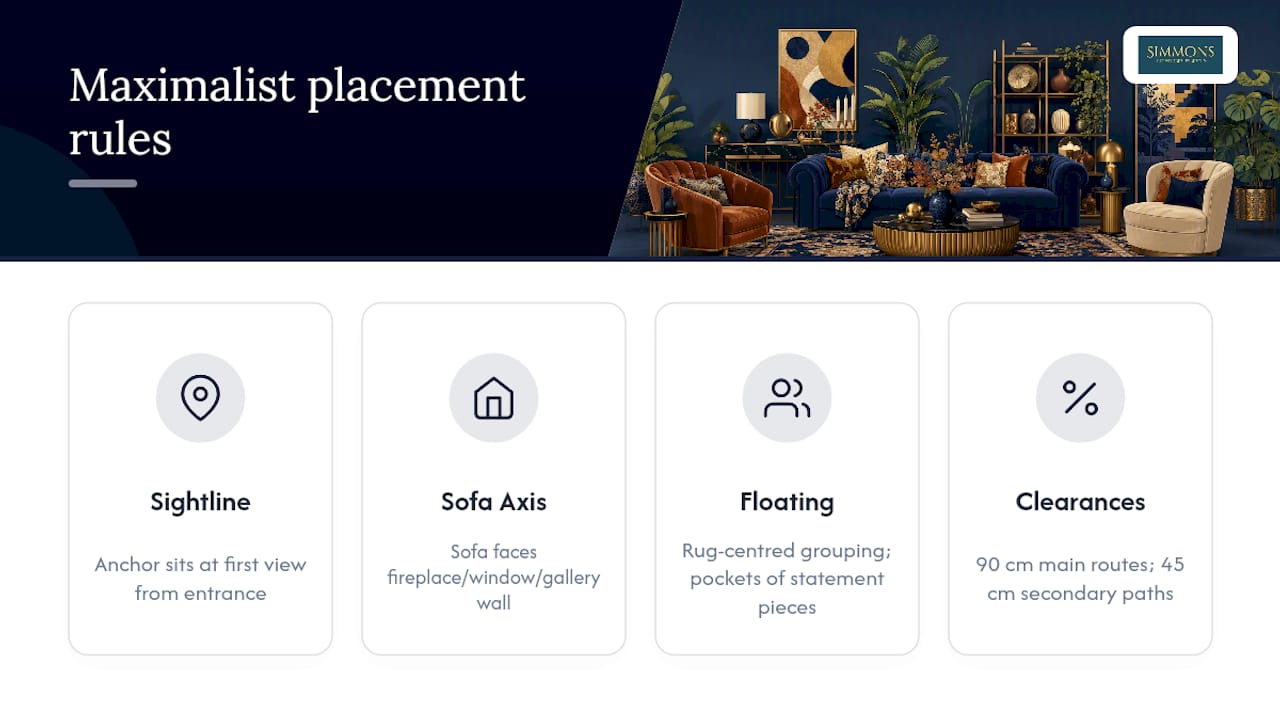
Height matters as much as floor plan. Vary furniture silhouettes deliberately, a low sofa against a tall bookcase, a squat coffee table beneath a substantial pendant light, so the eye travels vertically through the room rather than staying flat.
Advice on integrating maximalist furniture with existing decor
Most homeowners aren't starting from an empty room, and a full maximalist overhaul rarely needs to happen in one pass. Start by auditing what you already own against the three-colour system you've chosen; pieces that already sit within that palette, even loosely, can stay and simply gain a cushion or throw to tie them in properly.
Furniture that clashes outright with your new palette doesn't necessarily need replacing. A neutral sofa can be reupholstered in a bold fabric, or dressed with pattern-drenched cushions and a contrasting throw, far more affordably than sourcing a new piece. Wooden furniture in the wrong tone can often be refinished rather than replaced, particularly solid pieces worth keeping for their construction alone.
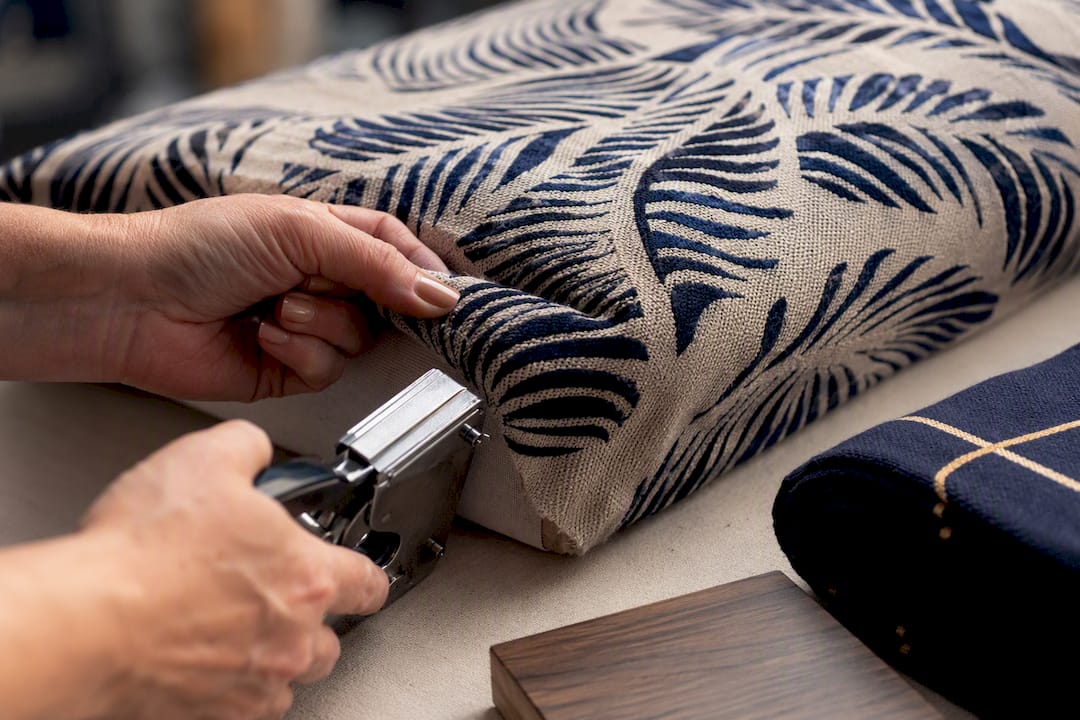
Introduce new statement pieces gradually rather than furnishing an entire room at once. Bringing in one bold anchor, then living with it for a few weeks before adding pattern and accessories around it, lets you judge scale and colour balance accurately rather than guessing from a shop floor or a screen.
Existing artwork and collections integrate more easily than most people expect. A gallery wall assembled years ago can often be reframed using one consistent frame finish, instantly making a mismatched collection read as deliberate rather than accumulated, echoing the same binding-element principle that ties mixed furniture eras together.
Where a genuinely awkward gap exists, an odd alcove, an unusually long console run, an inherited piece that doesn't quite fit, that's precisely where a bespoke commission earns its cost. It solves the integration problem a catalogue never will.
Guidance on maintenance and care of maximalist furniture materials
A maximalist room typically mixes more materials than a minimalist one, which means more care routines to keep track of, though none of them are complicated once established.
Velvet and boucle upholstery need weekly light vacuuming with an upholstery attachment to lift dust from the pile before it settles in. Blot spills immediately rather than rubbing, and have fabric professionally cleaned roughly once a year if the piece sees daily use.
Solid wood furniture, whether a Georgian-era antique or a new bespoke piece, benefits from a beeswax or specialist wood polish every few months rather than silicone-based sprays, which build up a film over time and dull carved detail. Keep wood away from direct radiator heat, which dries and cracks joints faster than almost anything else in a home.
Brass and other repeated metal finishes will patina naturally with air exposure; many maximalist schemes actually rely on that softening over time, so avoid harsh metal polish unless you specifically want a mirror-bright look restored. A soft cloth and mild soap solution is usually enough for routine cleaning.
Rugs, particularly layered ones, need rotation every few months to even out sun fading and foot traffic wear, alongside the weekly vacuuming mentioned earlier in this guide.
Lacquered or high-gloss pieces show fingerprints and dust more readily than matte finishes, simply because of the sheen; a microfibre cloth used two or three times a week keeps them looking sharp without resorting to abrasive cleaners that can scratch the surface.
Treat maintenance as part of the design decision, not an afterthought. A boucle sofa in a household with pets or young children carries a different care burden than the same piece in a quiet study, and that's worth weighing before you commit to a fabric.
Assembling a maximalist room over time
Maximalist rooms are collected, not decorated in a single weekend. The best ones I've studied grew over months or years, with the owner editing constantly, swapping out a cushion here, removing a piece that no longer earned its place there.
Prioritise your tactile anchors early: the sofa, the dining table, the piece your hand actually touches every day. Spend where it counts, on the anchor and its repeat finish, and let smaller accessories be more experimental and lower stakes. A collection built this way, with a trade resource briefed properly for the pieces that matter, ages far better than a room furnished all at once from a single catalogue.
— Luke
Commission a bespoke anchor that fits your scheme exactly
Bespoke furniture makers solve the problem catalogue furniture can't: matching scale, finish, and repeat detail across a room that's been layered over time rather than furnished in one visit. Where an off-the-shelf sofa is 20cm too wide for your alcove, or your brass repeat finish needs to appear on three different pieces made months apart, a bespoke workshop is the only route that guarantees the match.
The bespoke nest of coffee tables shows how a single commission can act as the anchor a maximalist living room is built around, sized and finished to brief rather than adapted to fit. Trade customers and homeowners alike can browse the full collection for inspiration, then get in touch with the trade team to brief dimensions, repeat finishes, and upholstery. If you've got a room that needs one piece to hold the whole scheme together, start that conversation now.
Sources
- 23 Maximalism Decor Ideas That Embody a 'More Is More' Sensibility (House Beautiful)
- 15 Maximalism Decor Ideas to Unlock This Charming Aesthetic (Country Living)
- What Is Eclectic Decor? And How to Ace This Dynamic Design Trend (Martha Stewart)